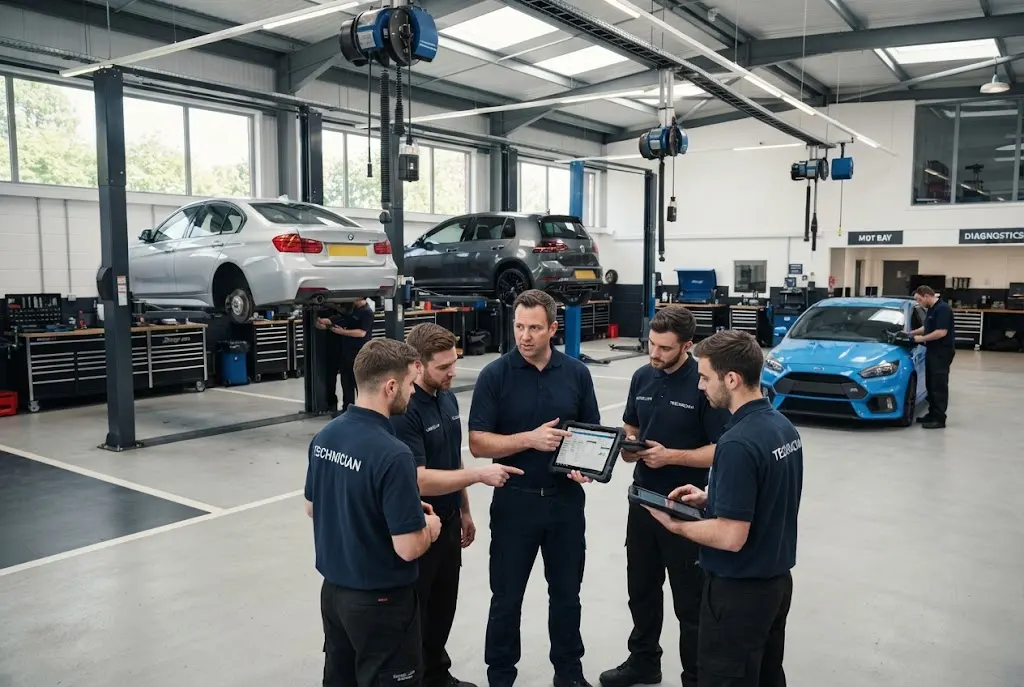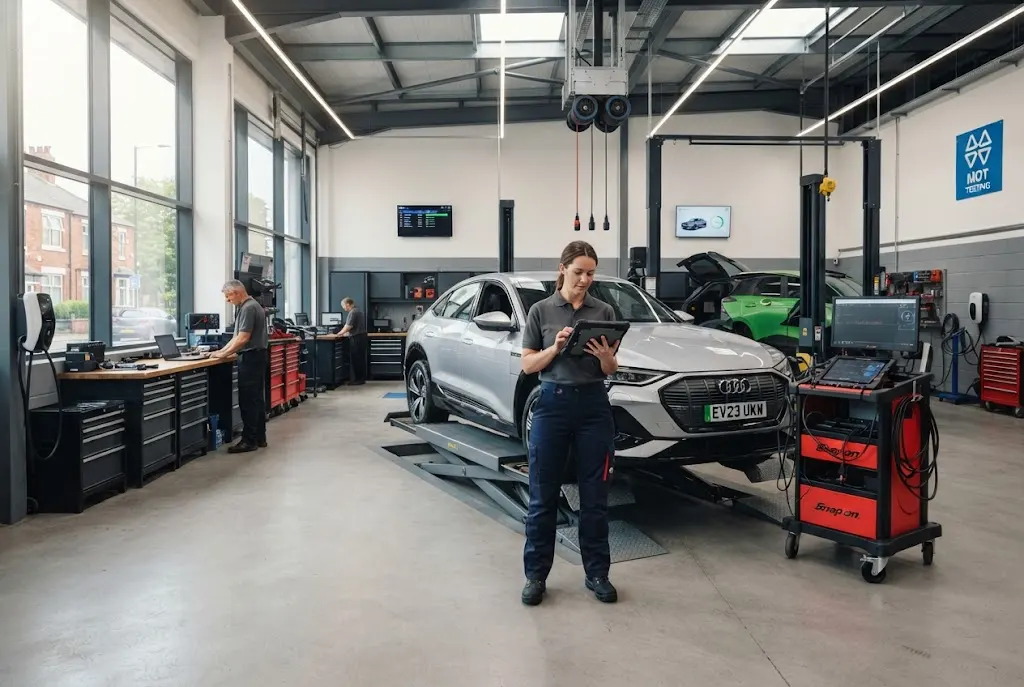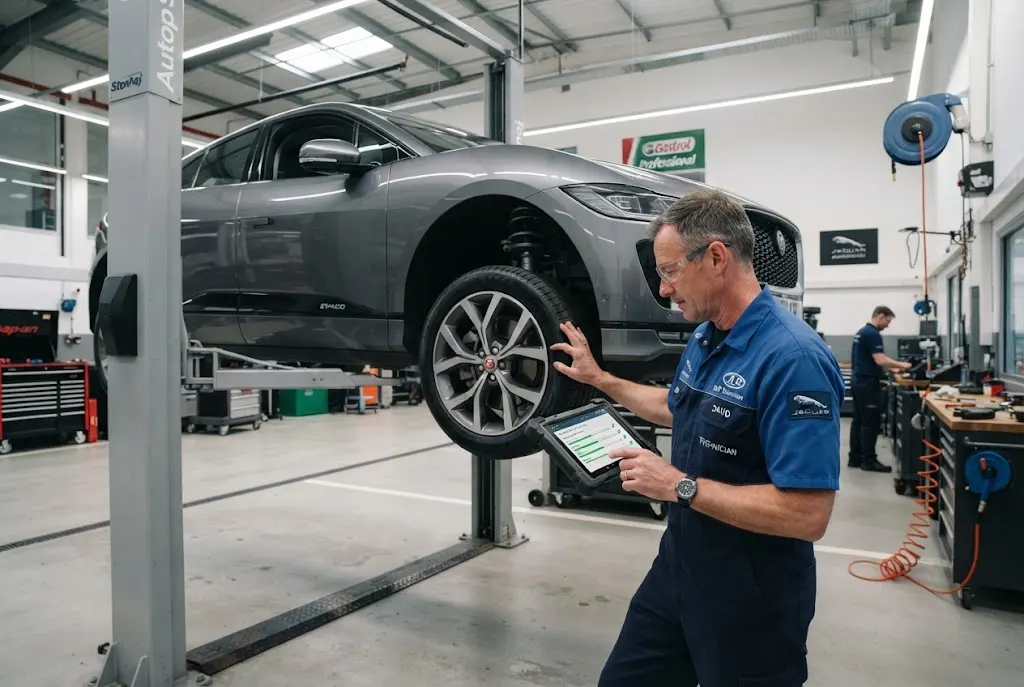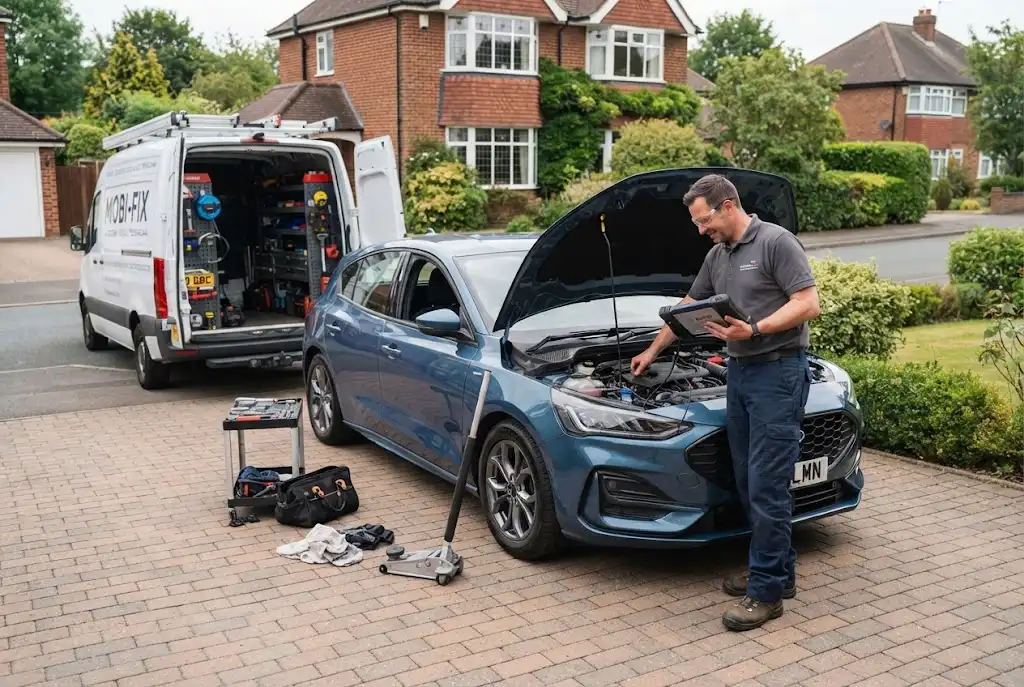
Wheel alignment can be more than a routine workshop task. For UK garages, it can become a valuable specialist service that supports tyre sales, steering and suspension repairs, customer retention and overall workshop profitability. When supported by accurate equipment, trained technicians and clear pricing, wheel alignment gives automotive businesses an opportunity to provide a service that customers can easily connect with tyre wear, handling and vehicle condition.
Correct alignment matters because wheel angles affect how a vehicle behaves on the road and how its tyres wear. GOV.UK guidance notes that excessive or uneven tyre wear can be caused by faults in braking or suspension systems, or by wheels being out of alignment. Michelin also explains that incorrect alignment can contribute to uneven tyre wear and reduced tyre life.
Why Wheel Alignment Matters to UK Workshops
Many garages already provide tyres, brakes, suspension and steering repairs. Wheel alignment fits naturally alongside these services because problems in one area can sometimes be connected with issues in another.
For example, a customer may arrive because a tyre is wearing more quickly on one side. A workshop that has the right diagnostic process can inspect the tyre, steering and suspension condition before determining whether alignment should be checked.
This creates an opportunity to move from a basic tyre transaction towards a broader vehicle maintenance relationship.
For workshop owners, the commercial attraction is equally important. An alignment service can use specialist equipment and technician time to create additional revenue while supporting other workshop services.
What Is Wheel Alignment?
Wheel alignment involves checking and, where adjustable, correcting the angles of the vehicle’s wheels and suspension against the manufacturer’s specified geometry.
It is different from wheel balancing. Wheel balancing concerns the distribution of mass around the tyre and wheel assembly, while alignment concerns the relationship between the wheels and the vehicle’s suspension and steering geometry.
Common alignment measurements can include toe, camber and caster, although the exact adjustable angles vary between vehicles.
Because vehicle geometry differs between models, technicians should use appropriate vehicle specifications rather than applying a generic setting.
Wheel Alignment vs Wheel Balancing
Customers sometimes use the terms interchangeably, but the services address different issues.
Wheel balancing corrects imbalance in the tyre and wheel assembly. Alignment addresses wheel geometry and suspension angles.
That distinction matters commercially because a workshop should diagnose the customer’s symptoms rather than automatically recommending one service.
Vibration at certain speeds may point towards a balancing issue, while uneven tyre wear or a vehicle pulling in a particular direction may justify an alignment inspection. The actual cause should always be established through appropriate checks rather than assumed from a single symptom.
Michelin’s guidance explains that balancing relates to uneven mass distribution in the tyre and rim assembly, whereas alignment involves adjusting wheel angles to vehicle specifications.
How Wheel Alignment Can Become a Profit Centre
A profitable alignment service begins with equipment utilisation. A workshop can own advanced alignment equipment, but if the machine remains unused for long periods, the investment may not produce the expected return.
Management should therefore look at alignment demand across the entire customer base.
Potential sources include:
- Customers purchasing new tyres.
- Vehicles with uneven tyre wear.
- Steering or suspension repair customers.
- Vehicles affected by pothole or kerb impacts.
- Customers reporting steering or handling concerns.
- Fleet and commercial vehicles.
- Performance or specialist vehicle owners.
- EV and hybrid vehicle customers.
The objective is to create multiple pathways into the service rather than relying entirely on customers searching specifically for alignment.
Invest in the Right Alignment Equipment
Equipment is central to the credibility and efficiency of an alignment service. Workshop owners should select equipment based on the types of vehicles they intend to service, expected workload, available workshop space and the level of accuracy required.
Before purchasing an alignment system, operators should consider:
- Vehicle coverage.
- Manufacturer specification databases.
- Measurement accuracy.
- Ease of setup.
- Calibration requirements.
- Software updates.
- Training and technical support.
- Workshop space.
- Expected daily alignment volume.
- Integration with existing workshop equipment.
The cheapest equipment is not automatically the most profitable choice. Likewise, the most expensive system may be unnecessary for a low-volume workshop.
The right investment is the system that matches the workshop’s target market and expected utilisation.
Make Wheel Tracking Part of the Diagnostic Process
Wheel tracking is commonly used when discussing alignment, but workshops should avoid treating it as a simple adjustment without checking the vehicle first.
A proper process can begin with a visual inspection of tyres, steering and suspension components. The technician can then assess alignment readings and determine whether the geometry falls outside the appropriate specifications.
If worn or damaged components are identified, alignment may need to wait until the underlying issue has been addressed.
This diagnostic approach protects the customer and the workshop. It reduces the risk of adjusting alignment on a vehicle with another mechanical problem and creates a clearer explanation of the work being recommended.
Connect Alignment With Tyre Services
Tyres provide one of the strongest commercial connections to alignment.
Customers replacing tyres may be interested in checking alignment, particularly when the previous tyres show unusual or uneven wear. However, workshops should avoid automatically selling an alignment to every customer. The recommendation should be based on inspection findings, vehicle symptoms or relevant service circumstances.
When an alignment inspection is appropriate, the workshop can explain how correcting geometry may help address certain wear patterns and support more even tyre use.
GOV.UK’s Highway Code guidance specifically states that excessive or uneven tyre wear may be caused by wheels being out of alignment, alongside faults in braking or suspension systems.
Use Steering Alignment to Support Repair Work
Steering and suspension repairs can create another natural opportunity for alignment checks.
Replacing or adjusting steering and suspension components can affect wheel geometry. A workshop should therefore follow the vehicle manufacturer’s relevant specifications and repair procedures when determining whether an alignment check is necessary after work.
This is especially valuable for workshops that already handle suspension, steering and tyre work. Alignment can become part of a broader repair pathway instead of an isolated service.
The result is a more complete customer proposition and potentially a higher average repair value.
Build Premium Alignment Services
Not every workshop needs to compete on the lowest alignment pricing.
A premium alignment service can focus on accuracy, detailed inspection, clear reporting and specialist vehicle knowledge.
For example, a premium service could include:
- Initial tyre and steering inspection.
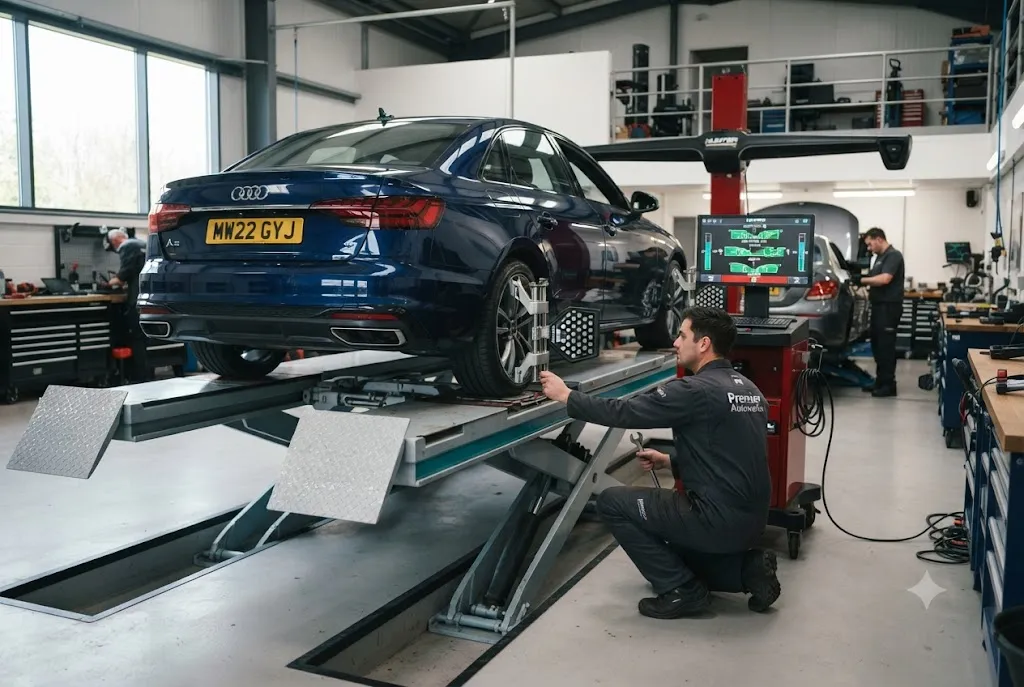
- Electronic alignment measurement.
- Manufacturer-specific specification checks.
- Adjustment where required and technically possible.
- Before-and-after measurement reporting.
- Inspection of related steering and suspension components.
- Clear explanation of the work completed.
The exact package should reflect what the workshop actually provides. Premium positioning only works when the customer can see the additional value.
Develop a Clear Alignment Pricing Strategy
Alignment pricing should account for technician time, equipment investment, calibration, software, workshop overheads and the complexity of different vehicles.
A simple single-price model may work for some workshops, while others may benefit from different packages.
Possible structures include:
- Basic alignment check.
- Front alignment service where appropriate.
- Four-wheel alignment.
- Alignment with tyre fitting.
- Alignment following steering or suspension work.
- Specialist or premium alignment service.
The workshop should make it clear what each package includes. If adjustment is not possible because of a mechanical fault, the customer should be told before unnecessary work is performed.
Train Technicians to Interpret Alignment Data
Alignment equipment can produce detailed measurements, but equipment alone does not create expertise.
Technicians need to understand what the readings mean, how vehicle geometry interacts with steering and suspension components and when a measurement indicates a deeper mechanical problem.
Training should therefore cover both equipment operation and diagnostic interpretation.
This becomes particularly important as vehicles become more technologically advanced. Modern vehicles can include electronic steering systems, driver assistance technologies and vehicle-specific geometry requirements.
The current GOV.UK MOT inspection manual includes detailed inspection requirements for steering systems, including steering linkage, steering play and electronic power steering.
Use Alignment Data to Improve Customer Communication
Technical information can be difficult for motorists to understand. Alignment measurements can therefore become more valuable when technicians translate them into clear customer language.
Instead of presenting a customer with unexplained numbers, the workshop can explain what the measurements mean and why a particular adjustment may be recommended.
Before-and-after reports can also help demonstrate that the service was actually performed.
This type of communication can support trust, particularly when the customer initially arrived because of a symptom such as uneven tyre wear or steering behaviour.
Promote Wheel Alignment Through Local SEO
Alignment is a service with strong local search potential because customers often need a workshop within a practical driving distance.
A garage website should have a dedicated service page that explains what alignment is, common signs of potential problems, what the workshop checks and how customers can book.
Location relevance can also be built naturally through properly structured local pages, business information and genuine customer reviews.
Rather than repeatedly using the same keyword, content should cover related concepts such as steering alignment, wheel tracking, tyre wear, suspension geometry, tyre fitting and vehicle handling.
Use Wheel Alignment to Support EV and Hybrid Services
Electrified vehicles still rely on tyres, wheels, steering and suspension, which means alignment remains relevant as the vehicle parc changes.
Workshops developing EV servicing can incorporate alignment into their broader maintenance proposition. Likewise, businesses providing hybrid servicing can continue offering alignment alongside other vehicle maintenance services.
The opportunity is not about creating a completely different alignment procedure for every EV or hybrid. Instead, technicians should use the correct vehicle specifications and understand the particular characteristics of the vehicle being serviced.
Turn Alignment Into a Network-Wide Service
For garage chains, alignment can become a useful standardised service across selected locations.
Network operators can establish consistent equipment standards, technician training, pricing frameworks and quality-control processes. This can make it easier for customers to receive a recognisable service at different branches.
At the same time, management should consider whether every site has enough demand to justify identical equipment investment.
A tiered network approach may be more efficient, with high-volume locations operating advanced alignment facilities while other branches focus on inspections and refer complex work when appropriate.
This approach reflects the wider principles discussed in garage chains growth strategies, where specialist capabilities can be distributed according to local demand.
Measure Workshop Profitability
Once alignment has been established as a service, management should track its commercial performance.
Useful measures include:
- Alignment jobs completed per week.
- Equipment utilisation.
- Average alignment revenue.
- Alignment sales linked to tyre fitting.
- Alignment sales linked to suspension repairs.
- Technician time per job.
- Repeat customer rate.
- Customer complaints or rework.
- Conversion from alignment inspection to completed service.
These figures can help determine whether the service is genuinely contributing to workshop profitability.
For example, low equipment utilisation may indicate that the business needs stronger local marketing, better staff awareness or a different pricing strategy. High demand combined with long job times may suggest a need to improve workshop processes or invest in additional capacity.
Use Fleet Customers to Increase Alignment Demand
Fleet operators can provide another potential customer segment for alignment services.
Commercial vehicles cover significant distances and can experience demanding operating conditions. Fleet maintenance programmes can therefore include appropriate tyre, steering and suspension inspections alongside other scheduled maintenance.
Workshops targeting fleet customers should focus on reliability, reporting, turnaround times and consistent service standards rather than selling alignment as an isolated add-on.
Preventive maintenance can also help fleet operators identify issues before they develop into larger operational problems. The Health and Safety Executive advises employers to maintain vehicles properly and highlights tyres, steering and braking systems among areas requiring attention.
When Should a Workshop Recommend Alignment?
A workshop should base recommendations on inspection findings and vehicle requirements rather than using alignment as a blanket sales technique.
Potential reasons to inspect alignment can include:
- Uneven or unusual tyre wear.
- Steering or handling concerns.
- Evidence of a kerb or pothole impact.
- Steering or suspension repairs.
- Customer concerns about the vehicle pulling to one side.
- Relevant manufacturer or workshop inspection procedures.
However, these symptoms can have multiple causes. For instance, GOV.UK notes that a vehicle pulling to one side when braking is more likely to involve a brake fault or incorrectly inflated tyres, so a workshop should diagnose the underlying issue rather than automatically treating it as an alignment problem.
The Future of Wheel Alignment as a Workshop Service
Wheel alignment is unlikely to disappear as vehicles become more electrified or digitally connected. Instead, accurate vehicle geometry and steering-related diagnostics remain important parts of professional maintenance.
For workshop owners, the opportunity lies in turning alignment from a low-profile adjustment into a properly managed service category.
That requires the right equipment, trained technicians, sensible pricing and strong links with tyres, steering, suspension and general maintenance. It also requires honest diagnosis. A workshop should recommend alignment when inspection evidence supports it rather than treating every customer as an automatic sale.
When those principles are combined, wheel alignment can contribute to stronger customer relationships and better workshop utilisation. It can also support broader service development across independent garages, workshop groups and national networks.
For automotive businesses reviewing the complete cluster of growth opportunities, alignment works particularly well alongside the broader competitive principles covered in competitive strategy for automotive service companies. Together, these services can help workshops build specialist capability while improving customer value and operational performance.