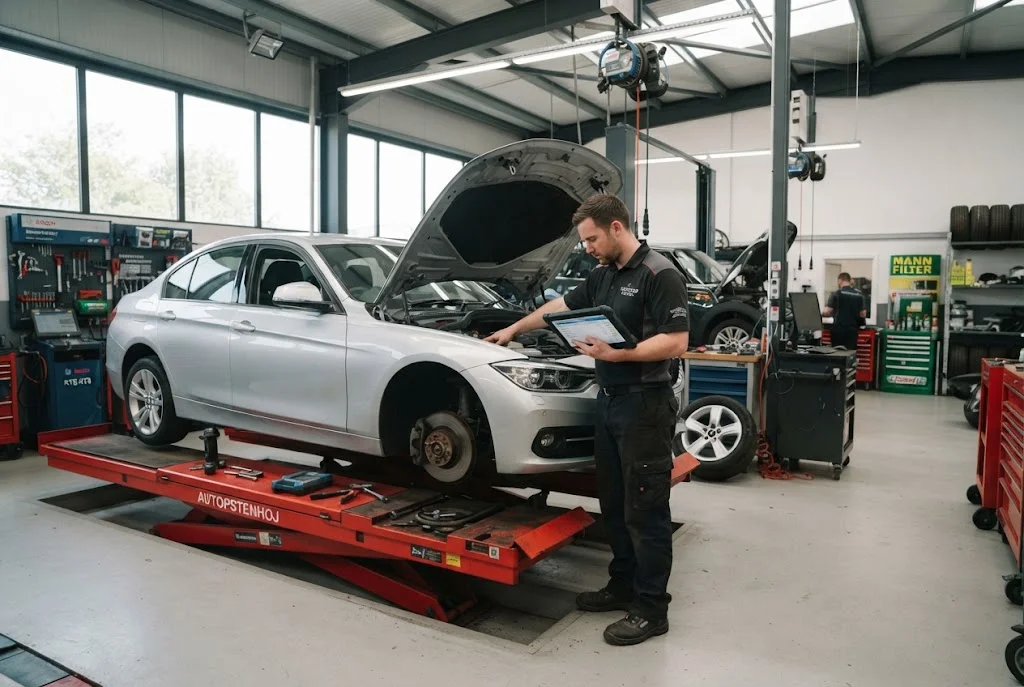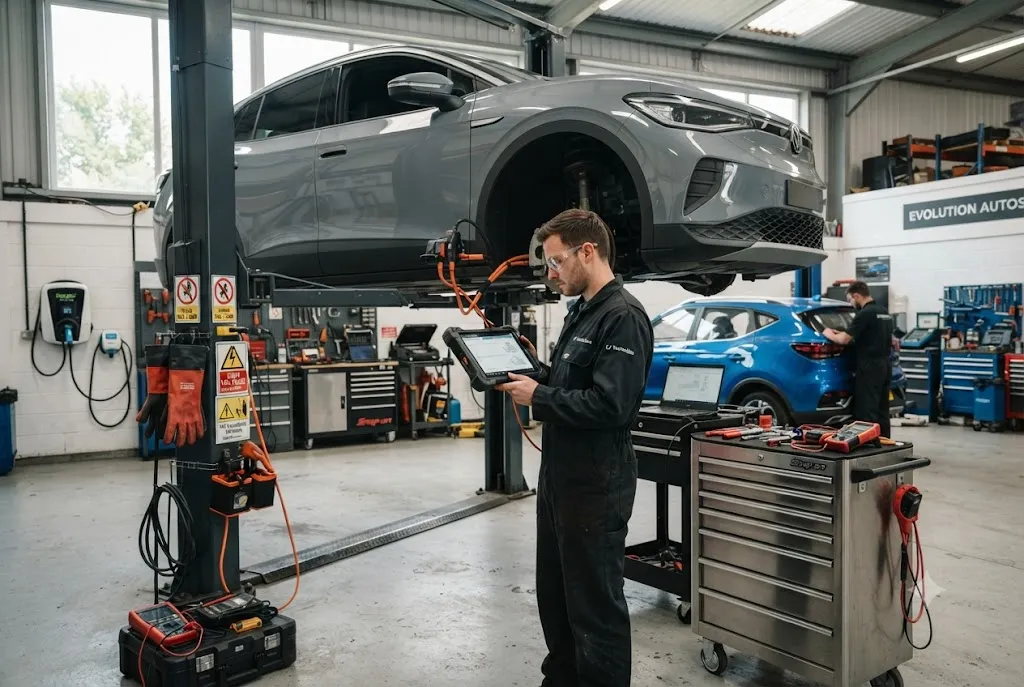
EV servicing is becoming an increasingly important capability for UK automotive workshops as electric vehicles become a larger part of the vehicles using Britain’s roads. For garages and workshop groups, the opportunity goes beyond adding an “electric vehicle” option to a service menu. Successful EV capability requires investment in trained technicians, suitable diagnostic equipment, high-voltage safety procedures, battery knowledge and workshop processes that reflect the technical differences of electric vehicles.
The UK aftermarket is already preparing for this shift. In September 2025, the Society of Motor Manufacturers and Traders reported an estimated 1.6 million electric cars on UK roads and said more than four in five surveyed workshops were equipped to service EVs, with most expecting further investment in capability. This makes EV servicing both a competitive opportunity and a strategic requirement for many automotive businesses.
Why EV Servicing Should Be on the Workshop Investment Plan
Electric vehicles do not eliminate vehicle maintenance. Instead, they change the nature of some of the work required.
EVs still need tyres, brakes, suspension, steering, air conditioning, cabin filtration, inspections and other conventional vehicle services. At the same time, they introduce high-voltage batteries, electric motors, power electronics, battery management systems and vehicle-specific diagnostic requirements.
For automotive businesses, this creates a transition rather than a complete replacement of existing workshop services.
A garage that already provides mechanical maintenance can build EV capability progressively. The most appropriate approach depends on its customer base, technician skills, available capital, local competition and the types of EV work it wants to perform.
What Does EV Servicing Include?
EV servicing covers a broad range of activities, and not every workshop needs to offer every level of repair.
Depending on training, equipment and manufacturer requirements, an EV workshop may provide:
- Routine electric vehicle inspections.
- Brake and suspension maintenance.
- Tyre inspection and replacement.
- Electric vehicle diagnostics.
- High-voltage system checks.
- Battery-related diagnostics.
- Thermal management system maintenance.
- Charging system diagnostics.
- Electrical fault diagnosis.
- High-voltage component repair or replacement where appropriately qualified.
This distinction is important. Routine maintenance around an EV is not the same as carrying out advanced work on high-voltage components. Workshop owners should define their service boundaries according to technician competence and equipment rather than marketing ambition.
Start With an EV Workshop Capability Audit
Before spending heavily on EV equipment, workshop management should assess its existing capabilities.
A practical audit can examine:
- Technician qualifications and experience.
- Existing diagnostic equipment.
- Workshop electrical infrastructure.
- High-voltage safety procedures.
- Personal protective equipment.
- Vehicle lifting equipment.
- Battery handling requirements.
- Technical information access.
- Customer demand.
- Local EV competition.
The purpose is to identify the gap between the services the business currently provides and the EV services it wants to introduce.
This prevents a common investment mistake: purchasing expensive equipment before establishing whether the workshop has the skills and processes required to use it effectively.
Invest in EV Mechanics and Technician Training
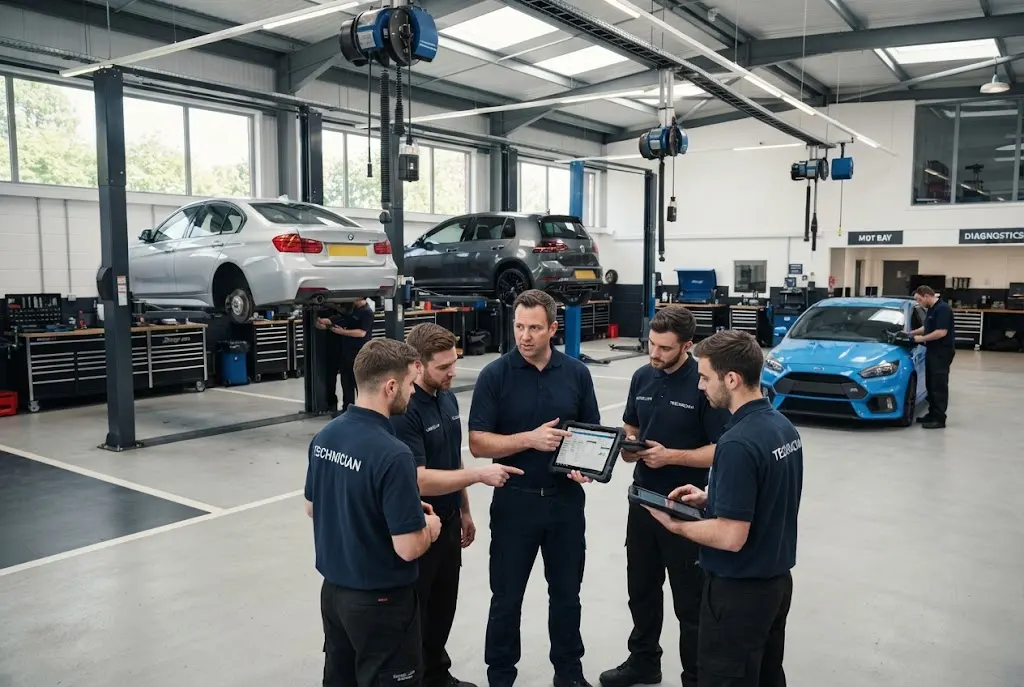
Technician capability is at the centre of EV servicing. Electric vehicles use high-voltage systems that require specific knowledge, safety procedures and appropriate training.
The Institute of the Motor Industry provides recognised electric vehicle qualifications across different levels. Its current EV qualification pathway includes Level 3 training for technicians developing electric and hybrid vehicle skills and Level 4 options for more advanced diagnostic and repair capabilities.
For workshops, this means training should be matched to the actual work technicians are expected to perform.
A useful development pathway can include:
- Basic EV awareness.
- Safe working around electric vehicles.
- High-voltage isolation procedures.
- EV diagnostic testing.
- Battery system understanding.
- Advanced high-voltage diagnostics.
- Specialist component repair where appropriately qualified.
IMI’s current Level 3 material includes areas such as high-voltage safety, isolation procedures, battery systems, electric drive motors, power electronics and diagnostic testing.
Make High-Voltage Safety a Core Workshop Process
High-voltage safety should never be treated as a secondary consideration. EV servicing introduces hazards that require specific working practices and competence.
Workshops should establish procedures for identifying high-voltage vehicles, assessing the work required, safely isolating systems when necessary and determining whether the technician assigned to the job has the appropriate competence.
Personal protective equipment, suitable tools, warning signage and controlled working areas should form part of the workshop’s safety framework where applicable.
Advanced work should only be undertaken by appropriately trained and competent personnel using suitable procedures and equipment. The IMI’s Level 4 qualification specifically addresses advanced diagnosis, testing and repair of high-voltage systems and components.
Choose EV Diagnostic Equipment Strategically
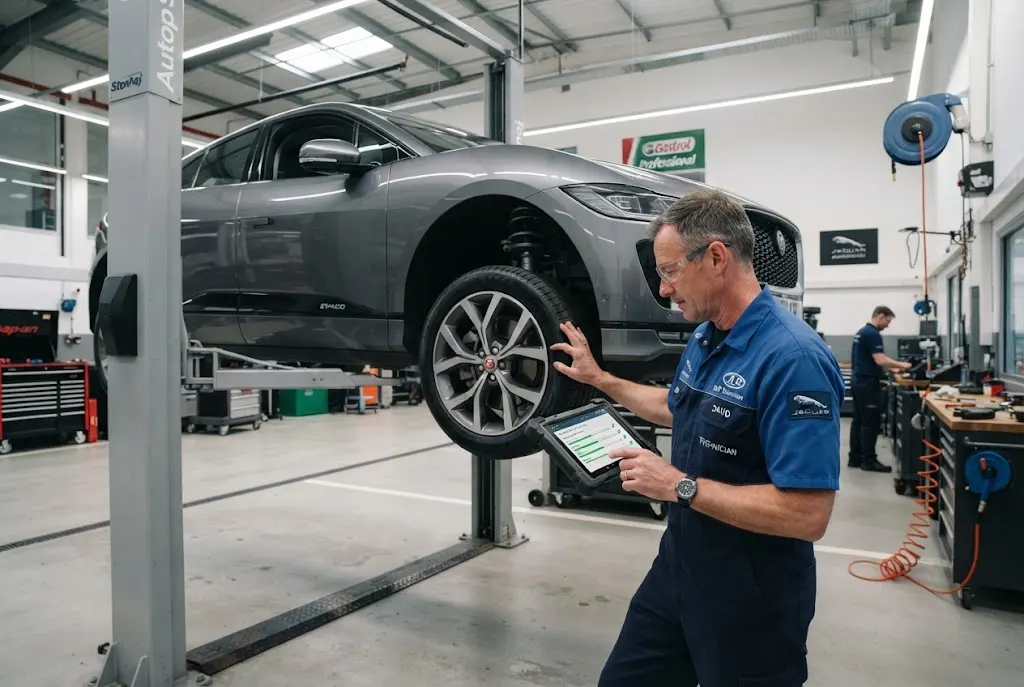
Diagnostics are likely to become one of the most important workshop capabilities as electric vehicles become more common.
However, buying the most expensive diagnostic platform is not necessarily the best investment. Workshop owners should first establish which vehicle brands and systems they expect to support.
Important considerations include:
- Vehicle coverage.
- High-voltage system diagnostic capability.
- Battery management system access.
- Manufacturer-specific functions.
- Software update requirements.
- Subscription costs.
- Technical support.
- Training requirements.
Diagnostic equipment should be considered alongside technician training. A tool can provide data, but trained technicians need to understand how to interpret that information and determine the appropriate repair path.
Develop Battery Servicing Carefully
Battery servicing is one of the most commercially interesting areas of EV maintenance, but it is also one where workshops need to define their capabilities carefully.
An electric vehicle battery is not simply a conventional replacement battery. It forms a complex high-voltage system that includes cells, modules, monitoring systems, cooling arrangements and battery management electronics.
A workshop may begin with battery diagnostics rather than attempting complex battery repair. This can allow the business to develop knowledge and customer demand before making larger investments.
Battery-related diagnosis should focus on identifying the underlying problem rather than automatically recommending replacement. Accurate testing can help customers understand whether an issue involves the battery itself, associated electronics, thermal management or another vehicle system.
Consider EV Battery Handling and Workshop Space
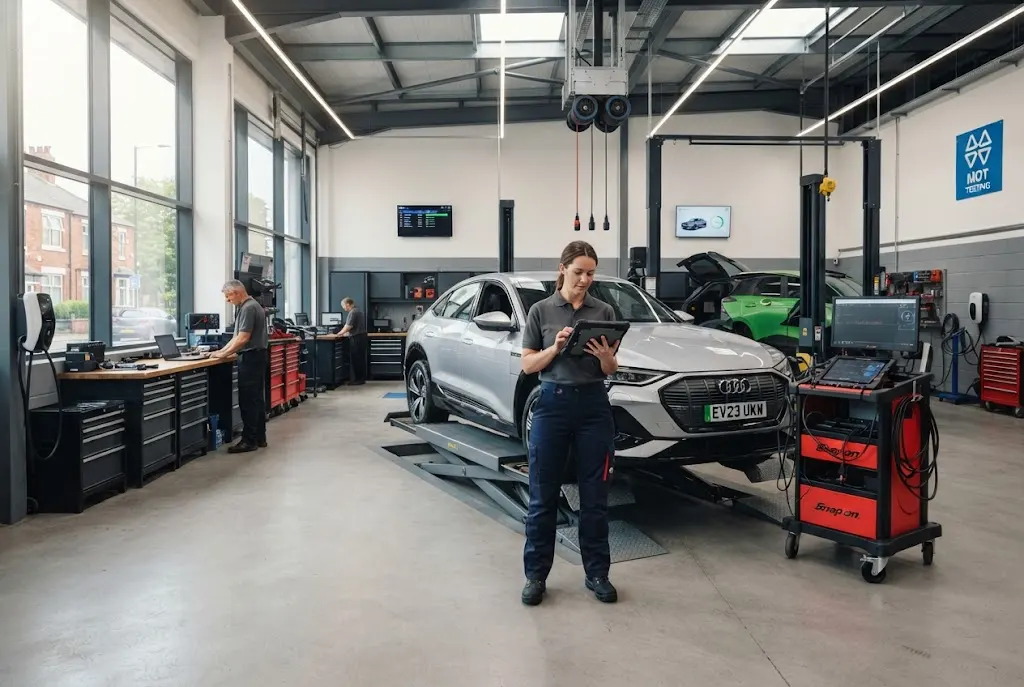
Workshops planning advanced EV services should think about physical space as well as equipment.
Large battery assemblies can require appropriate lifting and handling equipment. Storage and isolation arrangements may also need to be considered depending on the work being undertaken.
The workshop layout should allow technicians to work safely without creating unnecessary risks for other staff or customers.
This is one reason why EV workshop investment should be planned as a complete operational project rather than a simple equipment purchase.
Charging Infrastructure Can Support EV Workshop Investment
Charging infrastructure can play a useful role in an EV workshop strategy, although the requirements will vary considerably between businesses.
A workshop may need charging capability for customer vehicles, diagnostic procedures, vehicle preparation or its own fleet. The number and type of chargers should be determined by operational demand rather than simply installing equipment because EVs are becoming more common.
Before investing, operators should consider:
- Available electrical capacity.
- Workshop parking arrangements.
- Expected vehicle throughput.
- Charging speeds required.
- Energy costs.
- Site permissions and installation requirements.
- Whether charging will generate direct or indirect commercial value.
Charging can also become part of the customer experience. However, it should complement the core workshop proposition rather than distract from maintenance and repair operations.
Use Existing Workshop Services to Grow EV Revenue
EV servicing does not have to operate as a completely separate department.
Electric vehicles still require tyres, brakes, suspension, steering and other maintenance. This means an existing workshop can use its established capabilities while adding EV-specific expertise where necessary.
For example, a workshop offering wheel alignment can continue providing that service to EV owners while ensuring technicians understand the relevant vehicle specifications.
Similarly, tyre services can remain an important part of the EV customer journey because tyre selection, condition and wear remain essential maintenance considerations.
Connect EV Servicing With Hybrid Capability
Workshops do not necessarily have to choose between hybrid and electric vehicles. Many businesses can develop electrified vehicle capability progressively.
Hybrid servicing can provide an earlier step into electrified powertrain knowledge, although hybrid systems and full EVs are not identical. Training, diagnostics and safety requirements still need to match the work being undertaken.
Businesses that have already developed a structured hybrid servicing capability may have a useful foundation for expanding into EV services, provided they continue developing the specific skills required for fully electric vehicles.
Build an EV Service Proposition Customers Understand
Electric vehicle owners may have different questions from drivers of conventional vehicles. Some customers may be unsure about what an EV service includes or whether an independent garage is equipped to work on their vehicle.
Clear communication can turn this uncertainty into a competitive advantage.
Workshop websites should explain:
- Which EV brands and models are supported.
- Which EV services are available.
- Whether battery diagnostics are offered.
- What technician training the workshop has invested in.
- Whether charging facilities are available.
- How customers can book an EV inspection.
Specific information is generally more useful than broad claims about being an “EV specialist”. Customers need to understand what the workshop can actually do.
Price EV Services Around the Work Performed
EVs can require different diagnostic procedures and specialist equipment, but pricing should remain understandable.
Rather than applying an unexplained premium to every EV booking, workshops can create clearly defined services based on the actual work involved.
For example, a routine EV inspection may be priced differently from an advanced diagnostic assessment. Battery-related diagnosis can also be presented as a distinct service when appropriate.
Transparent pricing helps customers understand why specialist work costs what it does while giving the workshop room to recover training and equipment investment.
Use EV Investment to Strengthen Competitive Positioning
Investment in EV capability can become a genuine competitive differentiator for automotive service companies.
However, simply owning EV equipment does not create a strong market position. Competitors can purchase equipment too. The harder-to-copy advantage is the combination of trained people, efficient processes, accurate diagnostics, customer trust and experience.
This connects directly with the wider competitive principles discussed in competitive strategy for automotive service companies.
Businesses should therefore communicate their EV capability as part of a broader service proposition rather than treating it as a standalone marketing slogan.
How Garage Chains Can Scale EV Capability
For garage chains and workshop groups, EV investment introduces an additional question: should every location offer the same level of service?
In many cases, a tiered approach can be more practical.
Some branches can provide routine EV maintenance and inspections, while selected locations develop advanced diagnostic and battery capabilities. Complex work can then be referred within the network where appropriate.
This model can reduce unnecessary capital expenditure while giving the wider network access to specialist expertise.
It also connects with the broader growth strategy for garage chains, where network scale can be used to distribute specialist resources more efficiently.
Measure the Return on EV Workshop Investment
EV investment should be measured like any other major business decision.
Useful indicators include:
- Number of EV bookings.
- Average EV repair value.
- Diagnostic revenue.
- Battery diagnostic demand.
- Technician utilisation.
- Training costs.
- Equipment utilisation.
- Customer retention.
- EV-related referrals to other workshops.
These metrics can reveal whether investment is generating sufficient commercial value and where further development may be justified.
Plan EV Investment in Stages
Not every workshop needs to become an advanced EV repair centre immediately. A staged investment strategy can reduce risk.
Stage one: Assess local EV demand and existing technician capability.
Stage two: Train selected technicians and establish safe working procedures.
The Stage three: Add appropriate diagnostic equipment and basic EV service capability.
Stage four: Develop battery diagnostics and other specialist services where demand supports the investment.
Stage five: Consider advanced high-voltage repair, additional charging infrastructure and specialist workshop facilities.
The exact sequence will vary according to the business, but staged investment allows management to connect capital spending with real customer demand.
The Future of EV Servicing in the UK
EV servicing is moving from a specialist niche towards an increasingly important part of the mainstream automotive aftermarket. SMMT’s 2025 aftermarket analysis noted that more than four in five surveyed workshops were already equipped to service EVs and that most expected further investment in the capability.
That means competition will increasingly depend on more than simply being willing to work on electric vehicles.
The workshops best positioned for the next stage are likely to be those that combine qualified technicians, reliable diagnostics, safe operating procedures, sensible equipment investment and strong customer communication.
> For independent garages, EV capability can create a valuable specialist proposition. For larger automotive service companies, it can become a network-wide strategic capability. For garage chains, a tiered model can provide access to specialist expertise without requiring every branch to make identical investments.
The central lesson is simple: EV workshop investment should be planned around competence, customer demand and long-term commercial value. When those three elements align, EV servicing can become a meaningful growth opportunity rather than simply another cost of adapting to vehicle technology.