Business insurance for UK garages is not an administrative afterthought; it is part of how a workshop protects its premises, its people, its customers’ vehicles and its own future. A fire, a serious injury, a damaged customer car or a claim that lands months after a repair can threaten years of work. Yet many garages buy cover on price alone, renew automatically and only discover the gaps when something goes wrong. This guide explains the cover a UK garage should consider, how insurers judge workshop risk, and how to buy protection that matches the business you actually run.
Why business insurance for UK garages needs specialist thinking
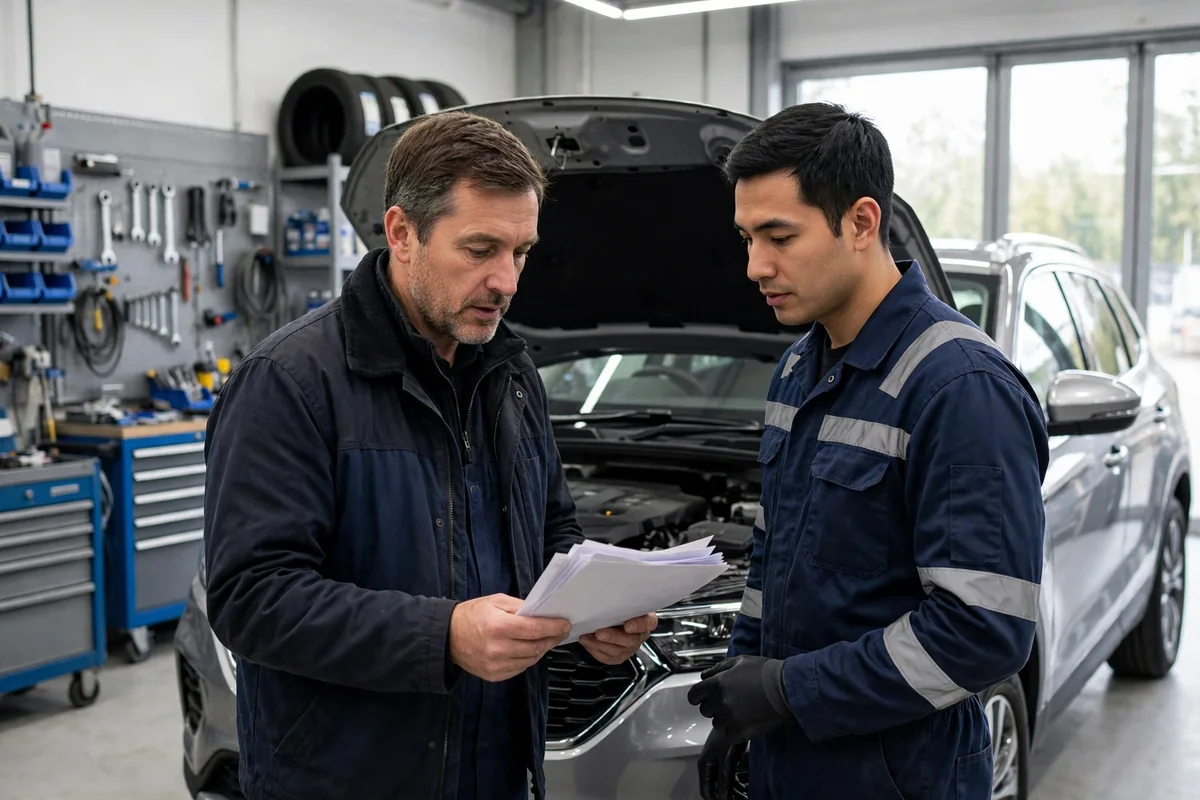
A garage is a higher-risk workplace than an office or a shop. Vehicles move around the premises, lifts and compressed air are in daily use, flammable liquids are stored, customers walk through work areas and expensive property belonging to other people is left in your care overnight. A standard commercial policy may not be designed for those realities. Motor trade insurance exists precisely because the risks are specific, and it can combine premises, liability, vehicles and tools in one package. As our guide to building a successful car servicing business explains, professional systems and safety processes sit at the heart of a well-run workshop, and insurance is the financial backstop behind those systems.
The core covers every workshop should understand
Public liability insurance covers injury or property damage suffered by customers and visitors. Employers’ liability is a legal requirement if you employ staff, including many casual arrangements, and the certificate must be available for inspection. Buildings and contents cover protects the premises, ramps, diagnostic equipment and tools, while business interruption cover pays towards lost income and ongoing costs after an insured event such as a fire or flood. Vehicles in your custody need appropriate cover for road testing and moving customer cars, and many garages add cover for vehicles kept overnight, courtesy cars and recovery work.
Garages should also consider professional indemnity or service indemnity protection, which can respond when faulty work or incorrect advice leads to a financial loss or further damage. Product liability matters if you supply parts. Cyber cover is increasingly relevant because modern workshops hold customer data, use online booking systems and rely on diagnostic software. None of these covers is glamorous, but together they decide whether an incident is a bad week or the end of the business.
How insurers judge your garage
Insurers price risk on the details: the services you offer, your turnover and wages, the value of equipment and customer vehicles on site, your security, your fire protection, your claims history and the experience of your technicians. MOT work, recovery, vehicle sales, courtesy cars and work on electric vehicles can all change the picture. Accuracy matters. If your policy describes a small servicing workshop but you also sell cars and run a recovery truck, a claim can become complicated. Review the description whenever your services change, in the same way you would revisit the numbers in our guide to how to price auto services profitably when costs move.
Protecting customer vehicles and your reputation
Customer cars are usually the largest concentration of other people’s property on your premises. Clear booking-in photographs, documented condition checks, secure key storage and sensible overnight parking reduce both losses and disputes. If a vehicle is damaged, fast and honest communication protects the relationship while the insurer handles the cost. That customer-first approach is the same principle behind our guide to building customer loyalty through car servicing: trust is a commercial asset, and insurance supports it rather than replacing it.
Workshop safety and claims prevention
The cheapest claim is the one that never happens. Insurers look favourably on documented risk assessments, lift inspections, PAT testing, fire extinguisher servicing, tidy storage of flammables and clear separation between customers and working areas. The operational discipline described in our guide to running a high-performance auto service garage (workshop organisation, scheduling and communication) also lowers insurance risk, because most incidents trace back to rushed work, poor housekeeping or unclear responsibilities. Train new starters properly, record near misses and fix small hazards before they produce injuries.
Buying and renewing cover intelligently
Start the renewal process early, gather accurate figures and compare like with like: excesses, limits, exclusions and conditions matter as much as the premium. A broker who understands the motor trade can explain the differences and negotiate with insurers who actually want garage business. Do not let cover lapse between policies, and tell your insurer about material changes during the year, such as new equipment, additional staff, building work or new services. Keep an insurance file with policies, certificates, asset values and photographs of equipment and serial numbers; after an incident, that file speeds everything up.
Insurance should also feature in your wider planning. Our guide to writing a business plan that actually gets used shows how to build risk and fixed costs into your forecasts, and realistic insurance costs belong in those numbers from the start rather than appearing as a surprise each renewal.
What to do when an incident happens
When something goes wrong, safety and evidence come first: make the area safe, help anyone injured, and notify your insurer promptly with photographs, job cards and witness details. Do not admit liability or promise repairs before the insurer advises you, but do communicate honestly with the customer about what happens next. Workshops that document work carefully recover faster from claims, and the same record-keeping discipline supports the profitability work described in our guide to improving auto repair services and workshop profitability. Afterwards, review what the incident taught you and update your processes, because insurers and customers both notice businesses that learn.
Final thoughts
The right business insurance for UK garages does three things: it meets your legal duties, it matches the real risks of the work you do, and it gives customers confidence that your business is built to last. Review it as carefully as you review your prices, your equipment and your team, and your workshop will be ready for the day when protection stops being paperwork and becomes the reason the business survives.