Running a successful auto service garage requires more than having skilled mechanics and good equipment. A high-performing workshop needs organised processes, effective scheduling, productive technicians, reliable parts management and clear communication with customers. When these areas work together, a garage can complete more jobs without sacrificing quality or creating unnecessary pressure on its team.
For independent automotive businesses, operational efficiency can be a major competitive advantage. Customers want their vehicles returned on time, repairs explained clearly and work completed to a professional standard. Meanwhile, garage owners need to make productive use of workshop space, labour and equipment. The key is to build systems that support both objectives.
What Makes an Auto Service Garage High Performing?
A high-performing garage is not simply the workshop that completes the most vehicles. Performance also depends on quality, customer satisfaction, technician productivity, safety and profitability.
A busy workshop can still perform poorly if vehicles remain on ramps for long periods, parts are regularly unavailable or technicians have to redo completed work. Similarly, a garage that focuses exclusively on speed may damage customer trust if inspections and repairs are rushed.
Operational excellence comes from creating a balanced system in which vehicles move efficiently through the workshop while technicians have enough time and resources to perform their work correctly.
Organise Garage Auto Service Operations
Every vehicle should follow a clearly defined process from booking to collection. The exact workflow will vary between businesses, but it commonly includes customer intake, vehicle inspection, diagnosis, approval, repair or servicing, quality checks and final handover.
Documenting this process can expose bottlenecks that may otherwise go unnoticed. If vehicles regularly wait for inspection, the problem may be related to scheduling. If completed jobs accumulate before customer collection, communication or collection procedures may need improvement.
Start by mapping how a typical vehicle moves through the business. Then identify unnecessary waiting, repeated administration and points where information is lost between staff members.
A structured approach to wider auto services business operations can provide the strategic foundation, while the garage itself needs practical processes for delivering each service efficiently.
Improve Workshop Scheduling
Scheduling has a direct effect on workshop productivity. An unrealistic schedule creates pressure from the moment the day begins, while an overly cautious schedule can leave valuable capacity unused.
Assign appropriate time estimates to common jobs. Routine servicing may be relatively predictable, whereas complex diagnostics or repairs can require considerably more time. Scheduling should account for these differences instead of treating every booking as equivalent.
It is also useful to maintain some flexibility. Unexpected diagnostic findings, parts delays and customer changes are normal in automotive work. A schedule with no spare capacity can quickly become disrupted by a single complicated vehicle.
Review completed jobs against their original time estimates. Over time, this can help managers create more accurate scheduling assumptions.
Increase Garage Productivity Without Sacrificing Quality
Garage productivity is about making effective use of available labour and workshop resources. Simply asking technicians to work faster is rarely a sustainable solution.
Instead, look at the obstacles that prevent technicians from spending time on productive work. These may include waiting for parts, searching for tools, moving vehicles unnecessarily or receiving incomplete job information.
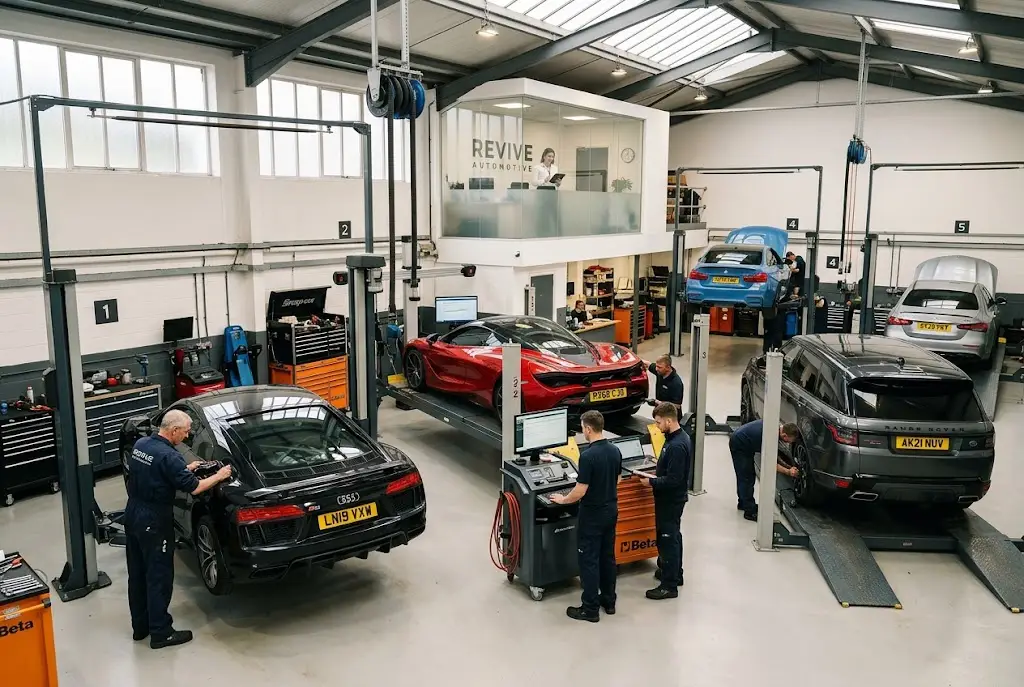
Good workshop layout can make a meaningful difference. Frequently used tools and equipment should be accessible, while storage areas should be organised so technicians can quickly find what they need.
Clear job instructions also reduce wasted time. Technicians should know what the customer has reported, what work has been authorised and what checks are required.
Use Effective Garage Management Systems
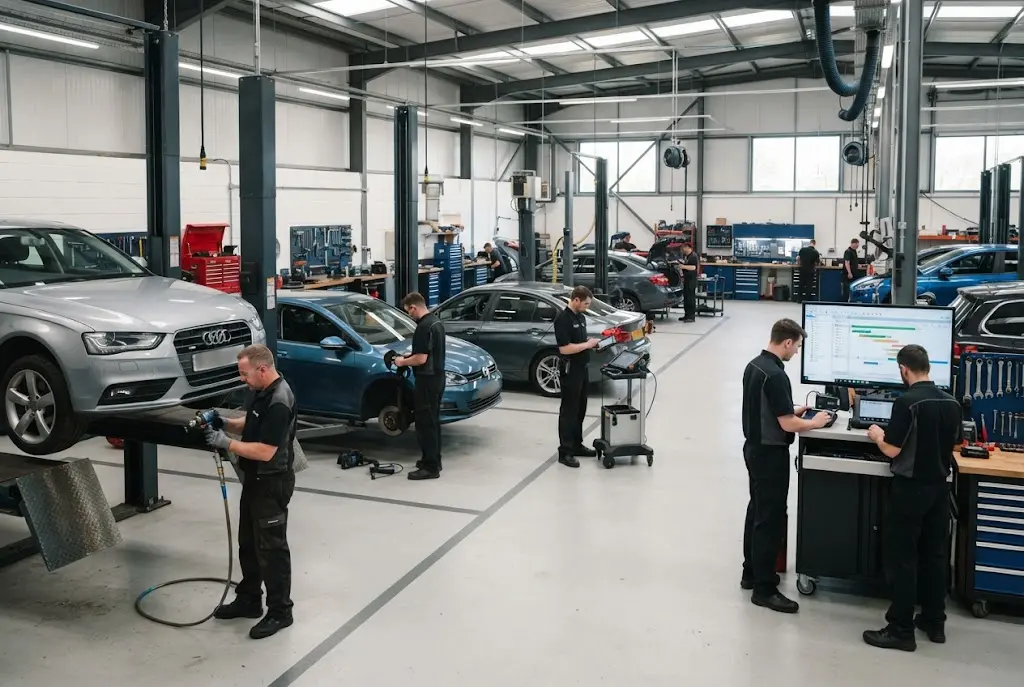
Strong garage management connects people, information and physical resources. Managers need visibility over which vehicles are in the workshop, which technician is working on each job and what remains outstanding.
Digital workshop management software can help centralise bookings, customer records, job cards, estimates, invoices and service histories. However, software alone does not create efficiency. The underlying processes must be clear first.
Staff should also understand who is responsible for each stage of a job. Clear ownership reduces the chance that important information is assumed to have been passed to someone else.
Daily or weekly operational reviews can identify recurring issues. Rather than reacting to individual problems, managers can look for patterns and improve the process responsible for them.
Manage Technician Workloads Carefully
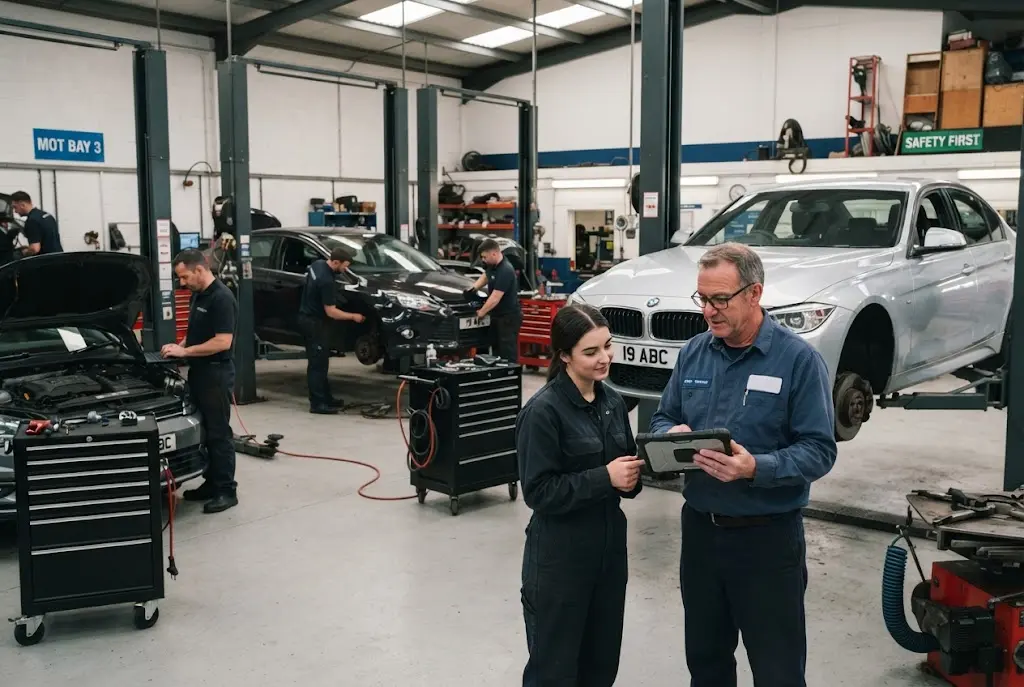
Technician allocation should take account of skill, experience and job complexity. A highly experienced diagnostic technician may be particularly valuable on difficult electrical faults, while routine maintenance can often be handled through a different workflow.
Overloading one technician with complex jobs can create a bottleneck. At the same time, assigning specialist work to someone without the appropriate skills can increase diagnosis time and the risk of mistakes.
Managers should monitor workloads throughout the day rather than waiting until the end of a shift. If one technician is consistently overloaded while another has spare capacity, work allocation may need to be adjusted.
Training can also improve flexibility by expanding the number of technicians capable of handling particular jobs.
Control Parts and Inventory
Parts management is another major factor in service centre operations. A vehicle occupying a workshop bay while waiting for a component reduces available capacity and can disrupt appointments.
Where possible, confirm parts availability before scheduling work that depends on specific components. Maintain relationships with dependable suppliers and keep records of commonly required parts.
However, excessive stock can tie up capital and create storage problems. Inventory decisions should therefore reflect actual demand rather than simply accumulating components “just in case”.
When a part is unavailable, communicate realistic completion expectations to the customer rather than promising a turnaround time the workshop cannot control.
Maintain High Standards of Quality Control
Efficiency has little value if completed vehicles return with unresolved problems. Quality control should therefore be part of the workshop process rather than something considered only when a customer complains.
Depending on the job, a final inspection can confirm that required work has been completed, components have been fitted correctly and the vehicle is ready for collection.
Job documentation should record relevant work and recommendations. If a problem occurs later, accurate records can help the workshop investigate what happened.
Tracking repeat or comeback work is particularly useful. If the same type of issue occurs repeatedly, management can investigate whether additional training, equipment or process changes are needed.
Keep Equipment Ready for Work
Workshop equipment is a significant investment, so it needs to be available and maintained when technicians need it. Lifts, diagnostic tools, compressors, wheel equipment and specialist tools can all become operational bottlenecks when they are unavailable.
Establish maintenance and inspection procedures appropriate to the equipment being used. Staff should also understand correct operating procedures and safety requirements.
When purchasing new equipment, consider expected utilisation and commercial demand. A tool that enables the garage to perform frequently requested work may provide considerably more value than equipment that is rarely needed.
Businesses should also review relevant workplace safety guidance when establishing procedures for vehicle repair and maintenance activities. The Health and Safety Executive’s motor vehicle repair guidance provides useful information for UK businesses.
Build Better Customer Communication
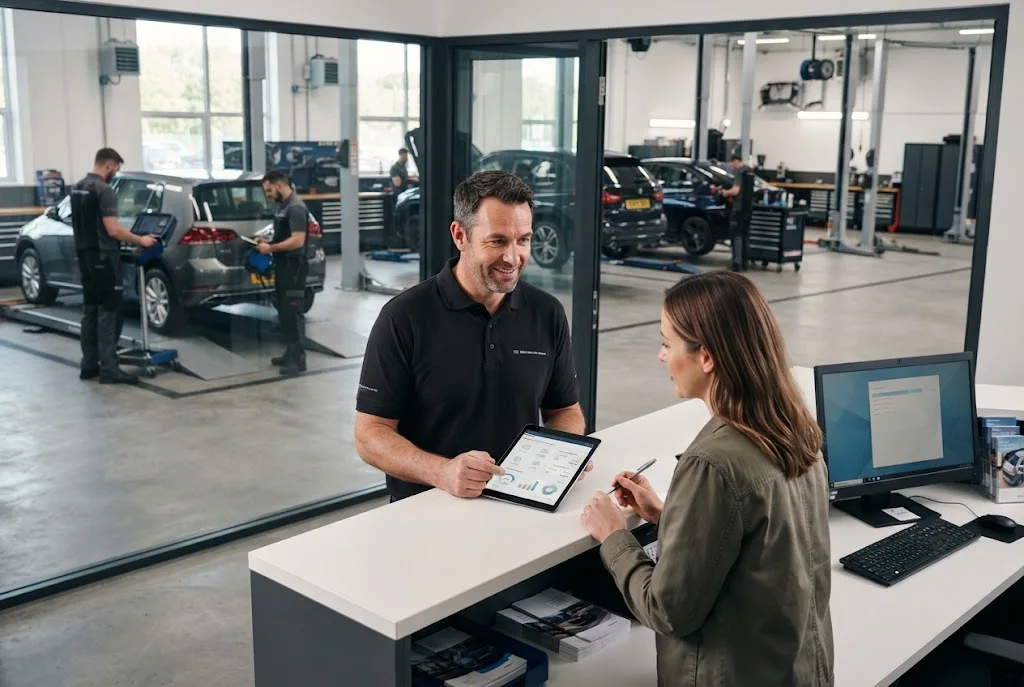
High-performing garages understand that customer communication is part of the service itself. A technically excellent repair can still produce a poor experience if the customer does not know what is happening.
At booking, establish what the customer wants the workshop to inspect or service. During the inspection, communicate significant additional findings clearly and seek the appropriate approval before carrying out extra chargeable work.
When completion is delayed, inform the customer as early as possible. A realistic update is generally more useful than an optimistic promise that later proves inaccurate.
At collection, explain the work completed and provide appropriate documentation. This creates a professional final impression and can encourage customers to return for future maintenance.
Measure Operational Excellence
Garage owners need practical performance indicators to understand whether operational changes are working. Useful measurements can include workshop utilisation, technician productivity, average job turnaround time, comeback rates, average repair value and customer retention.
Do not focus on one number in isolation. Increasing the number of completed jobs, for example, may appear positive until you discover that quality problems or overtime costs have also increased.
Instead, review several indicators together. If productivity improves while comeback rates remain stable and customer satisfaction remains strong, the operational change is more likely to have created genuine value.
Develop Strong Automotive Leadership
Leadership plays an important role in workshop performance. Managers should establish clear expectations while giving technicians the tools and support needed to meet them.
A productive culture does not come from constant pressure. It comes from clear communication, fair workload allocation, appropriate training and consistent standards.
Encourage technicians and service advisers to identify operational problems. Employees working directly with vehicles and customers often notice inefficiencies before management does.
When a useful improvement is identified, document it and incorporate it into the standard workflow where appropriate. This turns individual experience into a repeatable business process.
Use Data to Improve Garage Performance
Data can reveal problems that are difficult to see from day-to-day activity. Compare planned labour time with actual time, monitor the frequency of parts delays and review which services generate the strongest contribution to the business.
Look for trends rather than isolated events. One delayed vehicle may be unavoidable, but repeated delays associated with the same type of job indicate a process worth investigating.
Similarly, if certain appointments frequently run over their scheduled time, the business may need better job estimates, additional training or a different technician allocation process.
Prepare the Garage for Growth
Growth should be built on reliable processes. Before adding more vehicles, technicians or workshop bays, make sure the current operation can handle demand consistently.
A garage that has established strong systems can scale more effectively because new employees can be trained against defined procedures rather than relying entirely on informal knowledge.
Expansion can also involve additional service channels. Businesses with a strong workshop operation may eventually explore fleet maintenance, specialist automotive work or a mobile service model.
The mobile auto service business model can be considered when convenience, field repairs and on-demand servicing fit the target market.
Common Mistakes That Reduce Garage Efficiency
One common mistake is overbooking the workshop. Although a full diary may look positive, excessive demand can quickly produce delays and reduce service quality.
Another is failing to standardise routine processes. When every technician or service adviser handles similar jobs differently, the business can experience inconsistent outcomes.
Poor housekeeping can also affect productivity. Disorganised tools, unclear storage and cluttered workspaces increase the time required to complete everyday tasks.
Finally, managers should avoid measuring performance solely by speed. Quality, safety, customer communication and profitability all need to remain part of the definition of a high-performing workshop.
Final Thoughts on Running an Auto Service Garage
A successful auto service garage combines technical skill with disciplined management. Efficient scheduling, sensible technician allocation, dependable parts supply, equipment maintenance and quality control can significantly improve the way a workshop operates.
Customer communication should remain central throughout the process. When customers receive realistic expectations, clear explanations and professional documentation, the workshop can build trust alongside operational efficiency.
The strongest garages do not try to improve everything at once. They identify the biggest operational bottlenecks, introduce practical changes and measure the results. Over time, these improvements can create a more productive, profitable and scalable automotive service business.