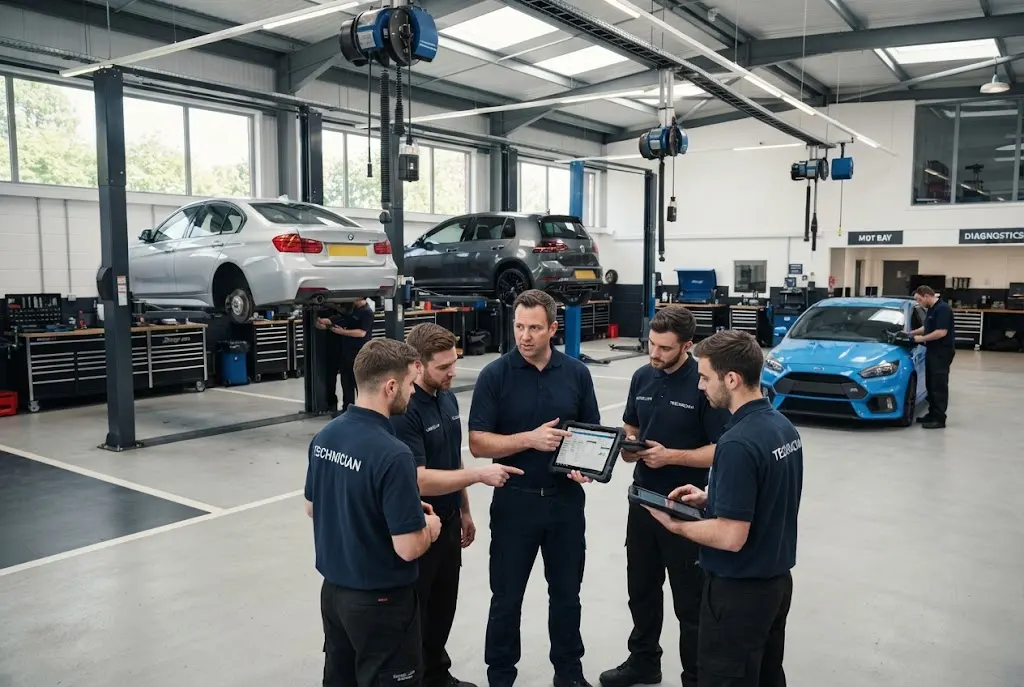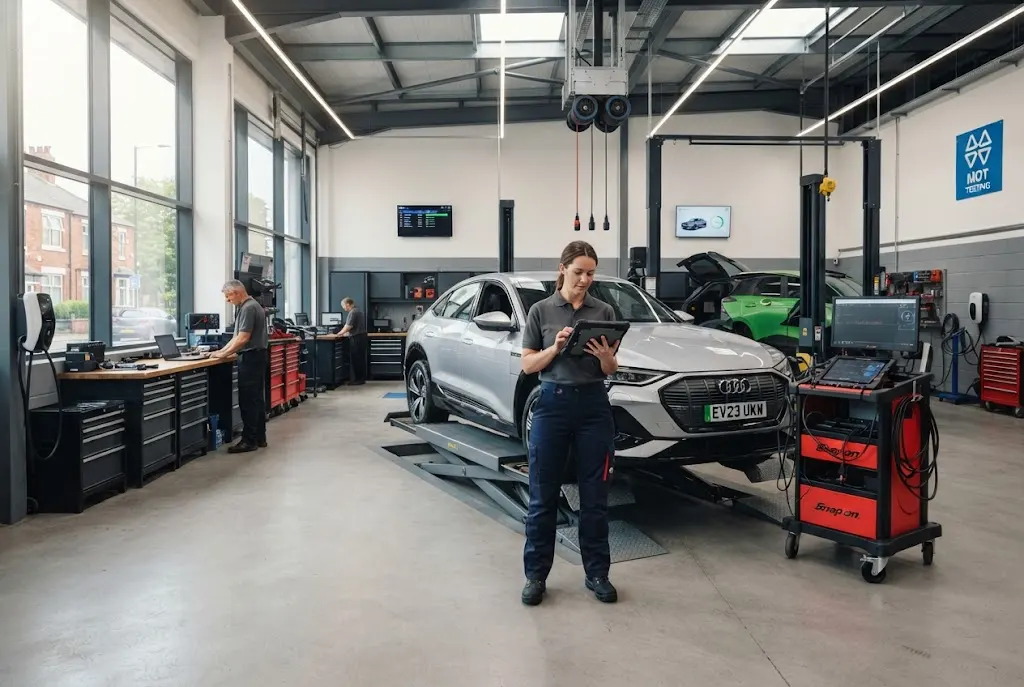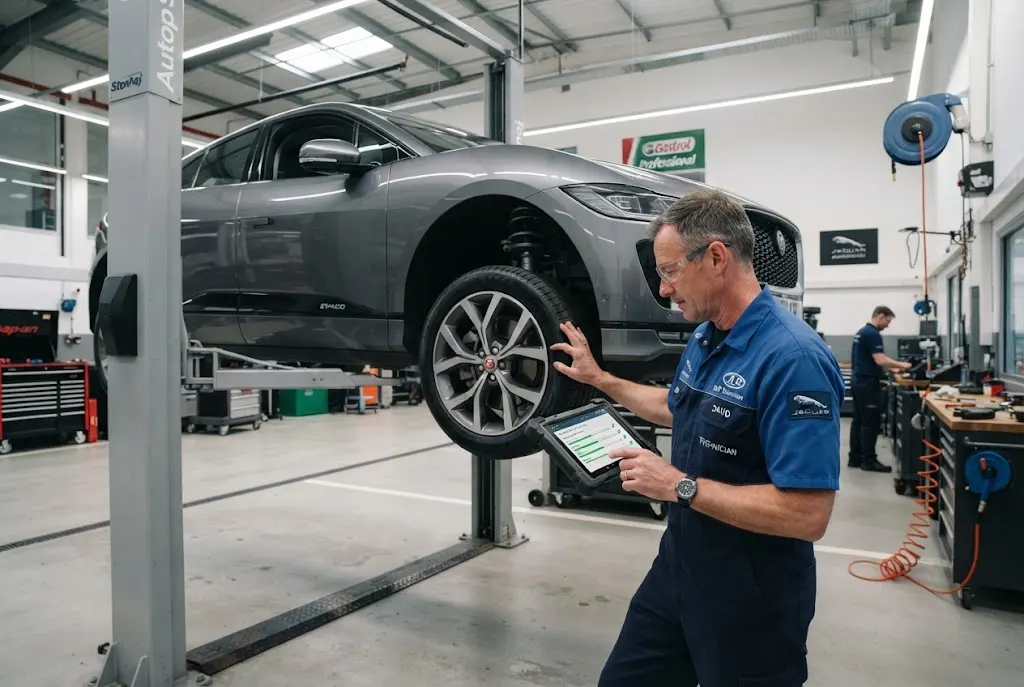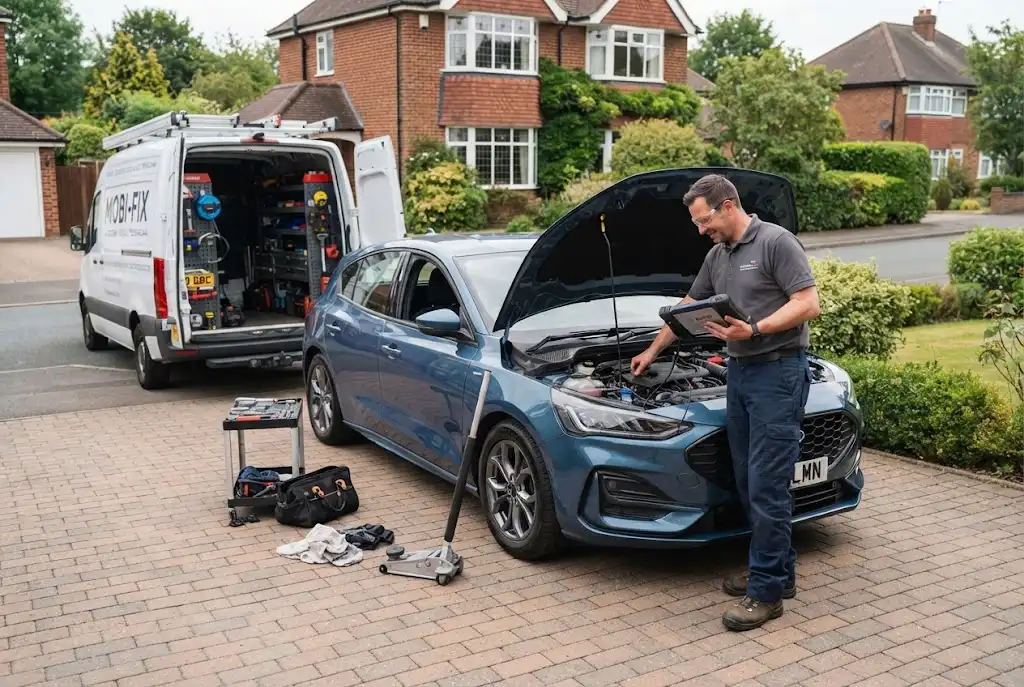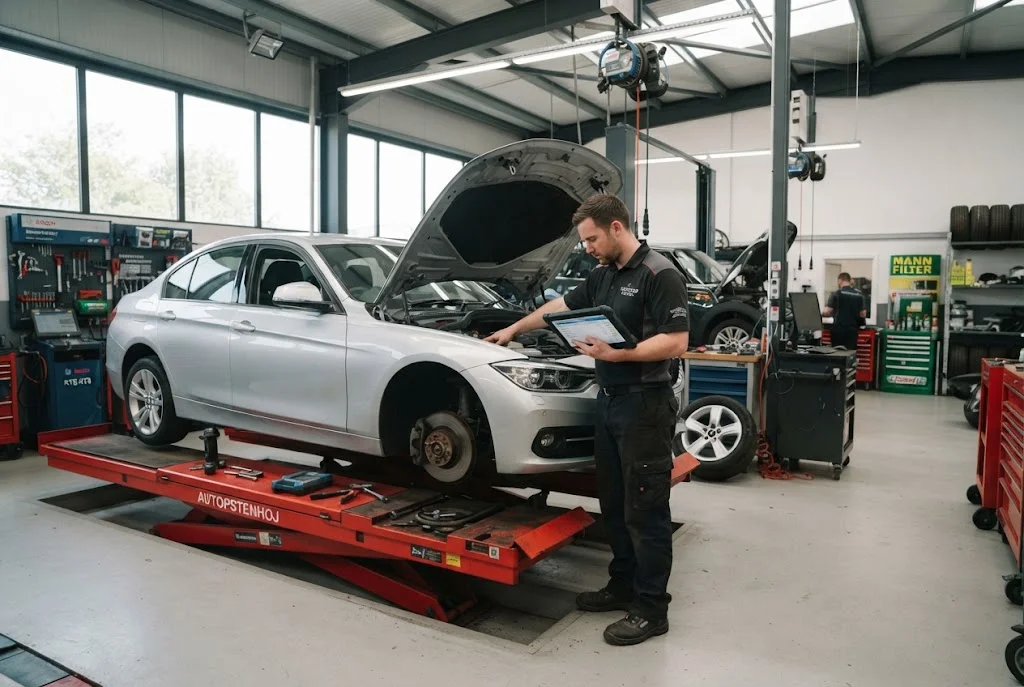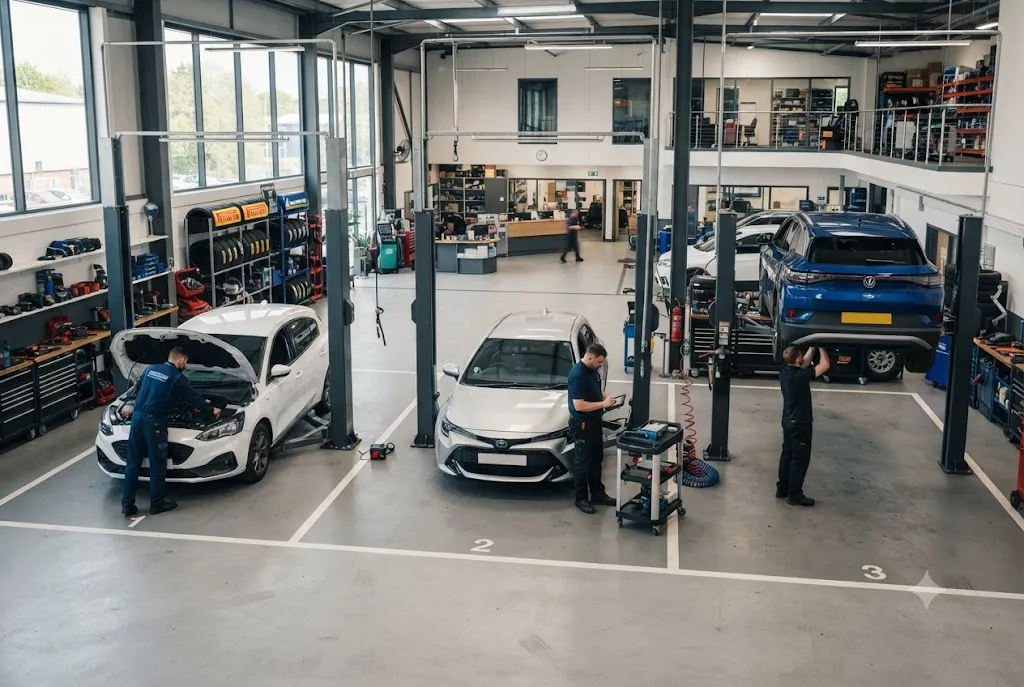
Garage chains are becoming increasingly important in the UK automotive aftermarket as motorists expect convenient locations, transparent pricing, consistent service and access to technicians who can work on increasingly sophisticated vehicles. For operators building or expanding a national network, growth is no longer simply about opening more workshops. Successful garage chains need a clear proposition, efficient operations, strong digital systems, skilled technicians and a strategy that can adapt to changing vehicle technology.
The UK aftermarket includes independent workshops, franchised repairers, fast-fit businesses, tyre centres, collision repairers and specialist garages. The Society of Motor Manufacturers and Traders (SMMT) describes the sector as a large and diverse ecosystem supporting tens of thousands of workshops across the country. Electrification, connected vehicles and advanced driver assistance systems are also changing the capabilities workshops need to develop.
Why Garage Chains Need a Different Growth Strategy
A single independent garage can often compete through local reputation, personal relationships and specialist knowledge. Garage chains have a different challenge. They must deliver a recognisable customer experience across multiple locations while keeping each site commercially efficient.
That makes scalability one of the central issues. A strategy that works for one workshop may not work when expanded across ten, fifty or hundreds of locations. Management needs common processes without making individual branches so rigid that they cannot respond to local demand.
Growth therefore needs to balance three priorities: geographic coverage, operational consistency and local relevance.
Large national operators such as Kwik Fit and ATS Euromaster illustrate how established brands can operate within the wider UK maintenance and repair market. Meanwhile, businesses such as National Tyres & Autocare, Halfords, Protyre, Fix Auto and Fast Fit Autocentres demonstrate the breadth of business models found across national and multi-site automotive services.
Build Density Before Chasing Footprint
One of the most important growth decisions for garage chains is where to open or acquire their next site. A larger geographic footprint does not automatically produce a stronger business. In many cases, increasing density around existing locations can create better economics.
When several workshops operate within a manageable geographic area, the network can share management resources, technical expertise, marketing activity and sometimes equipment. Parts distribution can also become easier to coordinate.
Instead of asking only, “Where is there an empty market?”, operators should consider:
- Where existing customers are travelling from.
- Which areas have strong vehicle ownership and workshop demand.
- Where commercial and fleet customers need coverage.
- Whether a new site can be supported by nearby management infrastructure.
- Whether the location improves the convenience of the wider network.
This approach can create a stronger local presence without spreading resources too thinly.
Use Acquisitions to Accelerate Garage Chains Growth
Organic expansion is not the only route available to garage chains. Acquiring established independent garages can provide faster access to locations, technicians, customer relationships and local market knowledge.
However, acquisition-led growth creates its own risks. Buying a workshop is relatively straightforward compared with integrating it successfully into a larger network.
Before an acquisition, operators should assess the workshop’s customer retention, technician capability, equipment condition, service mix, profitability, local reputation and management structure. The objective should not simply be to add another postcode to the network. The acquired business needs to contribute strategically to the overall operation.
A gradual integration process can often work better than immediately replacing every local process. Customers may value the existing relationships and familiarity of an established garage. Preserving those strengths while introducing better systems can make the transition smoother.
Standardise the Customer Experience
Consistency is one of the biggest advantages a national garage network can offer. Customers may be more comfortable booking with a recognised chain because they expect similar standards regardless of location.
To deliver that advantage, garage chains should standardise the parts of the customer journey that matter most. These can include booking, vehicle inspection, quotation, approval, payment, warranty handling and aftercare.
Standardisation does not mean every branch must operate identically. Instead, the goal is to establish minimum service standards while allowing local teams enough flexibility to manage individual customers.
Transparent pricing is particularly important. The Motor Ombudsman’s service and repair framework highlights principles such as honest service, transparent pricing, completing agreed work and ensuring invoices correspond with quotations. These principles can help multi-site operators build trust with motorists.
Turn Digital Booking Into a Growth Engine
For modern garage chains, the customer journey increasingly begins before the vehicle reaches the workshop. A motorist may search online, compare prices, check reviews and book an appointment without speaking to anyone on the phone.
A strong digital booking system can therefore become a commercial asset rather than simply an administrative tool.
Operators should make it easy for customers to:
- Find the nearest branch.
- Select a service or repair.
- Choose an appointment time.
- Provide vehicle registration details.
- Understand expected pricing.
- Receive confirmation and reminders.
- Approve additional work digitally where appropriate.
Search visibility also matters. Each location should have a properly optimised local presence rather than relying entirely on one national website page. Location pages, accurate business information, customer reviews and useful service content can help garage chains capture demand at the point when motorists are actively looking for assistance.
Expand Beyond Basic Servicing
Garage chains can strengthen revenue by developing a broader service mix instead of depending on routine servicing alone.
Tyres, brakes, batteries, diagnostics, air conditioning, MOT-related work, wheel alignment and manufacturer-specific maintenance can all contribute to workshop utilisation. The right mix will depend on local demand, technician capability and equipment investment.
Wheel alignment, in particular, can be developed as a specialist profit centre when workshops have appropriate equipment, trained staff and a clear customer proposition. Operators looking at this area should consider alignment pricing, equipment utilisation and the opportunity to package alignment with tyre and steering-related services.
This creates a natural opportunity for garage chains to develop higher-value services rather than competing primarily on basic labour pricing.
Prepare Garage Networks for Hybrid and EV Demand
Vehicle technology is changing the skills and equipment required by automotive workshops. SMMT reported that more than four in five surveyed aftermarket workshops had invested in training, talent and tooling for newer vehicle safety and powertrain technologies, while more than four in five surveyed workshops were equipped to service electric vehicles.
For garage chains, this shift creates both a challenge and an opportunity.
Operators that invest early in technician training, diagnostic equipment and appropriate workshop procedures can position themselves to serve a growing range of electrified vehicles. This is particularly important because hybrid and electric vehicles require different knowledge from conventional petrol and diesel vehicles.
Rather than treating electrification as a separate future project, national garage networks can build it into their long-term investment planning. Technician upskilling, battery diagnostics, safety procedures and appropriate workshop equipment should become part of a structured capability roadmap.
This is closely connected with hybrid servicing and EV servicing, two areas that can become increasingly important within a broader automotive service strategy.
Invest in Technician Recruitment and Retention
Network expansion is only sustainable when there are enough capable people to operate the workshops. Recruiting technicians can be difficult, but garage chains have an opportunity to create clearer career paths than many smaller businesses.
A structured training programme can cover diagnostics, vehicle electronics, hybrid systems, EV technology, ADAS-related equipment and other emerging capabilities. Apprenticeships and partnerships with training providers can also support the long-term technician pipeline.
Retention matters just as much as recruitment. Competitive pay is important, but so are modern workshop facilities, training opportunities, predictable career progression and good management.
As vehicle technology becomes more complex, investing in people is increasingly an operational requirement rather than an optional benefit.
Use Network Data to Improve Workshop Performance
Multi-site operators have access to an advantage that many small garages cannot easily replicate: network-wide data.
Garage chains can compare workshop performance across locations and identify patterns in booking demand, average repair value, labour utilisation, parts sales, customer retention and service mix.
The purpose should not be to create a simplistic league table. Instead, management should use the information to identify why certain workshops perform differently.
For example, one branch may have strong tyre sales but weak servicing revenue. Another may have excellent customer retention but low workshop utilisation during certain weekdays. These patterns can reveal opportunities for training, marketing, scheduling or service development.
Develop Fleet and Business Customer Relationships
Consumer bookings are important, but fleet customers can provide garage chains with recurring demand and greater predictability.
Businesses operating vans and cars need reliable maintenance, inspections, repairs and tyre support. A network with broad geographic coverage can be particularly attractive to organisations whose vehicles travel across different regions.
Garage chains should therefore develop fleet propositions that emphasise availability, reporting, predictable processes and network coverage. Digital vehicle records and centralised account management can further improve the customer experience.
This can also reduce dependence on one-off retail transactions and create longer-term commercial relationships.
Compete on Trust Rather Than Price Alone
Price remains important in automotive servicing, but competing exclusively on the cheapest quote can create pressure on margins and make long-term investment more difficult.
Garage chains can instead differentiate through convenience, transparency, technical capability and confidence. A customer may be willing to pay a fair price when they understand what work is required, why it matters and what standard of service they can expect.
That proposition becomes especially valuable as vehicles become more technologically advanced. Customers increasingly need workshops that can explain diagnostic findings and maintenance requirements clearly.
Build a Flexible Model for National Garage Networks
The strongest national garage networks are unlikely to rely on a single growth mechanism. A combination of organic openings, carefully selected acquisitions, partnerships and specialist service development can create a more resilient model.
Management should also recognise that different locations may need different strategies. A city-centre workshop may benefit from convenience and rapid servicing, while a suburban site could generate more demand from families, commuters and local fleets. A specialist location may instead compete through technical expertise.
The brand can remain consistent while the service mix adapts to local conditions.
The Future of Garage Chains in the UK
The UK automotive aftermarket remains highly diverse, with independent workshops, manufacturer-approved repairers, fast-fit operators, tyre businesses and larger networks competing for customer attention. SMMT’s recent aftermarket research also highlights electrification, vehicle connectivity and advanced driver assistance systems as forces reshaping the sector.
For garage chains, this means the next stage of growth will depend on more than opening additional branches. Successful operators will need to combine network density with digital convenience, technical capability, skilled people and disciplined operations.
The opportunity is particularly strong for businesses that can make complexity easier for motorists. Customers want reliable repairs, understandable pricing, convenient booking and confidence that their chosen workshop can work on the vehicle they drive.
Garage chains that consistently deliver those fundamentals while investing in hybrid, EV and diagnostic capabilities can build a stronger competitive position for the years ahead.
For operators looking at the wider competitive landscape, the next strategic question is how automotive service companies can differentiate themselves while maintaining operational excellence across an increasingly competitive market.