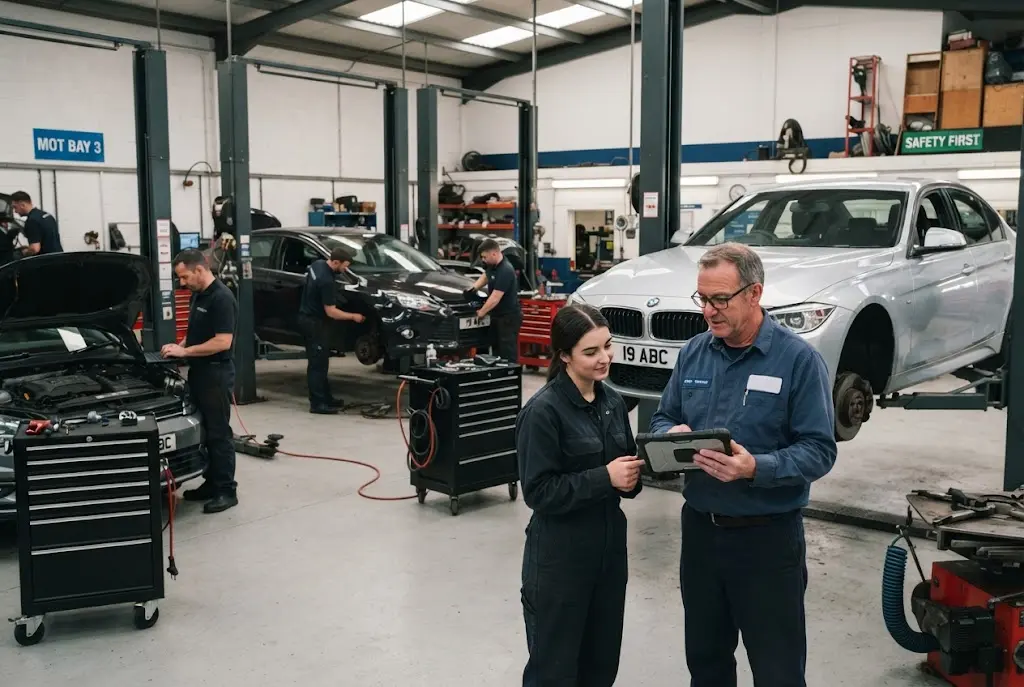
Reliable auto repair services depend on more than skilled technicians and well-equipped workshops. Behind every successful repair operation is a team that understands its responsibilities, follows consistent workflows and has the support needed to complete work safely and efficiently. For UK automotive businesses, effective team management can improve technician productivity, repair quality, customer experience and the long-term performance of the workshop.
As garages grow, managing people becomes increasingly complex. A small workshop may operate effectively through informal communication between an owner and a few technicians. Larger teams need clearer responsibilities, structured processes, appropriate training and stronger operational leadership. The aim is not simply to make employees work faster. It is to create an environment where skilled people can perform consistently while maintaining professional service standards.
Why Auto Repair Services Depend on Strong Teams
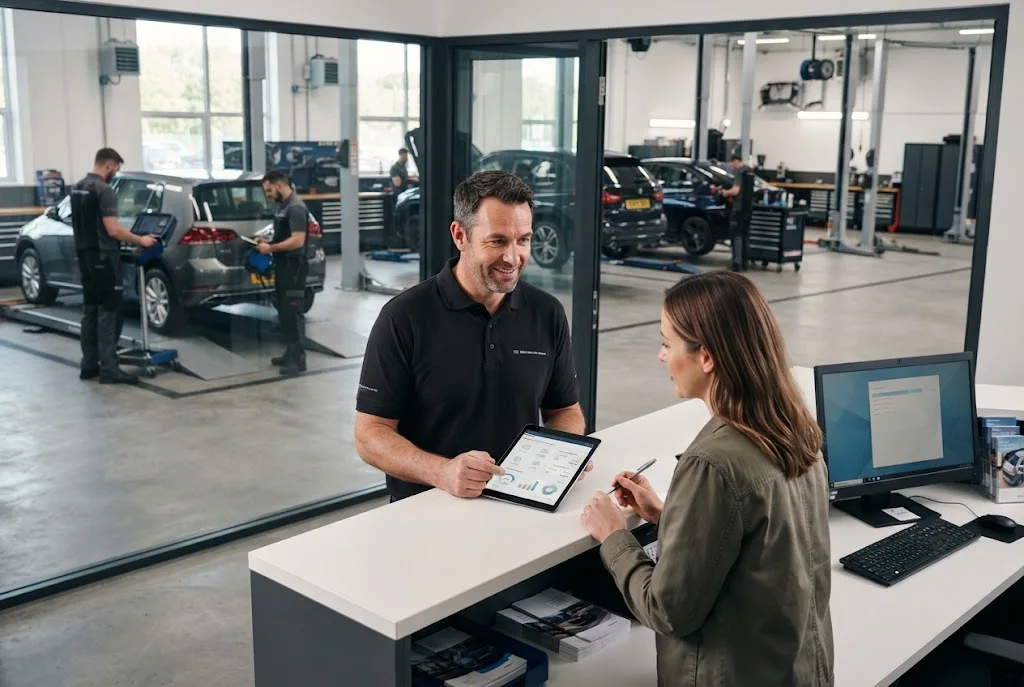
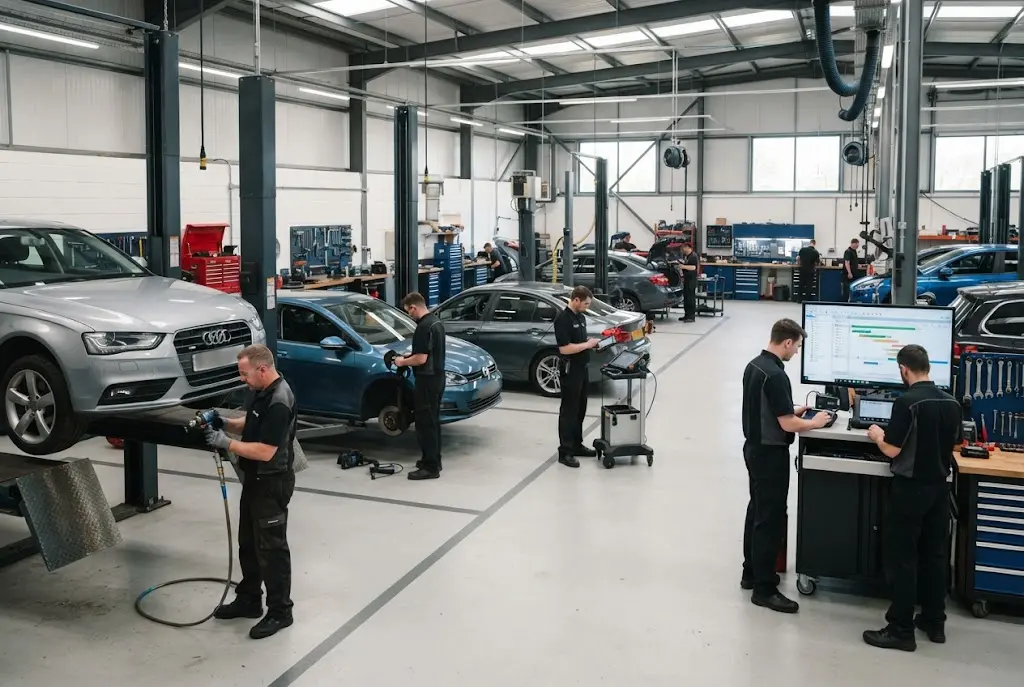
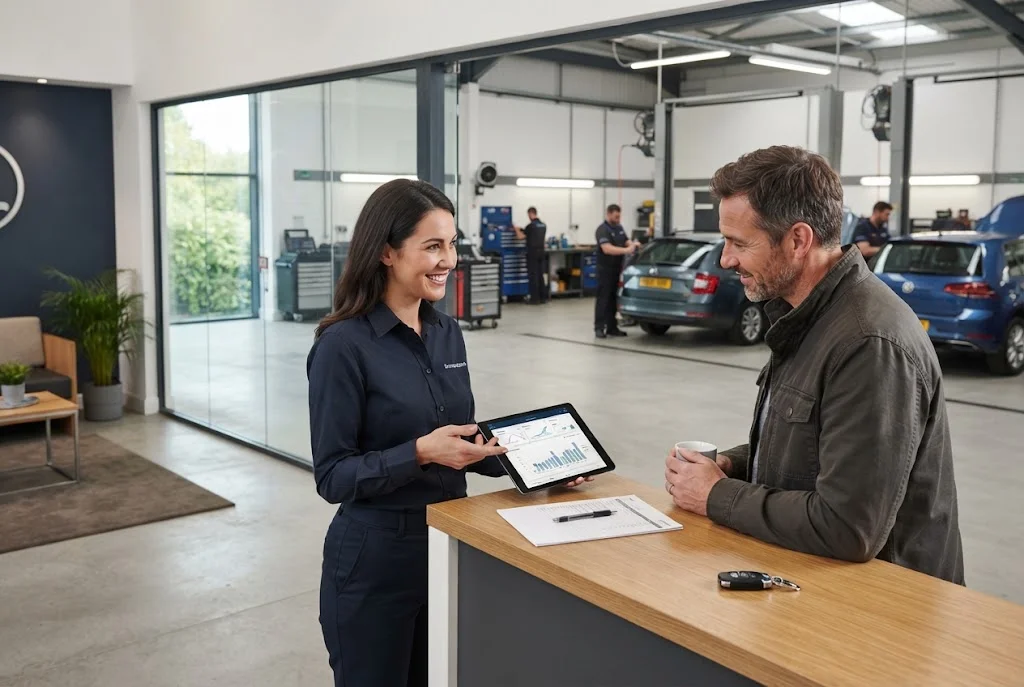
Automotive repair is a practical, knowledge-intensive business. Technicians need the right skills, equipment and information to diagnose and repair vehicles correctly. Service advisers need to communicate findings accurately. Managers need to coordinate workloads, staffing and customer expectations.
When these roles work together, the workshop can move vehicles through the repair process efficiently. When communication breaks down, even a highly skilled technician can become less productive because the vehicle is waiting for approval, parts or information.
This means team management should be viewed as part of the complete operating system of the business rather than as a separate human resources function.
The previous article on vehicle maintenance service operations examined how workflows, scheduling and workshop utilisation influence profitability. Those processes ultimately depend on the people responsible for delivering them.
Define Clear Roles Across the Workshop
One of the simplest ways to improve team performance is to make responsibilities clear.
A workshop may include technicians, diagnostic specialists, service advisers, reception staff, parts coordinators, workshop controllers and managers. In smaller garages, one person may perform several of these functions.
Regardless of business size, employees should understand who is responsible for key decisions.
- Who allocates jobs to technicians?
- Who manages workshop scheduling?
- Who communicates repair findings to customers?
- Who orders required parts?
- Who authorises additional work?
- Who performs or approves final quality checks?
- Who handles customer complaints?
- Who monitors workshop performance?
Clear ownership reduces confusion and prevents important tasks from being assumed to belong to somebody else.
It also makes performance conversations more constructive. Managers can discuss a specific responsibility rather than making broad statements about whether someone is performing well.
Recruit Technicians Around Skills and Workshop Demand
Workshop staffing should reflect the type of vehicles and repairs the business actually handles. Hiring purely on headcount can create problems if the team’s capabilities do not match customer demand.
For example, a business increasingly working on newer vehicles may need technicians with appropriate diagnostic and electrical skills. A workshop specialising in particular vehicle types may require experience that differs from a general repair garage.
Management should therefore consider:
- Current technician skills
- Expected customer demand
- Vehicle technology entering the workshop
- Specialist diagnostic requirements
- Training capacity
- Workshop opening hours
- Expected future expansion
This approach creates a more useful staffing plan because it connects recruitment with operational requirements.
Improve Technician Productivity Without Rushing Repairs
Technician productivity is important, but it should never be reduced to the idea of completing as many jobs as possible in the shortest time.
High productivity means using skilled labour effectively while maintaining repair quality and appropriate safety procedures. A technician who completes a repair quickly but has to redo the work later is not creating genuine productivity.
Managers should therefore look at the causes of lost technician time.
Common sources can include:
- Waiting for parts
- Waiting for customer authorisation
- Unclear job instructions
- Missing diagnostic information
- Shared equipment bottlenecks
- Poor workshop scheduling
- Excessive administrative tasks
- Vehicles arriving without sufficient preparation
Addressing these barriers can improve productivity without placing unnecessary pressure on technicians.
Build Consistent Repair Workflows
Experienced technicians naturally develop their own methods, but a professional workshop still benefits from consistent repair workflows.
A structured process might begin with a clear job description, followed by inspection or diagnosis, repair authorisation, parts confirmation, repair work, appropriate testing and final quality control.
The precise workflow will depend on the type of repair. A simple maintenance task does not require the same process as a complex diagnostic investigation. However, the workshop should establish clear minimum standards for information, documentation and quality checks.
Consistent workflows also make it easier to train new employees. Instead of learning entirely through observation, new technicians can understand the workshop’s expected operating process from the beginning.
Use Team Briefings to Improve Communication
Good communication does not necessarily require lengthy meetings. Short, focused team briefings can help workshop staff understand the day’s priorities.
A daily briefing might cover:
- Scheduled workload
- Complex or urgent jobs
- Parts availability
- Customer collection commitments
- Equipment requirements
- Staffing changes
- Outstanding quality issues
This can prevent technicians from discovering important information only after starting a job.
For larger workshops, a digital job management system can provide additional visibility. However, technology should support communication rather than replace sensible human coordination.
Make Repair Quality a Shared Responsibility
Repair quality should not rest entirely on the individual technician who performed the work. A strong workshop creates systems that support quality throughout the repair process.
That can include clear job information, appropriate diagnostic procedures, correct parts identification, technician checks and final inspections where necessary.
Quality data should also be reviewed. If a particular type of repair repeatedly results in customer returns, management should investigate the reason rather than simply treating each incident as an isolated mistake.
The cause could be insufficient training, incorrect parts, inadequate diagnostic information, an unclear workflow or another operational problem.
This approach turns quality management into process improvement rather than blame.
Develop a Practical Training Programme
Vehicle technology continues to evolve, so technician development cannot stop when an employee completes their initial qualification.
Training should reflect the vehicles and services the workshop expects to handle. Depending on the business, this may involve diagnostics, electrical systems, hybrid and electric vehicle technology, advanced driver assistance systems, manufacturer-specific systems or new workshop equipment.
SMMT has highlighted the importance of investment in training, tooling and talent as the UK aftermarket adapts to newer vehicle technologies. Its 2025 reporting noted significant workshop investment in skills and equipment for electric vehicles and advanced safety technologies. ([smmt.co.uk](https://www.smmt.co.uk/workshops-invest-in-tech-and-talent-to-keep-britains-safer-greener-cars-on-the-move/?utm_source=chatgpt.com))
For workshop managers, this reinforces an important principle: training should be connected to the actual work entering the business.
A training plan can identify current skills, future requirements and areas where additional support is needed.
Use Performance Reviews to Support Employee Development
Employee performance should be measured using more than the number of jobs completed.
A balanced review can consider:
- Repair quality
- Technician productivity
- Attendance and reliability
- Compliance with workshop procedures
- Diagnostic capability
- Team communication
- Customer-related feedback
- Training progress
- Contribution to process improvement
Performance discussions should also identify what employees need to improve. If a technician struggles with a particular type of diagnostic work, targeted training or mentoring may be more productive than simply assigning fewer jobs.
This creates a development culture rather than an environment where performance management is used only when something goes wrong.
Balance Workloads Across Technicians
Uneven workloads can affect both productivity and morale. If the same technicians consistently receive the most difficult jobs, they may become overloaded while other employees do not develop their capabilities.
Workshop managers should therefore consider job complexity as well as job quantity.
Where appropriate, less experienced technicians can work alongside more experienced staff on suitable repairs. This allows the business to maintain quality while gradually developing internal capability.
Job allocation should still respect competence. Delegating work simply to spread the workload can create safety and quality risks if an employee does not have the necessary skills.
Give Technicians the Right Tools and Information
Technician productivity is closely connected to the resources available to the team. Modern vehicles can require sophisticated diagnostic equipment, technical information and specialist tooling.
Management should regularly assess whether the workshop’s equipment matches the services it offers.
This does not mean purchasing every new piece of technology. Investment should be linked to customer demand and the types of repairs the business wants to perform.
When a workshop accepts jobs that require equipment it does not have, technicians may spend excessive time searching for alternative solutions or referring work elsewhere.
Good management therefore involves understanding the relationship between equipment investment, technician capability and the workshop’s commercial strategy.
Create Clear Service Standards
Service standards help ensure that customers receive a consistent experience even when different technicians or advisers handle their vehicles.
Standards can cover areas such as:
- Vehicle inspection procedures
- Repair documentation
- Customer communication
- Additional-work authorisation
- Final vehicle checks
- Workshop cleanliness
- Vehicle handover
- Complaint handling
These standards should be practical enough for employees to follow during a busy working day. A procedure that is too complicated is unlikely to be followed consistently.
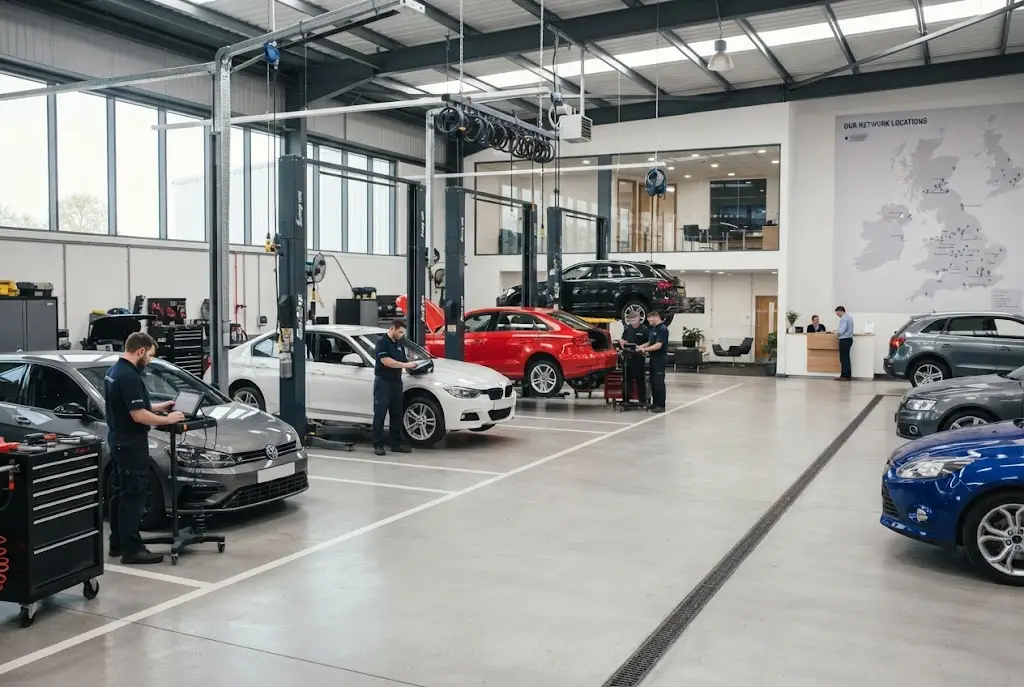
Service standards are particularly valuable for businesses with several locations. They create a common foundation while allowing individual branches to maintain their own local operating rhythm.
Build Strong Operational Leadership
Workshop leadership is more than checking whether jobs have been completed. Effective managers create clarity, remove operational obstacles and help employees maintain professional standards.
A strong workshop leader should understand the technical environment well enough to appreciate operational challenges while also recognising that management involves people, customers and commercial decisions.
Leadership can include:
- Setting daily priorities
- Monitoring workload
- Supporting technicians
- Resolving workflow problems
- Maintaining quality standards
- Reviewing performance data
- Supporting employee development
- Communicating business objectives
The manager should also avoid becoming the only person who can solve problems. If every decision requires the owner or workshop manager, the business may struggle to scale.
Use Technology to Support Team Management
Workshop management software can provide visibility into bookings, job status, customer information, technician allocation and vehicle progress.
Used properly, this information can help managers identify delays and make better decisions.
For example, if several vehicles are waiting for approval, management can see the problem and improve the communication process. If one technician has significantly more allocated work than others, the schedule can be reviewed before the imbalance affects completion times.
Technology should therefore be used as an operational support tool rather than as a replacement for leadership.
Reduce Rework and Comebacks
Repeat repairs can consume a significant amount of workshop capacity. They can also undermine customer confidence.
Managers should track the reasons vehicles return after repair. Patterns are particularly useful because they can reveal systemic problems.
If repeat issues are concentrated around a particular repair type, management can investigate whether the workshop needs better diagnostic procedures, additional training, different parts or stronger quality checks.
Reducing rework improves technician availability and can create more capacity for genuine customer work.
Connect Team Management With Customer Retention
Customers may never see the internal structure of the workshop, but they experience the results of team management.
A technician who receives accurate job information is more likely to diagnose efficiently. A service adviser who receives clear technical findings can communicate better with the customer. A manager who monitors quality can identify problems before they become complaints.
This is why team management ultimately connects with customer loyalty. The earlier article on building customer loyalty through car servicing explored how reliable communication and consistent service experiences encourage customers to return.
Good people management helps create the operational consistency behind that experience.
Measure Team Performance Without Creating the Wrong Incentives
Performance metrics can be useful, but poorly designed targets can encourage undesirable behaviour.
If technicians are measured only by the number of jobs completed, there may be pressure to prioritise speed over quality. If managers focus only on revenue, they may overlook training, customer satisfaction or repeat repair rates.
A balanced scorecard is therefore more useful.
Management can combine productivity measures with quality, customer and development indicators. This creates a broader picture of performance and reduces the risk of one metric dominating decision-making.
Prepare Repair Teams for Business Growth
As an automotive business expands, its team structure needs to evolve with it. An owner who personally manages every repair, customer complaint and staffing decision may be able to handle one location but struggle with a growing workshop network.
Delegation, documented processes and management development become increasingly important as the organisation grows.
This connects directly with the first topic in this cluster, scaling multi-location automotive businesses. Expansion works best when the people and processes supporting the original operation can be reproduced at additional locations.
Make Team Management an Ongoing Process
Managing an automotive repair team is not a one-time exercise. Skills change, employees develop, vehicle technology evolves and customer expectations move forward.
Successful workshops therefore review their staffing, training, workflows and performance regularly. Small improvements can accumulate over time and create a significantly stronger operation.
The most effective managers understand that technician productivity and repair quality are not competing goals. With clear processes, appropriate workloads, good communication and the right resources, a team can become both more productive and more reliable.
For UK automotive businesses, this approach provides a stronger foundation for sustainable growth. It supports customer trust, protects service standards and makes it easier to manage increasing demand without losing control of the workshop.
Ultimately, high-quality auto repair services are delivered by capable people working within a well-designed system. When businesses invest in clear roles, practical training, strong leadership and consistent repair workflows, they create an environment where technicians can perform at their best and customers receive dependable service.
The commercial side of that operation matters too. Once staffing, workflow and repair quality are under control, businesses need to make sure their pricing reflects their costs and value without damaging demand. That is the focus of the next article on winning on price without losing profit.
For businesses that also operate MOT testing facilities, management systems should remain aligned with current regulatory requirements. The official GOV.UK MOT testing station requirements provide relevant guidance for authorised testing stations.