A mobile auto service business brings vehicle maintenance and repair directly to the customer instead of requiring every vehicle to visit a traditional workshop. For entrepreneurs in the automotive sector, this model can create new opportunities around convenience, on-demand servicing and field-based repairs. However, running a successful mobile operation requires careful planning, suitable equipment, skilled technicians and efficient scheduling.
Unlike a conventional garage, a mobile mechanic spends a significant part of the working day travelling between customers. That changes how jobs are priced, scheduled and managed. Travel time, vehicle capacity, equipment requirements and the type of work that can safely be performed away from a workshop all need to be considered before launching the business.
When designed properly, mobile servicing can complement traditional auto services rather than simply compete with established garages. It can also become an additional service channel for an existing automotive business looking to expand its reach.
What Is a Mobile Auto Service Business?
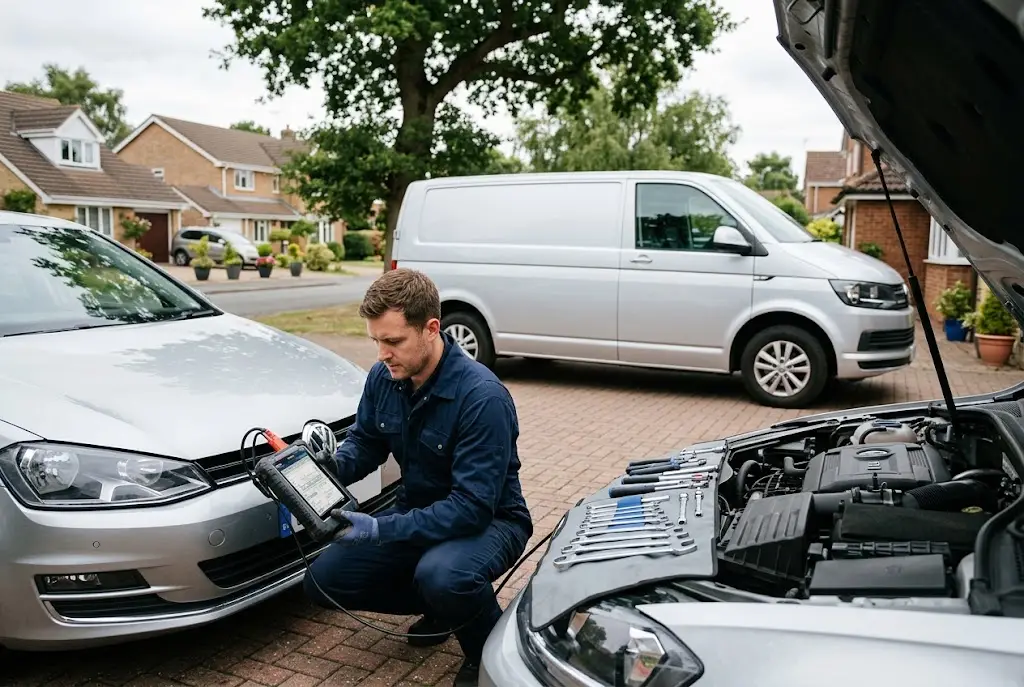
A mobile auto service business provides selected automotive maintenance, diagnostics or repair services at a customer’s chosen location. Depending on the business model, technicians may work at homes, workplaces, car parks, business premises or roadside locations.
The range of services depends on the equipment carried by the technician and the type of work the business is qualified and equipped to perform. Routine maintenance and certain diagnostic or repair jobs may be suitable for field work, while complex repairs may still require a fully equipped workshop.
This distinction is important. A successful mobile operation should not promise every type of repair simply because customers request it. Instead, it should establish a clearly defined service area and job scope.
Why Mobile Auto Service Can Be an Attractive Business Model
Convenience is the main attraction of mobile servicing. Customers may prefer having a technician visit their home or workplace rather than taking time out of their day to drive to a garage and wait for the vehicle to be completed.
Businesses can also benefit from reaching customers who have difficulty moving a vehicle. A field technician may be able to diagnose or resolve certain problems without requiring an immediate trip to a workshop.
For an established automotive business, mobile operations can provide another route to market. Instead of relying entirely on workshop bays, the business can potentially serve customers in locations where a traditional garage is less convenient.
However, convenience should be supported by reliable scheduling and realistic service promises. A technician who spends too much time travelling between jobs may complete fewer profitable appointments during the day.
Choose the Right Services for a Mobile Mechanic
The first commercial decision is determining which services can be delivered effectively in the field. Not every workshop procedure translates well to a mobile environment.
Potential mobile services may include:
- Routine vehicle maintenance
- Vehicle inspections and basic checks
- Battery testing and replacement
- Selected diagnostic services
- Minor mechanical repairs
- Electrical fault diagnosis
- Selected brake-related work
- Fleet maintenance visits
- Pre-purchase vehicle inspections
- Selected roadside repair services
The exact service list should reflect technician capability, equipment, insurance requirements, working conditions and the type of vehicles commonly found in the target market.
Businesses should also establish clear limits. If a repair requires equipment that cannot reasonably be carried in a service vehicle, the customer should be offered an appropriate workshop solution rather than an unrealistic field-service promise.
Build a Practical Mobile Workshop
A mobile technician effectively operates from a vehicle, so equipment selection is critical. The service vehicle needs enough capacity for essential tools, diagnostic equipment, parts and safety equipment without becoming inefficient or difficult to operate.
Organisation matters just as much as equipment. Frequently used tools should be easy to access, while replacement parts and consumables should have defined storage locations.
Before purchasing expensive equipment, consider how often it will actually be used. A tool that allows the business to complete a frequently requested and profitable service may justify its cost. Equipment that rarely leaves the vehicle may represent unnecessary capital expenditure.
The vehicle itself should also be maintained professionally. A mobile service business depends on reliable transport because a vehicle breakdown can disrupt multiple customer appointments in a single day.
Plan Mobile Mechanic Routes Carefully
Travel is one of the biggest operational differences between mobile and workshop-based servicing. Every appointment needs to account for the distance between jobs as well as the expected repair time.
Grouping appointments geographically can reduce unnecessary travel. For example, scheduling several customers within the same general area on one day may be more efficient than moving repeatedly between distant locations.
Route planning should also include realistic allowances for traffic, parking and unexpected delays. A schedule that looks efficient on paper can quickly fail when every appointment is separated by a long journey.
Digital mapping and scheduling tools can help, but the business should still build practical experience of its service area. Local traffic patterns and customer accessibility can have a significant effect on actual appointment times.
Price Mobile Services Correctly
Mobile businesses need a pricing model that accounts for more than technician labour. Travel time, fuel, vehicle costs, equipment, insurance, administration and scheduling limitations all affect the economics of field work.
Some businesses may use fixed prices for clearly defined services, while others may combine labour charges with a call-out or travel component. The right model depends on the service area and type of customer.
Whatever approach is used, pricing should be explained before the appointment wherever practical. Customers should understand what the quoted price includes and when additional costs could arise.
For a broader understanding of automotive pricing, the related guide to car service cost and workshop pricing can help businesses consider labour, parts and profitability.
Manage On-Demand Servicing Without Overbooking
On-demand servicing can create strong customer demand, but accepting every available request can damage the operation. Mobile technicians have fewer practical hours than a workshop with multiple service bays, and travel consumes part of the working day.
Create booking categories based on job complexity. Short maintenance visits may fit into tightly scheduled appointments, while diagnostic or uncertain jobs need additional flexibility.
When customers describe a problem, collect as much relevant information as possible before confirming the appointment. Vehicle make, model, symptoms and location can help the technician prepare the appropriate equipment.
Good pre-appointment information can reduce wasted journeys and improve first-visit completion rates.
Build Strong Field Technician Processes
Field technicians need a consistent process for starting, performing and closing each job. Before beginning work, confirm the vehicle details, customer requirements and agreed scope.
Document relevant findings during the inspection. If additional work is discovered, explain the issue clearly and obtain the appropriate approval before performing chargeable work beyond the original agreement.
After completion, record what was done and identify any maintenance concerns that may need future attention. Digital records can make this process easier and provide useful information when the customer books another appointment.
Technicians should also maintain professional standards when working on customer premises. Keeping the work area organised and leaving the location appropriately after completing the job can contribute to the overall customer experience.
Develop Mobile Repair and Roadside Services Carefully
Roadside services can be a natural extension of mobile automotive operations, particularly when technicians are equipped to handle suitable emergency or minor repair work.
However, roadside work introduces additional considerations. Technicians may work near moving traffic, in poor weather or in locations with limited space. The business therefore needs appropriate safety procedures and must only undertake work that can be performed safely in the circumstances.
The Health and Safety Executive provides UK guidance covering risks associated with motor vehicle repair and maintenance activities. Businesses should use relevant official guidance when developing their working procedures.
Not every roadside problem should be treated as a mobile repair opportunity. Where the vehicle or location creates an unacceptable risk, recovery to a suitable facility may be the appropriate solution.
Target Fleets and Business Customers
Fleet maintenance can be particularly relevant to a mobile service model. Businesses operating several vehicles may value maintenance performed at their premises because it can reduce vehicle downtime and simplify scheduling.
A mobile technician could potentially service multiple vehicles during a planned visit, depending on the work required and the facilities available at the customer’s location.
Fleet customers also tend to value accurate records. Documenting vehicle maintenance, completed work and recommendations can help businesses manage their vehicles more effectively.
Before targeting fleets, establish whether the mobile operation has enough capacity to provide consistent service. A commercial customer may expect reliable appointment windows and clear communication, so operational discipline becomes particularly important.
Use Technology to Manage Field Operations
Technology can make mobile operations considerably easier to coordinate. Scheduling software can organise appointments, while digital customer records can retain vehicle history and previous work.
Mobile invoicing can also reduce administration after a job is completed. Customers can receive clear documentation without requiring the technician to return to a physical office.
Route planning tools can help reduce travel time, while communication systems can provide customers with realistic arrival updates.
The objective should be to create a connected field operation in which booking information, technician availability, location and job history are visible to the people responsible for managing the business.
Control Mobile Auto Service Costs
Cost control becomes particularly important when technicians travel between customers. Fuel, vehicle maintenance, tyres, insurance and equipment all contribute to the cost of each appointment.
Track the distance travelled and time spent on different types of jobs. Over several months, this information can reveal which service areas and appointment types generate the strongest returns.
If technicians regularly travel long distances for relatively small jobs, the business may need to reconsider its service radius or introduce appropriate pricing for distant appointments.
Efficient geographic scheduling can also improve profitability without increasing customer prices. More time spent completing useful work and less time spent travelling can make a significant difference to the daily economics of a mobile operation.
Build Customer Trust in a Mobile Business
Trust is particularly important when a technician arrives at a customer’s home or workplace. Professional identification, clear communication and organised working practices can help establish confidence from the beginning.
Explain the diagnosis and recommended work in straightforward language. Customers should understand what has been identified, what action is recommended and what the agreed price covers.
Reviews and recommendations can also become valuable sources of new business. A mobile service is highly dependent on customer perception because convenience alone does not guarantee repeat bookings.
Reliable arrival times, professional workmanship and clear documentation can turn a one-off mobile repair into a longer-term customer relationship.
Know When a Vehicle Needs a Workshop
A successful mobile mechanic business should know its limitations. Some repairs require specialist lifting equipment, extensive workshop space or procedures that are impractical at the customer’s location.
When a vehicle needs more comprehensive work, having a relationship with a suitable workshop can help the business provide a solution without attempting an unsuitable field repair.
This can also create an opportunity for a hybrid model. An automotive business may use mobile technicians for convenient maintenance and initial diagnosis while using a workshop for complex repairs.
For businesses developing a larger physical operation, the related guide to running a high-performance garage provides useful context on workshop efficiency and service centre operations.
Expand the Business Gradually
Once a mobile operation has consistent demand, expansion can take several forms. The business could add another technician, increase the service area, introduce fleet maintenance or develop additional specialist services.
However, expansion should be based on actual demand and operational capacity. Adding another service vehicle before the first one is consistently productive can increase costs without creating sufficient additional revenue.
Monitor booking volume, travel time, average job value, repeat customers and technician utilisation before making major expansion decisions.
Documenting processes is also important. A business that relies entirely on the owner’s personal knowledge can find it difficult to train additional field technicians. Standardised booking, inspection, documentation and customer-service procedures make growth easier to manage.
Common Mobile Auto Service Mistakes
One common mistake is offering too many services from the beginning. A large service menu may look attractive, but it can create equipment, training and scheduling problems.
Another mistake is underestimating travel time. A technician may appear fully booked but still generate weak revenue if too much of the working day is spent driving.
Poor parts planning can create similar problems. If a technician arrives without the required component, a second visit may be necessary, increasing costs and frustrating the customer.
Businesses should also avoid promising repairs that cannot be performed safely in the customer’s location. Professional judgement and appropriate safety procedures must remain more important than completing every possible job.
Final Thoughts on Building a Mobile Auto Service Business
A mobile auto service business can provide a practical way to deliver automotive maintenance and selected repairs with greater convenience. Its success depends on choosing the right services, controlling travel time, equipping technicians properly and creating efficient field-service processes.
Start with a focused service offering and a manageable geographic area. Build reliable scheduling and documentation systems before expanding the operation. As demand becomes consistent, consider fleet customers, additional technicians and carefully selected new services.
The strongest mobile businesses understand that convenience is only part of the proposition. Customers also expect professional workmanship, clear pricing, reliable communication and safe working practices. When those elements are combined, mobile servicing can become a sustainable and scalable part of a wider automotive service business.