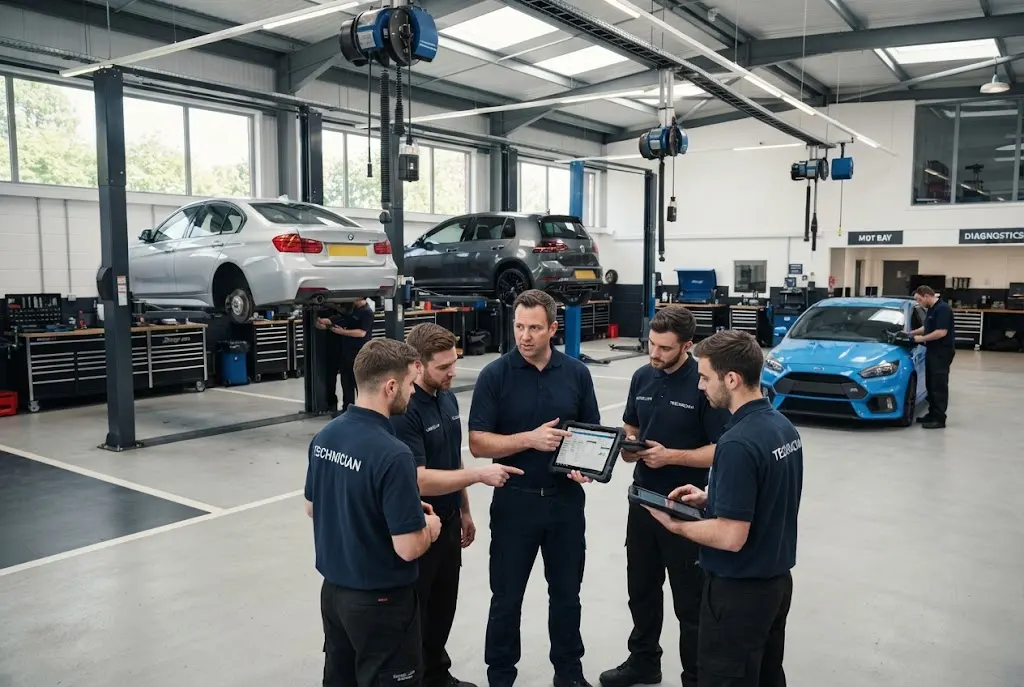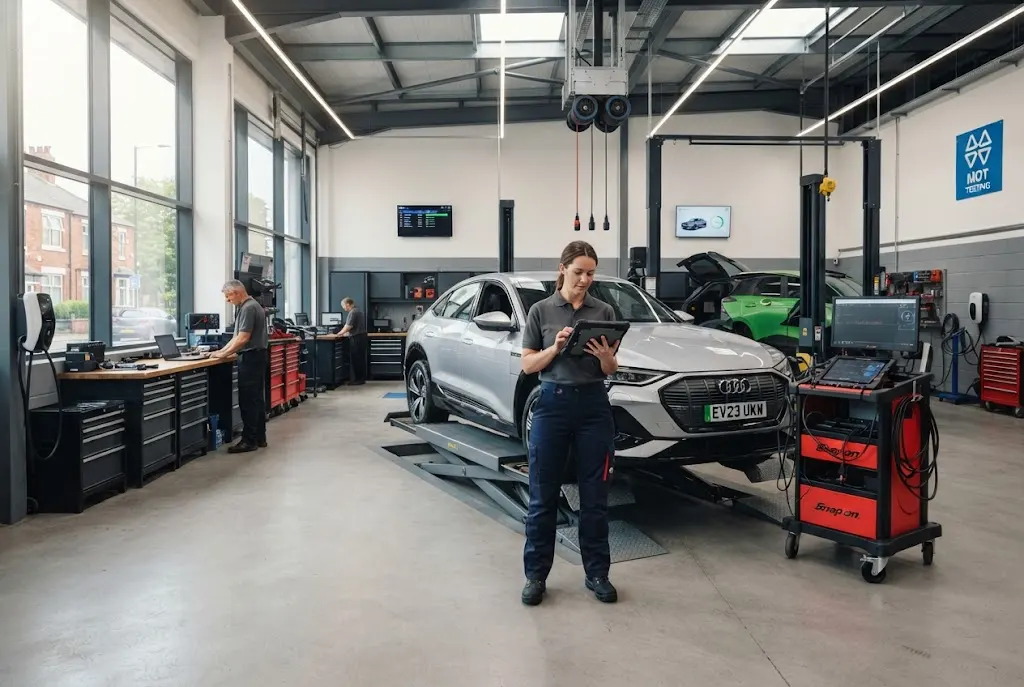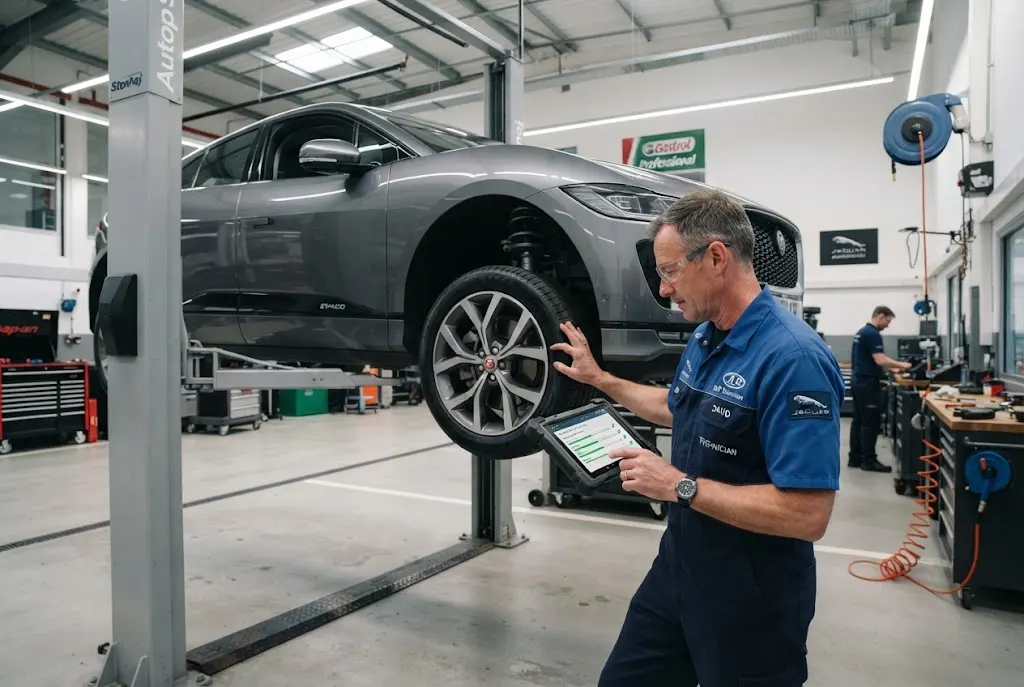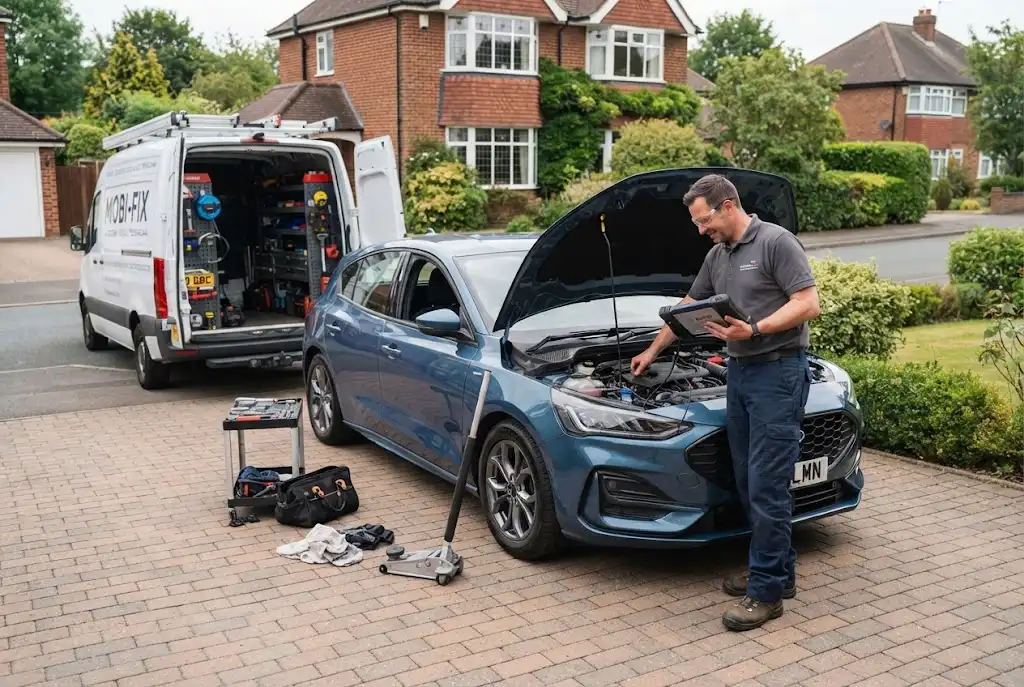
Automotive service companies operate in one of the UK’s most diverse and competitive aftermarket environments. Customers can choose between independent garages, franchise garages, authorised service centres, fast-fit operators, national networks and specialist workshops. With vehicle technology becoming more sophisticated, businesses can no longer rely on location or low prices alone. Strong competitive positioning now depends on operational excellence, technical capability, customer trust and the ability to adapt.
The modern UK aftermarket includes independent chains, manufacturer-approved repairers, single-site workshops, franchised workshops and specialist service providers. The Society of Motor Manufacturers and Traders estimates that the aftermarket supports more than 42 million vehicles and tens of thousands of workshops across the UK, highlighting the scale of the opportunity as well as the intensity of competition.
Why Automotive Service Companies Need a Clear Competitive Strategy
A workshop may provide excellent mechanical work and still struggle commercially if customers cannot find it online, prices are unclear or appointment processes are inconvenient. Equally, a business can attract large numbers of customers but lose profitability through poor scheduling, inefficient parts management or excessive rework.
Competitive strategy connects these issues. It answers a practical question: why should a customer choose this business instead of another garage?
The answer might be technical expertise, convenience, specialist knowledge, transparent pricing, fleet support, faster turnaround or a particularly strong customer experience. The important point is that the proposition should be deliberate rather than accidental.
Understand the UK Automotive Service Competitive Landscape
The UK’s aftermarket gives motorists considerable choice. Independent garages often compete through local reputation and personal service. Franchise garages can combine a recognised brand with established operating systems. Authorised service centres can emphasise manufacturer-specific expertise, while larger workshop groups may compete through network coverage and purchasing power.
These models are not identical, so automotive service companies should avoid copying competitors without considering their own strengths.
For example, a smaller independent workshop may not need to compete with a national chain on branch numbers. Instead, it could build authority around a specific vehicle type, technical service or local customer segment.
Likewise, a larger network may have the resources to compete through convenience and geographic coverage, but it must maintain consistent service standards across locations.
Choose the Right Competitive Positioning
Competitive positioning is the space a business aims to occupy in the customer’s mind. For an automotive service company, this should be specific enough to influence purchasing decisions.
Potential positioning strategies include:
- Value: Competitive pricing combined with reliable workmanship.
- Convenience: Easy booking, extended hours and accessible locations.
- Technical expertise: Advanced diagnostics and specialist vehicle knowledge.
- Premium service: A higher-touch customer experience with detailed communication.
- Specialisation: Expertise in a particular manufacturer, vehicle type or repair category.
- Fleet support: Reliable servicing and repair capacity for business vehicles.
A company can offer several of these benefits, but it should have a clear primary reason for customers to choose it.
Make Operational Excellence a Competitive Advantage
Operational excellence is not simply about reducing costs. It means designing workshop processes so that resources, people, equipment and customer demand work together efficiently.
Common operational problems include unused workshop capacity, delayed parts, inefficient vehicle movement, poor job scheduling and repeated administrative work. Each problem can reduce profitability while also affecting customer satisfaction.
Automotive service companies should therefore measure the entire workshop journey, from booking through vehicle reception, inspection, repair, quality control and collection.
Useful performance measures can include:
- Workshop utilisation.
- Average repair value.
- Labour productivity.
- First-time fix performance.
- Customer retention.
- Average turnaround time.
- Parts availability and delays.
- Rework and warranty issues.
These measures become particularly valuable when management compares performance over time rather than focusing on a single day’s results.
Improve the Customer Journey From Search to Collection
Competitive advantage increasingly begins before a customer enters the workshop. Motorists commonly research garages online, compare services, read reviews and look for pricing information before making contact.
A strong digital presence should therefore support the physical workshop experience rather than operate as a separate marketing activity.
Customers should be able to quickly understand what the company does, which vehicles it supports, where it operates and how to book. Location information should be accurate, service pages should answer practical questions and booking processes should minimise unnecessary steps.
After booking, communication matters just as much. Confirmation messages, repair updates and clear explanations of additional work can reduce uncertainty.
The Motor Ombudsman’s Service and Repair Code provides a useful benchmark for customer-focused practices, including honest service, transparent pricing, completing agreed work and using competent staff. Its framework is relevant to both main-dealer and independent repair businesses.
Compete on Transparency Instead of Discounting
Price comparison is unavoidable in automotive servicing, but permanent discounting can weaken margins and make it harder to fund technician training, equipment and technology.
A stronger approach is to make value understandable.
Customers should know what a quoted service includes, why additional work is recommended and whether a repair is urgent or can be planned for later. Clear inspection reports and digital photographs can also help explain technical findings where appropriate.
Transparency does not mean being the cheapest business. It means making the price easier for the customer to understand.
Differentiate Independent Garages Through Expertise
Independent garages have a major opportunity to compete through specialist expertise. A smaller business can develop a strong reputation around particular vehicle brands, diagnostics, classic vehicles, performance cars, hybrid systems or specific repair categories.
This strategy can be more sustainable than attempting to serve every possible customer with a generic proposition.
Specialisation can also improve marketing. Instead of competing for broad terms such as “car garage”, a workshop can build useful content and service pages around the specific problems and vehicles it handles best.
Over time, this can help establish topical relevance while attracting customers with a stronger purchase intent.
Use Technology to Raise Workshop Performance
Technology should solve operational problems rather than exist simply because competitors are using it.
Workshop management systems can help businesses organise bookings, customer records, job progress, parts information and invoicing. Digital vehicle inspections can make recommendations easier to explain. Diagnostic technology can support increasingly complex vehicles, while customer communication systems can reduce unnecessary telephone administration.
For larger workshop groups, integrated systems can also provide management visibility across multiple sites.
The objective is not to automate every human interaction. Instead, technology should remove repetitive administration and give technicians and service advisers better information.
Build Capability for Hybrid and Electric Vehicles
Vehicle electrification is changing the competitive requirements of automotive service companies. SMMT’s aftermarket report identifies electrification, ADAS and vehicle connectivity among the technologies reshaping the service and repair market.
Businesses that continue investing only in conventional mechanical capabilities may gradually find their addressable market becoming narrower.
Hybrid and electric vehicle capability can therefore become an important differentiator. This includes appropriate diagnostic equipment, technician training, safety procedures and workshop processes.
Businesses developing this capability should think beyond simply advertising that they “service hybrids”. The real competitive advantage comes from being able to diagnose problems accurately, communicate clearly with customers and complete work safely.
For companies planning a dedicated development programme, hybrid servicing can be treated as one strategic capability, while EV servicing can form another part of the longer-term technology roadmap.
Use Wheel Alignment as a Specialist Revenue Opportunity
Competitive strategy also involves identifying services that can increase customer value without requiring a completely different business model.
Wheel alignment is one example. A workshop with suitable equipment and trained technicians can develop alignment as a specialist service alongside tyres, steering and suspension work.
Rather than presenting alignment as an isolated technical procedure, businesses can explain how correct wheel geometry relates to tyre wear, handling and vehicle behaviour.
This approach can support a higher-value service proposition while creating additional opportunities to identify related maintenance requirements. For businesses exploring this model in greater detail, wheel alignment services can become a dedicated profit-centre strategy.
Develop a Strong Technician Strategy
People remain one of the most important competitive assets in automotive servicing. Workshop equipment can be purchased by competitors, but a strong team of experienced technicians and service advisers takes much longer to build.
Automotive service companies should therefore treat training and retention as strategic investments.
Training plans can cover diagnostics, hybrid systems, EV technology, ADAS, manufacturer-specific procedures and customer communication. Apprenticeships can support future recruitment, while clear progression pathways can improve retention.
Technician development is especially important when businesses expand into new services. A new piece of equipment does not automatically create a new capability. Staff need the knowledge and confidence to use it correctly.
Build Partnerships With Suppliers and Industry Networks
Competitive businesses do not operate in isolation. Strong relationships with parts suppliers, equipment providers, training organisations, fleet operators and industry bodies can provide access to expertise and commercial opportunities.
SMMT’s automotive ecosystem includes aftermarket businesses, service providers and suppliers across many categories. Its Automotive Supplier Finder alone lists more than 10,000 companies across thousands of categories, illustrating the depth of the wider supply network.
For workshop groups and independent businesses alike, supplier relationships can support better parts availability, technical information and access to new technology.
Use Customer Retention as a Strategic Metric
Acquiring a new customer can require significant marketing effort. Retaining an existing customer can therefore be commercially valuable, particularly when the business provides routine servicing and maintenance.
Retention should not be reduced to sending automatic reminders. The complete experience matters.
Customers are more likely to return when appointments are convenient, repairs are completed correctly, pricing is transparent and staff communicate clearly. A well-maintained customer history can also help the workshop make relevant service recommendations without appearing overly aggressive.
Scale Without Losing Local Trust
For workshop groups and growing automotive service companies, expansion creates a difficult balance between central control and local relationships.
Central teams can establish brand standards, purchasing processes, technology systems and training frameworks. Local teams can then retain responsibility for customer relationships and day-to-day workshop management.
This hybrid model can provide the efficiency of a larger organisation without making every customer interaction feel impersonal.
The lesson is particularly relevant to businesses considering the growth strategies used by garage chains. Network scale can create commercial advantages, but only when the underlying operating model remains efficient and customer-focused.
How Automotive Service Companies Can Win Long Term
The strongest automotive service companies will not necessarily be the businesses with the largest number of sites or the lowest advertised prices. Long-term competitiveness is more likely to come from combining several advantages that customers can actually experience.
That means reliable workshop operations, skilled technicians, convenient digital booking, transparent pricing, strong customer communication and appropriate investment in new vehicle technologies.
Businesses should also regularly review their competitive positioning. Customer expectations change, vehicle technology changes and competitors change. A strategy that worked five years ago may not provide the same advantage today.
The UK aftermarket remains highly competitive, but that competition also creates opportunities for well-managed businesses. Companies that understand their target customers, build genuine technical capability and continuously improve operational performance can establish a position that is difficult to replicate.
Ultimately, competitive strategy is not about trying to be everything to everyone. It is about deciding where the business can create the greatest value, delivering that value consistently and building the operational capability required to sustain it.