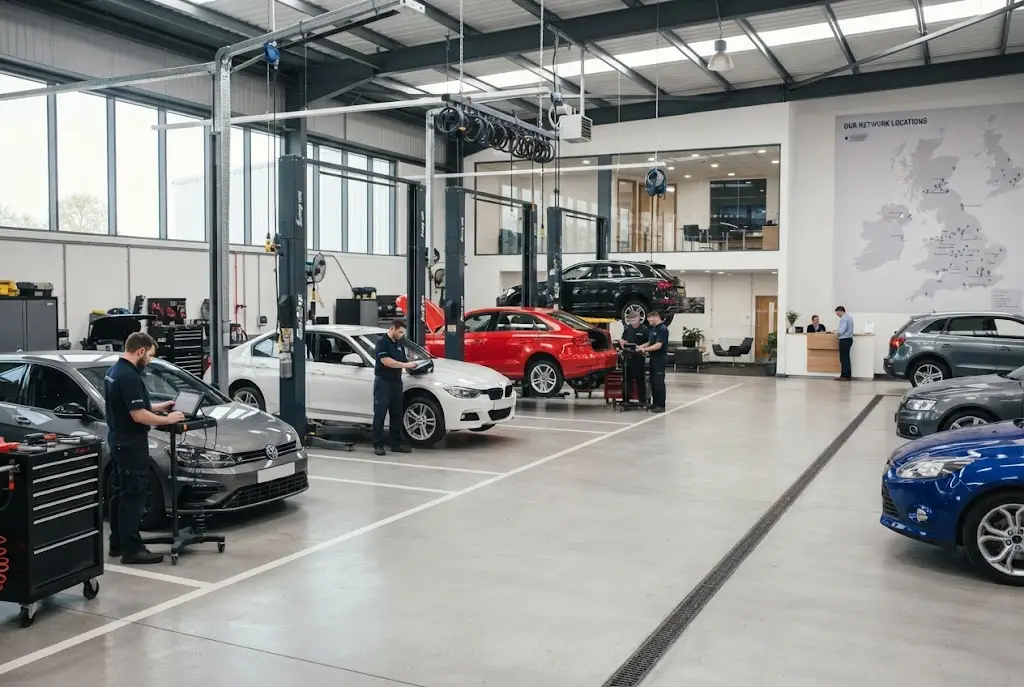
Growing an automotive business from one successful garage into a network of locations is a significant step. The challenge is not simply opening more sites. It is creating consistent auto services that customers can trust regardless of which branch they visit. For owners planning automotive expansion, operational scalability depends on repeatable processes, capable teams, reliable business systems and strong financial control.
A single workshop can often rely heavily on the owner or a small management team. Once a business operates across several locations, that approach becomes difficult to maintain. Each site needs clear responsibilities, standard procedures, measurable performance targets and enough flexibility to respond to local demand. The goal is to build a business that can grow without allowing service quality to fall.
Why Scaling Auto Services Requires More Than Opening New Garages
Adding another garage creates new revenue potential, but it also introduces additional costs and management responsibilities. Property, equipment, staffing, stock, customer communications and compliance all need to be coordinated. If the underlying operating model is weak, expansion can multiply existing problems rather than solve them.
Successful multi-location garages therefore tend to standardise the parts of the operation that should remain consistent while allowing individual branches to respond to their local market. This balance is particularly important in the UK, where independent workshops, repair networks and manufacturer-approved businesses operate alongside one another.
The wider UK aftermarket is already a substantial and diverse sector. The Society of Motor Manufacturers and Traders describes an ecosystem that includes independent chains, single-site workshops, franchised operations, parts networks and mobile services. Its recent reporting also highlights the continuing need for workshops to adapt to electrification, advanced vehicle technology and changing customer expectations.
Build a Repeatable Operating Model Before Expanding
The strongest expansion strategy normally begins before a second or third site opens. Owners should first identify how the existing business actually operates and turn successful habits into documented processes.
This can include customer booking procedures, vehicle inspection standards, quotation processes, parts ordering, job allocation, quality checks, invoicing and follow-up communication. The purpose is not to make every employee work mechanically. Instead, documented processes create a dependable baseline that can be taught, measured and improved.
For example, a workshop may have an informal process for checking a vehicle before work begins. At one location, an experienced technician may know exactly what photographs, notes and checks are required. At another site, a newer employee may follow a completely different approach. A documented workflow removes that inconsistency.
Owners should also identify which decisions require central control and which can be made locally. This distinction becomes increasingly important as a workshop network grows.
Standardise Service Quality Across Workshop Networks
Customers generally expect the same level of professionalism each time they interact with a business. A multi-site automotive company therefore needs clearly defined service standards.
These standards might cover:
- How vehicles are checked when they arrive
- How repair recommendations are explained
- How customers receive quotations
- How additional work is approved
- How completed vehicles are inspected
- How customers are informed when work is finished
- How complaints and quality issues are handled
Consistency does not mean every branch must be identical. A city-centre garage may have different customer volumes and vehicle types from a rural workshop. However, the fundamentals of service quality should remain consistent.
This becomes even more important where MOT testing is part of the operation. The Driver and Vehicle Standards Agency requires authorised MOT businesses to maintain appropriate management systems, testing standards, staff competence and premises and equipment. DVSA also carries out risk-based site reviews. Businesses should therefore treat compliance and quality management as operational responsibilities rather than paperwork that can be dealt with later.
For businesses combining MOT testing with broader car servicing, repair and maintenance work, separating statutory requirements from optional customer services can also make branch procedures easier to manage.
Use Business Systems to Connect Multiple Locations
Technology becomes increasingly valuable as the number of locations grows. A business may need one system for customer records, another for workshop scheduling, inventory management, accounting and digital communications. Ideally, these systems should work together rather than create isolated information silos.
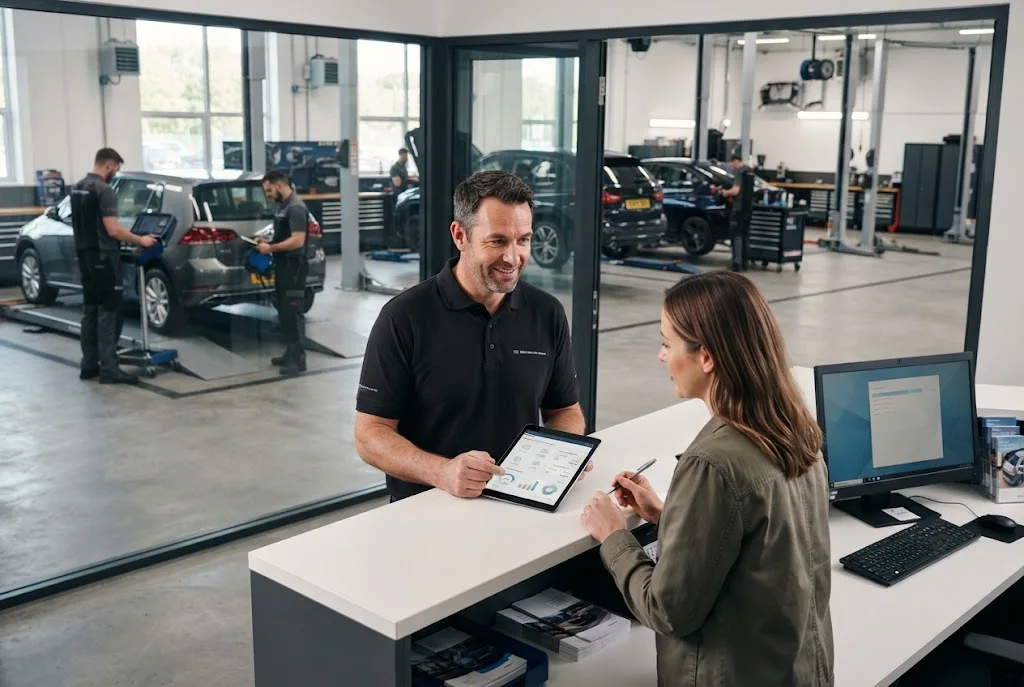
A centralised customer record can help a business understand previous work, recommendations and communication history. This becomes particularly useful when customers use different branches. A customer should not have to explain their entire vehicle history every time they visit another location within the same network.
Good systems can also provide management visibility. Owners and senior managers should be able to compare locations using consistent measures such as bookings, completed jobs, labour utilisation, average invoice value, comeback rates, customer retention and outstanding work.
The objective is not to collect data simply because technology makes it possible. Information should help managers identify problems early and make better decisions.
Centralise What Makes Sense, Localise What Matters
One of the most important decisions in multi-location garage management is deciding what should be controlled centrally.
Central teams may handle areas such as:
- Brand standards
- Marketing strategy
- Supplier negotiations
- Technology platforms
- Financial reporting
- Training frameworks
- Customer communication standards
- Business-wide policies
Local managers, meanwhile, may need authority over daily staffing, appointment adjustments, local customer relationships and immediate workshop decisions.
This structure prevents two common problems. Excessive centralisation can make branches slow and inflexible, while excessive independence can result in inconsistent standards. Effective service centre management gives local teams enough authority to operate efficiently while keeping the wider business aligned.
Prepare Teams for Automotive Expansion
People are one of the biggest factors in successful automotive expansion. A business cannot simply copy the physical layout of a successful garage and expect another branch to perform in the same way.
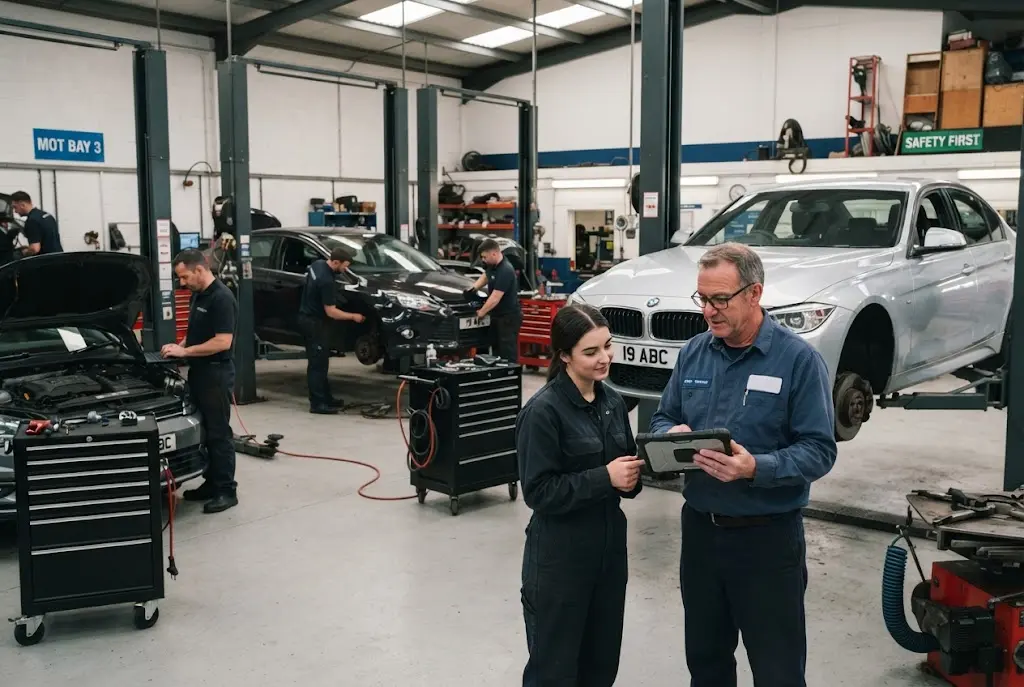
New locations need managers who understand both technical operations and customer service. Technicians also need appropriate training for the vehicles and technologies they are expected to work on.
This is becoming particularly relevant as vehicle technology changes. Recent SMMT reporting indicates that UK workshops are investing in skills, tooling and training to support electric vehicles and advanced safety technologies. For expanding businesses, workforce development should therefore be considered part of the growth plan rather than an optional expense.
Clear role definitions can help as well. Employees should know who controls workshop scheduling, who approves additional work, who handles customer complaints and who is responsible for quality checks. When responsibilities are unclear, issues can move between departments or branches without anyone taking ownership.
Businesses planning wider auto repair services operations should also connect staffing plans with expected demand rather than simply recruiting whenever a branch becomes busy.
Measure Each Location With the Same Core KPIs
Operational scalability requires measurement. If every branch reports performance differently, senior management cannot accurately identify which locations are performing well and which need support.
A practical reporting framework can include:
- Number of bookings
- Vehicle throughput
- Average repair order value
- Labour utilisation
- Technician productivity
- Parts and labour margins
- Customer retention
- Repeat booking rates
- Customer complaints
- Vehicle comebacks or repeat faults
The exact KPIs will depend on the business model. A premium specialist workshop may prioritise different measures from a high-volume MOT and servicing network. The important point is that the same definitions should be used across locations.
Performance data should then lead to action. If one branch has consistently lower workshop utilisation, management should investigate whether the cause is weak demand, poor scheduling, staffing limitations, parts availability or another operational constraint.
Make Customer Experience Part of the Expansion Strategy
Expansion should never focus exclusively on internal operations. Customers ultimately decide whether a growing automotive brand deserves repeat business.
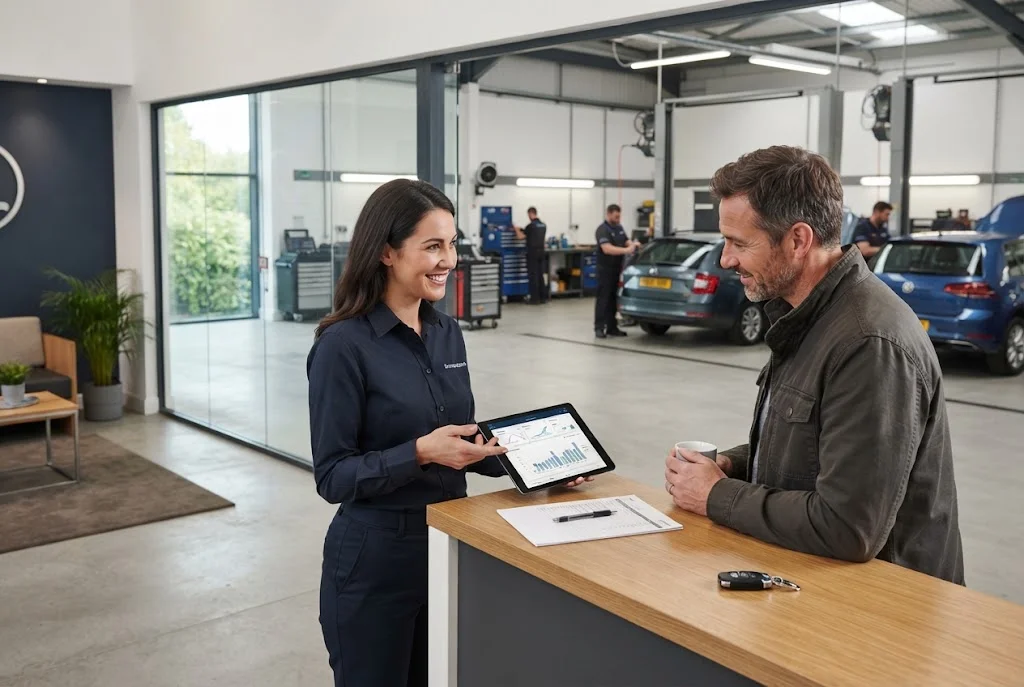
Clear communication can make a significant difference. Customers should understand what work is recommended, why it is needed, what it will cost and when their vehicle is expected to be ready. Consistent communication standards across locations help protect the reputation of the entire network.
Customer retention should also be considered before opening additional sites. A business that continually loses customers after each visit may generate impressive booking numbers while struggling to build long-term value.
This is where car servicing and customer loyalty become closely connected. Service reminders, maintenance plans, digital service histories and thoughtful after-sales support can give customers reasons to return to the same network rather than searching for another garage.
Use Process Improvement to Increase Workshop Capacity
Opening additional locations is not always the first answer to growth. Sometimes the existing operation has unused capacity that can be unlocked through better workflow optimisation.
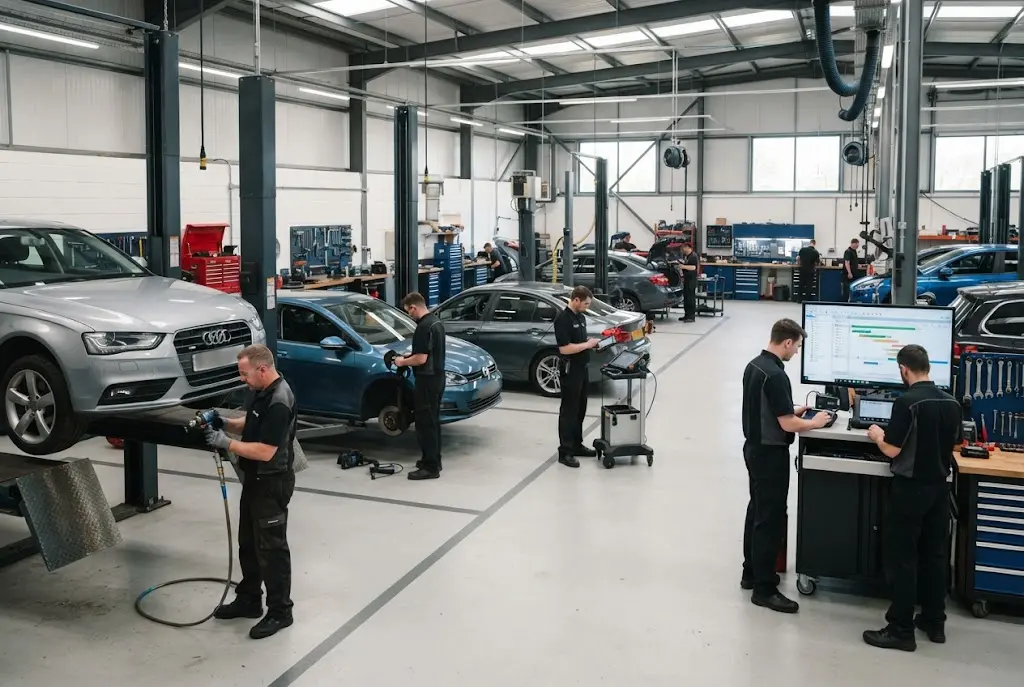
Review how vehicles move from booking to reception, inspection, diagnosis, repair, quality control and collection. Delays between these stages can reduce workshop utilisation even when technicians appear busy.
For example, if vehicles regularly wait for approval before work can begin, improving the customer authorisation process may increase throughput without adding another technician. If parts arrive late, better purchasing and inventory processes may have a greater effect than recruiting additional staff.
This is why businesses should examine vehicle maintenance operations and workflow performance before committing significant capital to another branch.
Plan Expansion Around Financial and Operational Capacity
Franchise growth and company-owned expansion can both provide opportunities, but neither should be treated as an automatic route to success. The business needs enough management capacity, working capital, skilled staff and operational maturity to support the additional location.
A sensible expansion strategy should consider the cost of premises, equipment, recruitment, training, technology, marketing and working capital. It should also account for the time required for a new branch to establish a reliable customer base.
Expansion targets should therefore be linked to operational readiness. If the existing business cannot consistently deliver quality service without the owner personally solving everyday problems, opening another location may simply increase management pressure.
When Is a Garage Ready to Become a Multi-Location Business?
There is no single revenue figure or number of employees that automatically means a garage is ready to expand. Readiness is better judged by the strength of the operating model.
A business may be in a stronger position to expand when:
- Core processes are documented and consistently followed
- Management responsibilities are clearly defined
- Customer demand is stable
- The existing workshop has reliable financial performance
- Technician recruitment and training processes are established
- Customer records and operational data are organised
- Quality standards can be measured
- The business can operate without constant owner intervention
These conditions create a foundation for sustainable growth. Without them, expansion can place additional pressure on people, cash flow and service quality.
Build Systems That Can Grow With the Business
The most effective multi-location automotive businesses do not treat expansion as a series of disconnected garage openings. They build a system that can support additional sites over time.
That system combines consistent customer experience, strong service centre management, trained teams, reliable technology, measurable performance and clear financial controls. It also leaves enough flexibility for individual locations to respond to their customers and local markets.
For owners considering automotive expansion, the central question should therefore be more than “Where should we open next?” A better question is “What systems must exist so the next location can perform to the same standard as the first?”
Once that foundation is in place, growth becomes more manageable. The business can expand its workshop network while protecting service quality, improving operational scalability and creating a stronger platform for long-term franchise growth or company-owned expansion.
For broader guidance on the commercial side of automotive operations, businesses can also consider how car service cost and pricing strategy affect margins as a network grows. Pricing, staffing, workflow and customer retention are interconnected, and treating them as one operating system gives expanding garages a much stronger chance of sustainable profitability.
For UK businesses that provide MOT testing, it is also important to follow current DVSA requirements and keep each authorised testing location compliant with applicable standards. The official GOV.UK guidance for setting up and managing an MOT test station provides the relevant regulatory framework.
Ultimately, scaling a garage business successfully is about creating repeatable excellence. When every location has the people, processes, technology and management discipline needed to deliver reliable service, expansion becomes an extension of a proven operating model rather than a leap into the unknown.