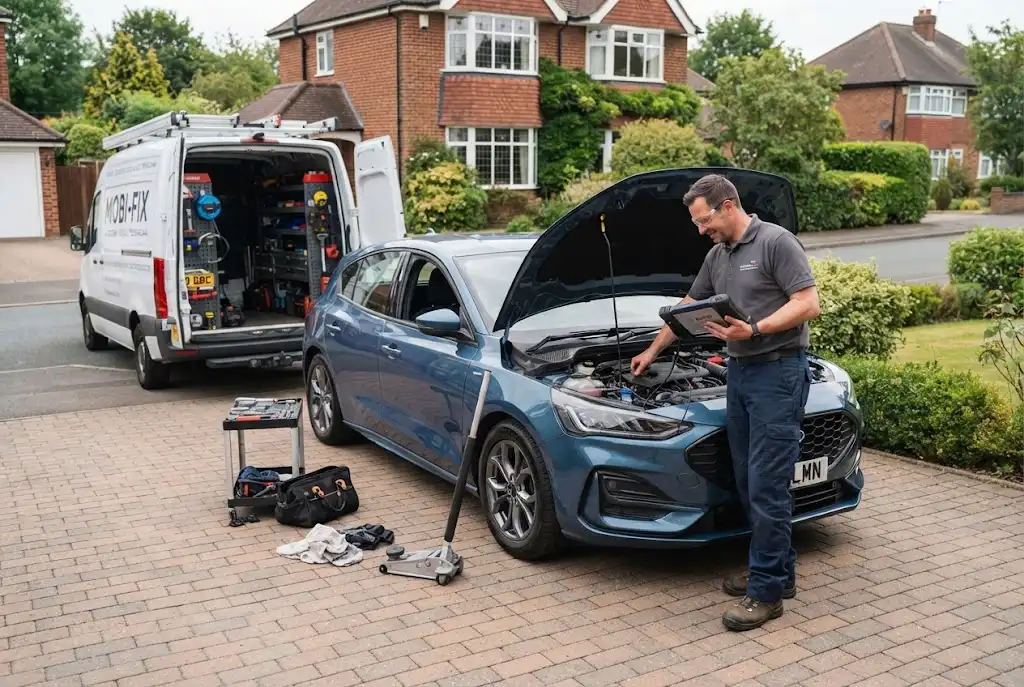
A mobile auto service allows automotive businesses to take selected vehicle services directly to customers rather than requiring every vehicle to visit a traditional workshop. For garages looking to expand their reach, this model can create new opportunities around convenience, roadside support and flexible servicing while complementing an established workshop operation.
The growth of mobile services also changes how automotive businesses think about technicians, equipment, scheduling and pricing. A successful mobile operation needs more than a vehicle and a set of tools. It requires careful planning, suitable service processes and a clear understanding of which jobs can be completed safely and efficiently away from a fixed workshop.
What Is a Mobile Auto Service?
A mobile auto service provides selected automotive services at a customer’s location. Depending on the business model, customers may receive assistance at home, at work, in a car park or at the roadside.
Common services can include routine maintenance, battery-related work, minor repairs, diagnostics and other jobs that do not require extensive workshop equipment. The exact service range depends on the vehicles being supported, the technicians’ capabilities and the equipment available to the mobile team.
For an established garage, mobile servicing does not necessarily need to replace workshop operations. Instead, it can operate as an additional service channel that reaches customers who value convenience or cannot easily take their vehicle to a garage.
Why Customers Choose Mobile Auto Service
Customer convenience is one of the strongest reasons for developing a mobile service model. Vehicle owners often have busy schedules and may find it difficult to arrange time to visit a workshop, wait for a vehicle to be serviced or organise alternative transport.
A mobile mechanic can potentially complete suitable work at a location that is more convenient for the customer. This can reduce disruption and make professional automotive assistance easier to access.
The model can also be useful when a vehicle cannot be driven safely or reliably. In those situations, roadside support can provide a practical connection between the customer and an automotive business.
Choosing the Right Services for Mobile Operations
Not every automotive job is suitable for a mobile environment. Before launching a mobile operation, a business should identify services that can be completed safely with the equipment, workspace and environmental conditions available to the technician.
Routine maintenance and selected diagnostic work may be suitable depending on the circumstances. More complex repairs may still require the lifting equipment, specialist machinery or controlled environment available in a fixed workshop.
This distinction is important because service expansion should not come at the expense of quality or safety. A clear service menu helps customers understand what a mobile team can handle and when a vehicle may need to be transferred to a workshop.
The Role of the Mobile Mechanic
A mobile mechanic needs to combine technical automotive knowledge with the ability to work independently in different environments. Unlike a technician working in a controlled workshop, a mobile technician may encounter changing weather, restricted working space, unfamiliar parking areas and different customer requirements.
Preparation therefore becomes particularly important. Technicians need access to the correct tools, replacement parts, diagnostic equipment and job information before travelling to a customer.
Strong communication skills also matter. A technician may need to explain a diagnosis, describe recommended repairs and clarify which work can be completed immediately. Clear communication can help create confidence in a service model where customers are watching the work take place at their own location.
On-Site Servicing and Operational Planning
On-site servicing can become difficult to manage if appointments are scheduled without considering travel time. A technician may be able to complete a job quickly, but inefficient routing between customers can reduce the number of appointments possible during a working day.
Effective scheduling should therefore consider service duration, travel distance, traffic conditions, technician availability and the equipment required for each appointment.
Digital booking systems can help businesses organise appointments and collect important vehicle information before a technician is dispatched. Asking customers for the vehicle registration, service requirements and location during booking can reduce unnecessary journeys and improve preparation.
Building a Mobile Workshop Model
Some businesses operate mobile workshops using vehicles equipped with tools, diagnostic equipment and selected parts. The configuration should reflect the services the business intends to provide rather than attempting to carry every possible tool or component.
Vehicle layout can also influence productivity. Frequently used equipment should be easy to access, while specialist tools can be organised according to the types of jobs the technician commonly performs.
Stock management is another consideration. Carrying commonly required parts may allow technicians to complete more jobs during the first visit, but excessive inventory increases vehicle weight and ties up working capital. A balanced approach can improve operational efficiency without creating unnecessary costs.
Roadside Support as an Expansion Opportunity
Roadside support can complement a broader mobile automotive operation. Customers experiencing certain vehicle problems may need assistance where the vehicle has stopped rather than at their home or workplace.
A garage can structure roadside services around clearly defined situations and establish appropriate procedures for assessing whether a vehicle can be repaired at the location. Where a repair requires workshop equipment, the mobile team can help determine the next appropriate step.
Roadside operations require particular attention to safety, communication and location management. Technicians should have appropriate procedures for working around moving traffic and should only undertake work where conditions allow it to be completed safely.
Managing Field Technicians
As a mobile operation grows, field technicians become an important part of the business structure. Managers need visibility over appointments, travel schedules, job progress, parts requirements and customer communication.
Clear procedures can help maintain consistent service quality across multiple technicians. Digital job records can document the customer’s reported problem, inspection findings, work completed and any recommendations for future maintenance.
This information can also support the wider garage management function by providing a clearer view of technician workloads and service demand.
How Mobile Auto Service Supports Service Expansion
Service expansion through mobile operations can allow an established garage to reach customers beyond its immediate workshop location. Instead of relying exclusively on customers travelling to the premises, the business can create another channel for delivering selected services.
This can be particularly useful when a workshop has periods of unused technician capacity. Mobile appointments may provide an additional way to utilise available resources, provided travel time and operating costs are properly accounted for.
Expansion should nevertheless be measured carefully. Adding more service areas without sufficient demand, technicians or scheduling capacity can create operational pressure. A phased approach allows the business to assess demand before committing to a larger mobile fleet.
Pricing Mobile Automotive Services
Mobile operations may require a different pricing structure from traditional workshop services. Travel time, vehicle operating costs, equipment, technician availability and appointment duration all influence the economics of each job.
Customers are often paying not only for the mechanical work but also for the convenience of receiving the service at their chosen location. A clear pricing model should explain what is included and identify circumstances that could require additional charges.
Garages can also review their broader car service cost structure when developing mobile packages. Understanding the underlying cost of labour, equipment and travel helps create prices that are commercially sustainable while remaining transparent to customers.
Using Mobile Services Alongside Inspection Work
Mobile operations can also connect with specialist inspection offerings. Some auto inspection services may be suitable for customers who want a vehicle assessed before making a purchase or who need an independent assessment at a convenient location.
Pre-purchase inspections can be particularly valuable when the vehicle is located some distance from the customer. A suitable mobile inspection model can reduce the need for the prospective buyer to travel before receiving an assessment.
Inspection reports can then provide customers with documented findings and help distinguish inspection work from subsequent repair or maintenance services.
Making Mobile Auto Service Operationally Scalable
Operational scalability requires more than adding additional service vehicles. As demand increases, businesses need consistent processes for bookings, dispatching, customer communication, technician training, parts management and quality control.
Technology can support this process. Digital job management, online booking, customer records and route planning can reduce administrative work and give managers greater visibility over field operations.
Businesses should also monitor practical performance measures such as appointment completion, travel time, repeat bookings, technician utilisation and customer feedback. These measures can reveal whether expansion is improving the business or creating unnecessary operational complexity.
Connecting Mobile Services With Long-Term Business Growth
A mobile operation can become part of a wider strategy for developing an automotive service business. Rather than treating mobile work as a separate experiment, garages can integrate it with workshop servicing, inspections, maintenance packages and customer retention programmes.
This approach creates multiple ways for customers to interact with the same automotive business. A customer might initially book a mobile service, later visit the workshop for a complex repair and return for scheduled maintenance.
The key is to make each service channel work together. Consistent records, pricing principles and service standards can create a connected customer experience regardless of where the work takes place.
Planning a Sustainable Mobile Service Model
Before launching a mobile operation, a garage should define its target customers, service area, equipment requirements, technician capacity and pricing structure. It should also identify which services can realistically be delivered on-site and which should remain workshop-based.
Starting with a focused service range can make the model easier to manage. Once demand and operational performance become clearer, the business can consider additional technicians, vehicles, service areas or specialist offerings.
A well-planned mobile auto service can therefore become more than a convenience option. It can provide another route to customers, support service expansion and create a flexible extension of a traditional garage operation. When scheduling, pricing, technician capability and customer experience are managed together, mobile servicing can complement the wider automotive business without compromising the quality associated with a professional workshop.
For garages considering the next stage of development, mobile operations can be assessed alongside structured service pricing, specialist inspection services, long-term business development and effective garage management.
For general UK vehicle inspection and roadworthiness information, the GOV.UK MOT guidance provides an authoritative reference for motorists and automotive businesses.