Building a successful car servicing business requires more than knowing how to maintain vehicles. A professional workshop must combine technical expertise with effective service planning, workshop management, customer communication and financial control. Whether you are starting an independent garage or developing an existing maintenance business, a structured approach can help you create reliable operations and build long-term customer relationships.
Car owners need regular maintenance throughout a vehicle’s life, while businesses operating fleets depend on dependable servicing to keep vehicles available. This creates a strong foundation for automotive businesses that can provide consistent workmanship, sensible scheduling and transparent pricing. However, success depends on creating systems that allow the workshop to deliver quality work efficiently.
What Does a Car Servicing Business Need to Succeed?
A successful servicing operation needs a clear proposition and a practical operating model. Customers should understand what the workshop provides, what is included in each service and how the business handles additional repairs or maintenance requirements.
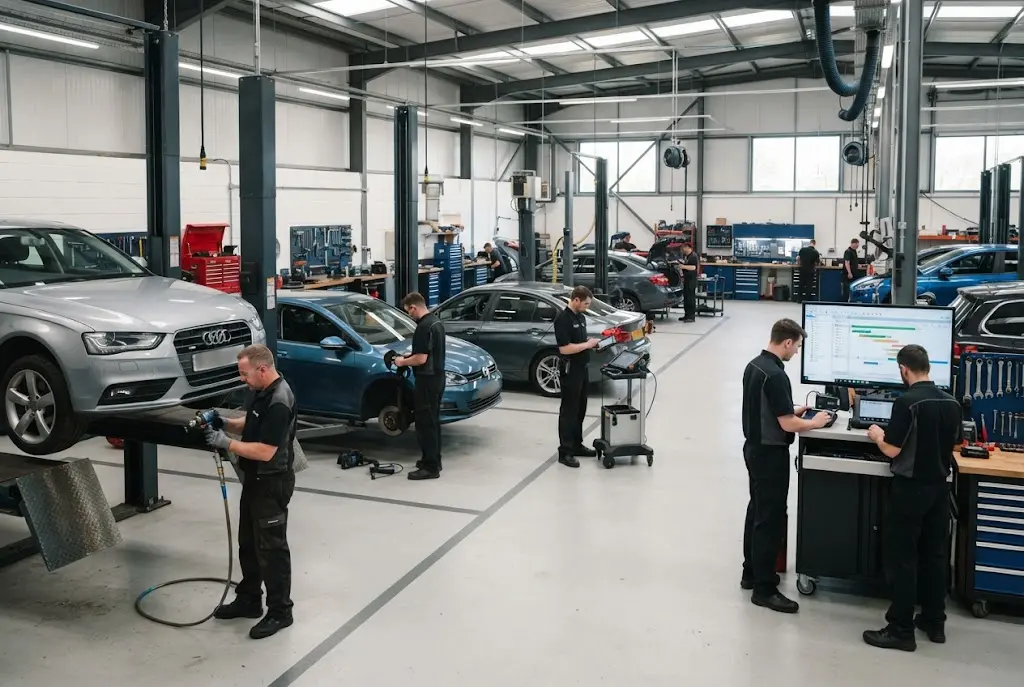
The business also needs to understand its capacity. A workshop with four service bays and a limited number of technicians cannot operate in the same way as a large automotive centre with multiple teams. Service planning should therefore reflect available staff, equipment, working hours and expected demand.
From the beginning, focus on building repeatable processes. A customer should receive a similarly professional experience whether they book a routine service today or return six months later for another maintenance requirement.
Define Your Car Servicing Offer
A clear service structure makes it easier for customers to choose the right option and helps workshop staff organise jobs. Many garages distinguish between interim and full services, while more comprehensive maintenance may be offered for vehicles requiring additional checks or replacement items.
The exact terminology and contents of a service package should be clearly explained. Customers should know what inspections are included and whether parts such as filters, fluids or spark plugs are replaced as part of the package or assessed separately.
A workshop may also offer additional maintenance services alongside routine servicing, including:
- Brake inspections and repairs
- Battery testing and replacement
- Engine diagnostics
- Air conditioning maintenance
- Tyre services
- Suspension inspections
- Electrical fault diagnosis
- Clutch and transmission work
For a broader view of the sector, businesses can connect their servicing strategy with the wider auto services business model, particularly when deciding which additional workshop services to introduce.
Understand Interim, Full and Major Service Requirements
Customers often use terms such as interim service, full service and major service when comparing garages. A business should explain these options in straightforward language rather than assuming customers understand the differences.
Interim Service
An interim service is generally positioned as a more frequent maintenance visit for vehicles that require attention between more comprehensive servicing intervals. The exact checks and replacements depend on the vehicle manufacturer’s maintenance requirements and the service package being offered.
Full Car Service
A full service typically covers a broader range of inspections and maintenance tasks than a basic or interim package. The business should provide a clear checklist so customers understand what the service includes.
Major Service
A major service can involve additional maintenance requirements based on the vehicle’s age, mileage and manufacturer recommendations. Because requirements vary between vehicles, businesses should avoid presenting one universal checklist as appropriate for every car.
Clear service definitions reduce misunderstandings and make the booking process more efficient.
Build Effective Service Planning Systems
Service planning is one of the foundations of a productive workshop. Every booking should be assessed according to the expected work, technician availability and estimated vehicle turnaround time.
Start by categorising common jobs. Routine servicing may require a predictable amount of workshop time, while diagnostic or complex repair work can be less predictable. Allocating appropriate time to each type of booking helps prevent the day’s schedule from becoming overloaded.
Leave some flexibility in the schedule where possible. A workshop that books every available minute can struggle when a vehicle arrives with an unexpected fault or a supplier delays a required part.
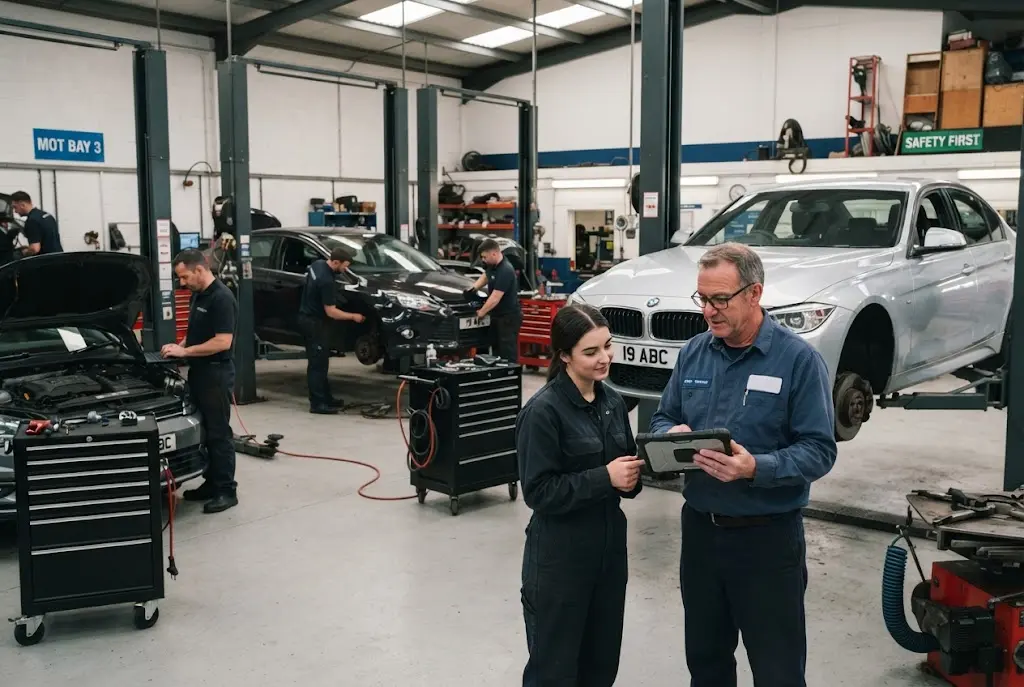
Good planning should also consider technician skill levels. A specialist diagnostic job may need to be assigned to a technician with the right experience and equipment rather than simply allocating it to whoever becomes available first.
Improve Workshop Management
Effective workshop management connects customer bookings with actual vehicle work. When a car arrives, staff should record the customer’s concerns, agreed services and any relevant vehicle information before work begins.
Job cards or digital records can then track the vehicle through inspection, diagnosis, repair, quality checks and completion. This creates accountability and makes it easier to identify where delays occur.
Managers should regularly review jobs that exceed their estimated time. Occasional overruns are normal, but repeated delays may indicate problems with diagnosis, technician allocation, parts availability or scheduling.
These lessons are particularly valuable when developing a high-performance garage operation, where productivity and workshop efficiency become increasingly important as the business grows.
Price Car Servicing for Sustainable Profitability
Pricing should cover the real cost of delivering the service while remaining appropriate for the market you serve. Labour, parts, consumables, premises, equipment, insurance, software and administration all contribute to operating costs.
A common mistake is to focus only on the price charged to the customer without understanding the margin generated by each job. A service that appears busy may still contribute little to the business if labour time and parts costs are poorly controlled.
Review service packages regularly. If supplier costs change or a particular service consistently takes longer than expected, the business may need to reconsider its pricing structure.
For a detailed approach to this issue, see the related guide to car service cost and workshop pricing strategies.
Invest in the Right People and Equipment
Technicians determine much of the quality and productivity of a servicing business. Recruitment should therefore consider practical experience, diagnostic ability, attention to detail and willingness to continue learning.
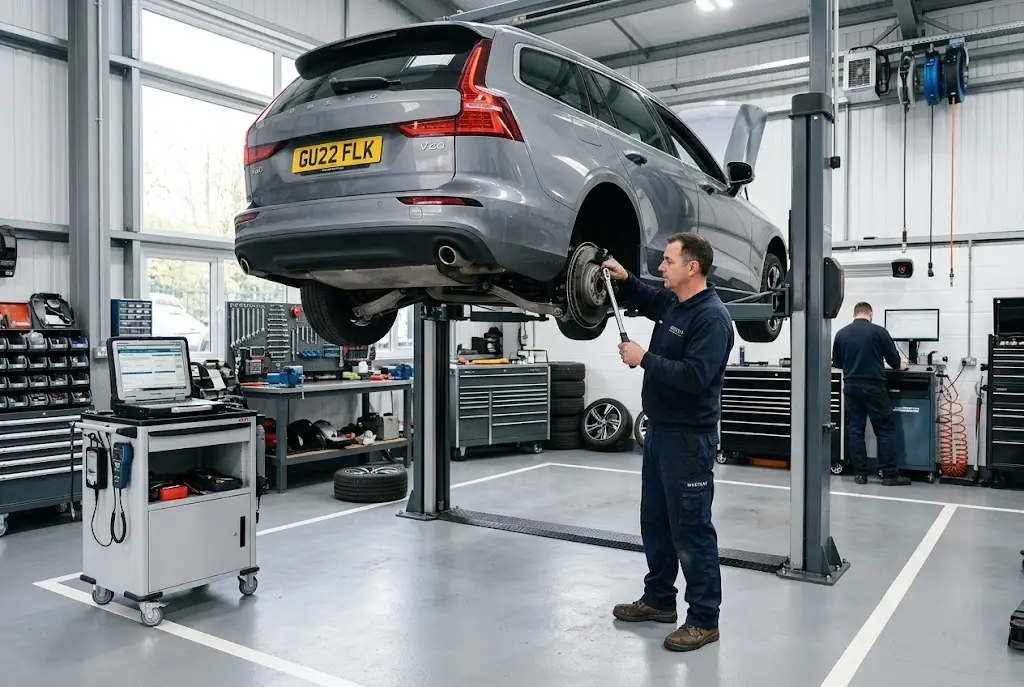
Vehicle technology continues to develop, so workshops need appropriate diagnostic equipment and technicians who can use it effectively. However, purchasing equipment simply because it is technically impressive does not guarantee a return on investment.
Assess equipment purchases according to customer demand and expected utilisation. Specialist tools can be worthwhile when they allow the workshop to complete profitable work that would otherwise need to be outsourced.
Training should also extend beyond mechanical tasks. Technicians need to understand workshop procedures, safety requirements, documentation and quality-control processes.
Create a Reliable Customer Journey
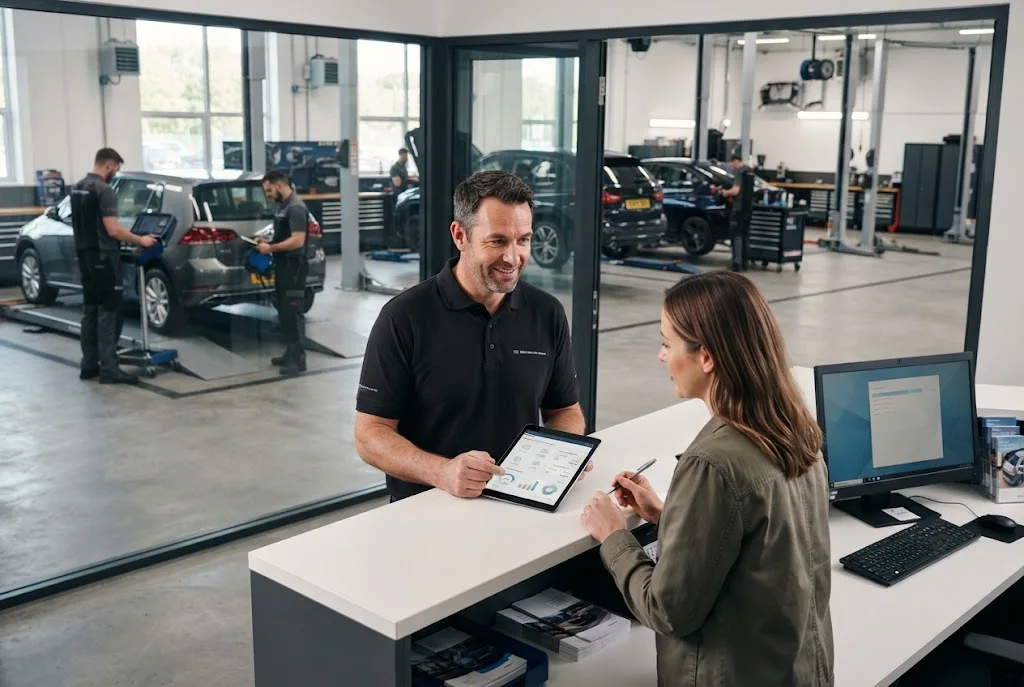
A professional car servicing business should make every stage of the customer’s experience straightforward. This begins when the customer first makes an enquiry and continues through booking, vehicle inspection, service approval, completion and follow-up.
Explain the scope of the booked service before the vehicle arrives. If additional work is discovered during inspection, communicate the findings clearly and explain why the work may be necessary.
Avoid technical language where it does not help the customer. A clear explanation of a problem is often more useful than a complicated description of the mechanical component involved.
After completing the service, provide an understandable invoice and retain accurate service records. Good documentation can make future visits easier and demonstrates that the workshop takes its work seriously.
Use Digital Tools to Organise Service Operations
Technology can simplify many administrative tasks in a servicing business. Workshop management software can help with bookings, customer records, job cards, estimates, invoices and service histories.
Digital reminders can also support repeat servicing. Customers may appreciate a timely reminder when their next maintenance interval approaches, provided the communication is relevant and not excessive.
Online booking can improve convenience for routine work, while telephone or in-person communication remains valuable when a customer has a complicated fault or needs advice before booking.
The objective is not to automate every interaction. Instead, technology should reduce administrative work and give staff more time to focus on customers and vehicles.
Measure the Performance of Your Servicing Business
Once the workshop is operating, measure performance consistently. Useful indicators can include the number of vehicles serviced, average job value, technician productivity, workshop utilisation, parts margins, customer retention and repeat repair rates.
These measurements help reveal whether growth is actually improving the business. For example, increasing vehicle volume is not necessarily positive if jobs take too long or generate insufficient margin.
Customer feedback can provide another valuable source of information. Look for recurring complaints about waiting times, communication, pricing or the quality of completed work. Patterns are more useful than isolated comments because they can identify areas where a process needs improvement.
Plan for Business Growth
A successful maintenance business does not have to remain limited to routine car servicing. Once core operations are stable, owners can consider additional revenue streams such as fleet maintenance, specialist diagnostics, repair services or mobile operations.
Fleet customers can provide recurring work when the business can meet their scheduling, documentation and reliability requirements. Specialist services can also help a workshop differentiate itself from general competitors.
Another option is to develop a mobile service operation. Businesses considering this model can explore mobile auto service and mobile mechanic operations as a potential expansion route.
However, expansion should come after the core workshop has reliable systems. Adding more customers, staff or locations to an inefficient operation can make existing problems harder to manage.
Common Car Servicing Business Mistakes
One of the biggest mistakes is underpricing services simply to attract customers. Price-sensitive customers may generate volume, but consistently low margins can prevent the business from investing in staff, equipment and facilities.
Another problem is overbooking. When workshops promise unrealistic turnaround times, customers become frustrated and technicians face unnecessary pressure.
Inconsistent documentation can create similar difficulties. Without accurate job records, it becomes harder to understand what work was completed, what was recommended and what should be checked during a future visit.
Finally, businesses should avoid treating customer communication as an administrative afterthought. Clear explanations and realistic expectations are central to building trust in automotive services.
Final Thoughts on Building a Car Servicing Business
A successful car servicing business depends on reliable systems as much as technical expertise. Clear service packages, realistic scheduling, capable technicians, appropriate equipment, transparent pricing and effective customer communication create the foundation for sustainable operations.
Start by understanding your market and defining the services your workshop can deliver consistently. Then build processes around those services and measure their performance. As the business becomes more efficient, additional opportunities such as fleet work, specialist repairs or mobile services can be considered.
The strongest servicing businesses focus on creating a dependable experience at every stage. When customers know what to expect, receive clear information and trust the quality of the work, they are more likely to return and recommend the workshop to others.