Building a successful auto services business requires more than mechanical expertise. A modern automotive service business needs a clear service offering, efficient workshop processes, reliable technicians, sensible pricing and a customer experience that encourages repeat business. Whether you are planning an independent garage, expanding an established workshop or developing a broader automotive service operation, the fundamentals remain the same: deliver quality work, control costs and make it easy for customers to trust your business.
The UK automotive aftermarket includes everything from routine maintenance and diagnostics to repairs, tyres, MOT-related services and specialist mechanical work. That creates opportunities for businesses that can combine technical capability with strong day-to-day management. However, competition is also significant, so simply opening an auto service garage is not enough. The business needs a well-defined strategy from the beginning.
What Makes Auto Services Businesses Successful?
A successful automotive service business balances three priorities: customer value, technical quality and operational efficiency. Customers want their vehicles maintained properly, problems diagnosed accurately and costs explained clearly. At the same time, the business needs to keep technicians productive, manage parts efficiently and make good use of workshop capacity.
This balance is especially important for independent automotive workshops. A garage can have excellent technicians but still struggle if appointments are poorly organised, parts are frequently delayed or customers receive unclear estimates. Likewise, a highly efficient workshop can damage its reputation if repairs are rushed or communication is poor.
The strongest businesses therefore treat technical work and business management as connected parts of the same operation.
Choose the Right Auto Service Business Model
Before investing in premises, equipment and staff, decide exactly what type of automotive service business you want to operate. A general garage may provide routine maintenance, diagnostics, brakes, exhaust work, batteries and mechanical repairs. A specialist workshop might focus on a particular vehicle type, manufacturer, system or service.
Your business model should reflect the demand in your target area. Consider the vehicles customers commonly drive, the services already offered by competing garages and the problems customers may struggle to get solved locally.
A clear positioning strategy also makes marketing easier. Instead of presenting the business as a garage that does “everything”, you can communicate specific strengths such as dependable servicing, transparent repairs, diagnostic expertise, fleet maintenance or convenient appointment availability.
For businesses planning to make vehicle maintenance a core revenue stream, understanding car servicing and service operations is an important next step.
Build a Practical Range of Auto Repair Services
The services you offer should generate useful revenue while meeting genuine customer demand. Many independent garages combine routine maintenance with repair and diagnostic work because these services can support different customer needs throughout the year.
Potential areas include:
- Routine vehicle servicing and maintenance
- Brake inspection and replacement
- Battery testing and replacement
- Engine diagnostics and fault finding
- Clutch and transmission repairs
- Suspension and steering work
- Exhaust system repairs
- Air conditioning servicing
- Tyre-related services
- Electrical diagnostics and repairs
The precise service mix should depend on your technicians, equipment, premises and local demand. It is usually better to perform a smaller number of services consistently well than to advertise specialist work that your workshop is not properly equipped to handle.
As the business develops, additional services can be introduced when there is a clear commercial reason to do so.
Invest in Strong Workshop Management
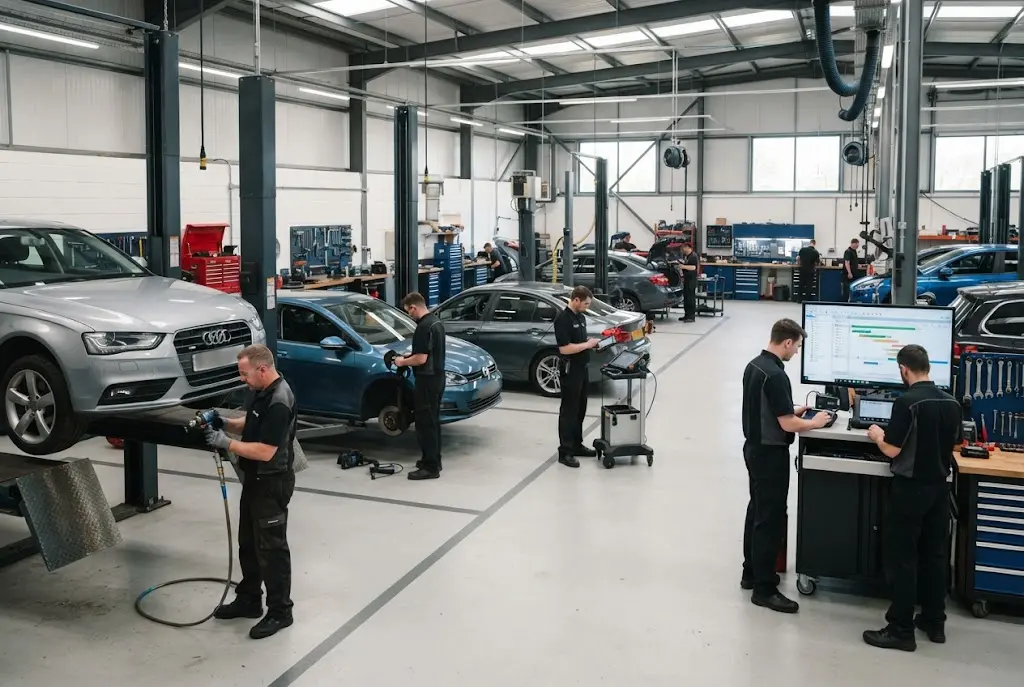
Workshop management has a direct impact on profitability. Every vehicle moving through the workshop should have a clear job description, assigned technician, expected completion time and record of parts or materials used.
Good vehicle service operations start before the technician begins work. When a vehicle arrives, record the customer’s concerns accurately and inspect the vehicle according to the agreed scope. If additional work is discovered, communicate the issue and obtain the appropriate customer approval before proceeding.
Scheduling also matters. If every booking is treated as urgent, technicians can become overloaded and customers may experience unnecessary delays. A structured booking system should allow sufficient time for different types of jobs while leaving some capacity for unexpected diagnostic work.
Businesses looking to improve garage performance should also consider workshop efficiency and high-performance garage management as part of their wider operational strategy.
Set a Sustainable Pricing Strategy
Pricing is one of the most important decisions in an automotive service business. Charging too little can create cash-flow problems, while pricing significantly above the local market without providing additional value can make customer acquisition difficult.
A sensible workshop pricing model should account for technician labour, parts, consumables, equipment, rent, utilities, software, insurance, administration and other operating costs. It should also leave enough margin to support the long-term health of the business.
Customers generally respond better when pricing is transparent. Explain what a service or repair includes and distinguish between inspection, labour, parts and any additional recommended work where appropriate.
For a more detailed look at this area, businesses can develop a separate pricing framework covering car service cost, workshop pricing and service profitability.
Hire and Develop Skilled Technicians
Technicians are central to the reputation and productivity of an automotive service business. Recruitment should therefore consider both technical competence and the ability to work systematically.
Modern vehicles increasingly rely on electronic systems, computerised diagnostics and complex mechanical components. A workshop that invests in ongoing training can be better positioned to handle changing vehicle technology.
However, training does not have to focus only on technical skills. Technicians should also understand job documentation, workshop safety, quality checks and efficient use of parts and equipment.
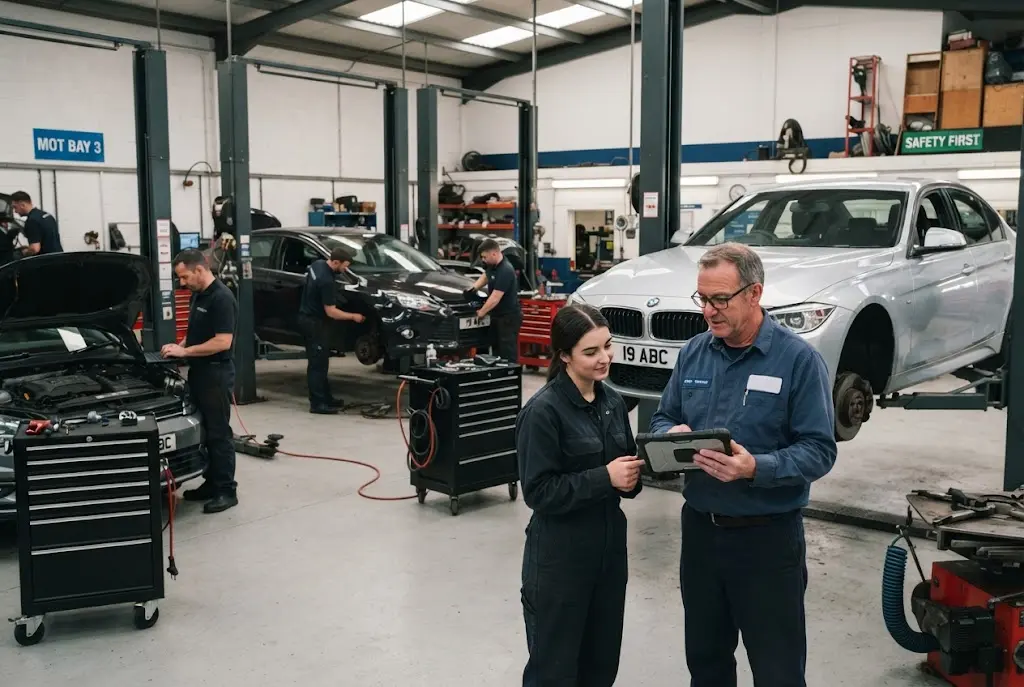
Clear responsibilities help prevent confusion. A workshop manager or service adviser can coordinate customer communication and job flow, allowing technicians to concentrate on diagnosis, maintenance and repairs.
Make Customer Trust Part of the Business Model
Trust is particularly important in automotive services because many customers cannot independently judge the technical necessity or quality of a repair. Clear communication therefore becomes a competitive advantage.
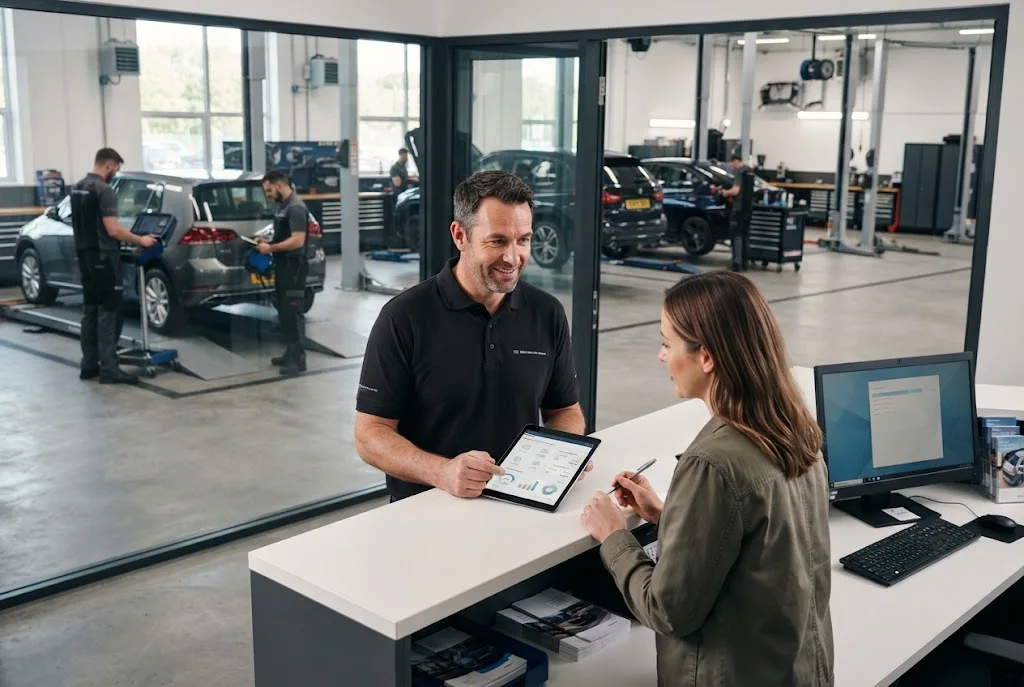
Start by explaining the customer’s reported problem in straightforward language. When a diagnosis identifies additional work, explain why the repair is recommended rather than simply presenting a price.
Professional documentation can reinforce this approach. Provide customers with clear invoices, descriptions of completed work and information about any maintenance issues that may require attention later.
This approach is consistent with wider UK guidance around health and safety in motor vehicle repair businesses, which covers activities including vehicle maintenance, repair, MOT testing and roadside recovery. Businesses should review relevant guidance from the Health and Safety Executive when developing workshop procedures.
Control Parts, Tools and Workshop Capacity
Parts management can have a surprisingly large effect on garage profitability. A vehicle that remains on a ramp while waiting for a part reduces workshop capacity and can create scheduling problems.
Develop reliable supplier relationships and confirm parts availability before promising completion times whenever possible. Record frequently used parts and monitor purchasing patterns so the business can make informed stock decisions.
Workshop equipment also needs to be managed carefully. Diagnostic tools, lifting equipment, specialist tools and other assets represent significant investments. They should be maintained properly and used efficiently rather than sitting unused for long periods.
Use Technology to Improve Vehicle Service Operations
Technology can help an automotive service business organise work without replacing the human side of customer service. Workshop management software can assist with bookings, job records, customer information, estimates, invoices and service history.
Digital records can also make repeat servicing easier. When a customer returns, the business can review previous work and identify relevant maintenance information instead of starting from scratch.
Online booking can provide another layer of convenience, particularly for routine services. However, digital systems should support good communication rather than create unnecessary barriers for customers who prefer to speak with a member of staff.
Measure the Performance of Your Automotive Workshops
Business owners need reliable performance indicators to understand whether the workshop is improving. Useful measures can include booked hours, productive technician hours, average repair value, parts margins, comeback rates, appointment utilisation and customer retention.
The goal is not to chase every metric available. Instead, choose measurements that reveal where the business is losing time, money or customer confidence.
For example, consistently low workshop utilisation may indicate weak demand, poor scheduling or insufficient marketing. A high comeback rate may point towards quality-control problems or inadequate diagnosis. Long vehicle turnaround times could indicate parts delays or inefficient job allocation.
Regular reviews allow management to identify patterns and make practical changes before small problems become expensive ones.
Build a Long-Term Growth Strategy for Auto Services
Once the core operation is stable, an automotive service business can explore additional growth opportunities. These might include fleet servicing, specialist diagnostics, mobile repairs, additional technicians or another workshop location.
Expansion should follow operational stability rather than compensate for problems in the existing business. If the first workshop has weak processes, adding another location can multiply those problems.
Mobile services can also provide an alternative growth model for businesses that want to reach customers away from a traditional workshop. The separate mobile auto service business model can be particularly relevant where convenience and on-demand vehicle support are important to customers.
Common Mistakes to Avoid in an Auto Service Business
Several avoidable mistakes can undermine an otherwise promising garage. One is competing mainly on the lowest price. Low pricing may attract enquiries, but it can make it difficult to cover labour and operating costs while maintaining quality.
Another mistake is accepting more work than the workshop can realistically complete. Overbooking can create delays, unhappy customers and pressure on technicians.
Poor communication is another common weakness. Customers are more likely to become frustrated when they do not know what is happening with their vehicle or why the estimated cost has changed.
Finally, businesses should avoid ignoring safety and compliance responsibilities. A professional workshop needs appropriate procedures, equipment, training and documentation for the work it undertakes.
Final Thoughts on Building a Strong Auto Services Business
A successful auto services business is built through consistent execution rather than one major decision. The right service mix, skilled technicians, efficient workshop processes, transparent pricing and dependable customer communication all contribute to sustainable growth.
Start with a business model that fits your local market, establish reliable service operations and monitor performance closely. As the business becomes more efficient, consider additional opportunities such as specialist services, fleet maintenance or mobile operations.
Most importantly, build the business around quality and trust. Customers who receive clear advice, fair treatment and dependable vehicle work have a strong reason to return. Over time, that reputation can become one of the most valuable assets an independent automotive service business can develop.